When Katie discovered she was expecting her fourth baby in late 2021, her heart overflowed with hope. After two consecutive miscarriages, this pregnancy felt like a long-awaited miracle. Their three boys were thrilled, and when the scan revealed they were finally welcoming a little girl into a home filled with dinosaurs and muddy boots, the excitement only grew. A daughter — their first — felt like a promise of glitter and softness added to their already joyful chaos.

But on April 1st, during what should have been a routine 20-week scan, their lives changed forever.
A trainee sonographer began the scan, then quietly passed the probe to her supervisor. The room fell silent. Katie sensed it instantly — that heavy shift in the air when a professional is searching for something they cannot find. The sonographer gently explained she couldn’t see enough of the baby’s heart and asked them to return shortly to meet with a consultant.
Thirty minutes later, their world shattered.

The consultant explained that their baby had a very serious and complex congenital heart condition. He referred them urgently to fetal cardiology. Over the next days, specialists confirmed the devastating reality: their daughter had
hypoplastic right heart syndrome (HRHS), transposition of the great arteries (TGA), coarctation of the aorta, tricuspid atresia, and a ventricular septal defect. In simple terms — she had only half a functioning heart.
The pregnancy that had begun with joy suddenly became filled with fear, grief, and uncertainty.

Preparing for a baby who would need to fight from her first breath
From the moment of diagnosis, Katie’s pregnancy transformed into a tightrope walk of weekly scans, appointments, and medical planning. Each visit carried the weight of life-or-death possibilities. Enjoying her pregnancy became nearly impossible — every flutter, every quiet moment, every sleepless night stirred new worry.
Still, the family pressed forward. They loved her fiercely even before she arrived.
In June 2022, Katie underwent a detailed fetal MRI to give surgeons a clearer picture of their baby’s heart. A 3D model was created — a remarkable medical tool that would guide her care. Seeing their daughter’s heart reconstructed in a model was surreal, equal parts heartbreaking and awe-inspiring. Medicine, they realized, would become the bridge between hope and survival.

A fierce beginning: Primrose arrives
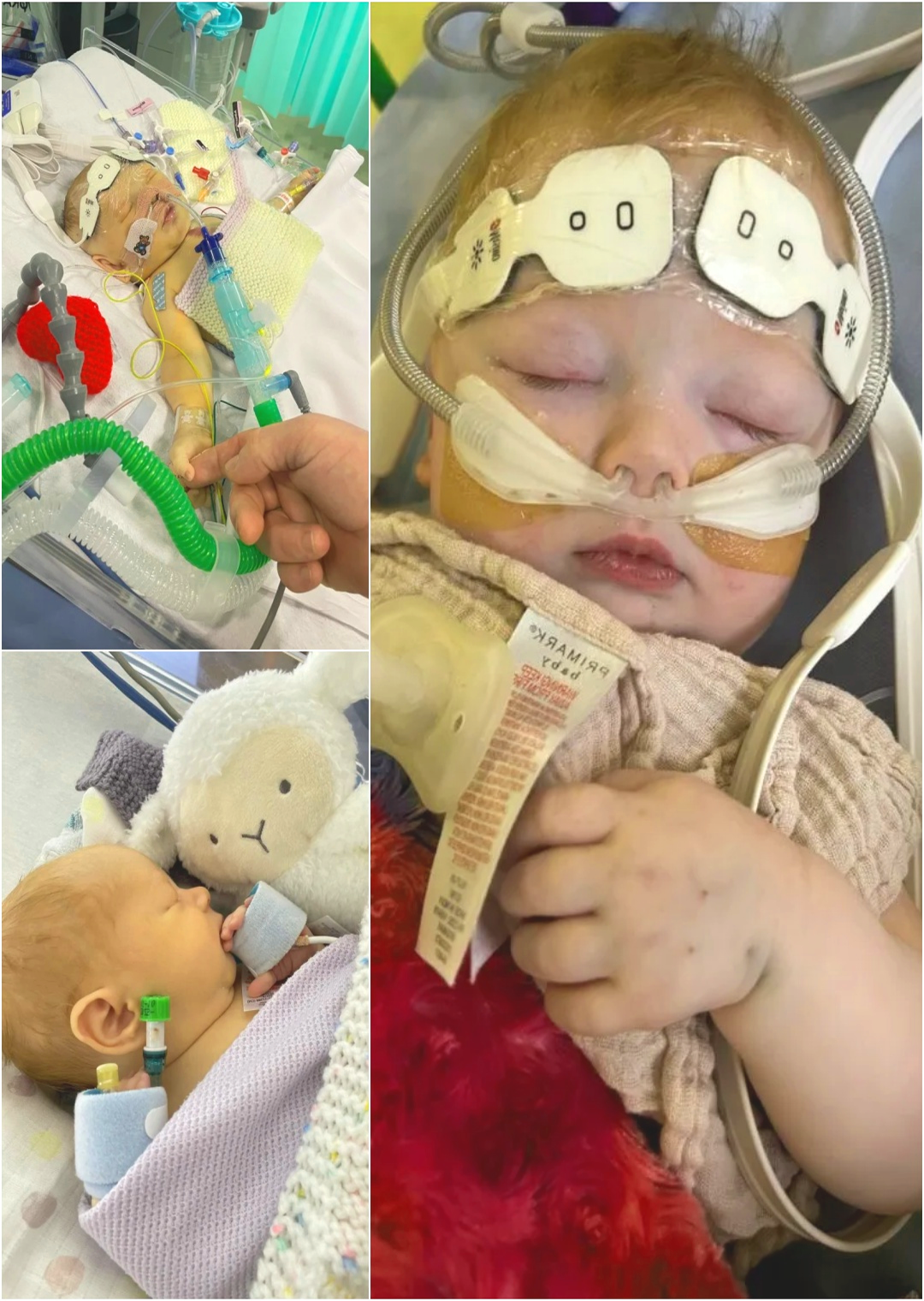
In August 2022, Primrose was born — tiny, brave, and fighting from her first breath. She was rushed to NICU almost immediately, her future resting in the hands of specialists.
At six days old, she underwent her first open-heart surgery: the Norwood, an operation performed on newborns with single-ventricle conditions. No parent can ever be prepared to see their days-old baby on a ventilator, covered in wires, tubes, and monitors. Katie remembers her throat closing each time she tries to describe it. The fear. The love. The helplessness. The unimaginable strength hidden inside her infant daughter.
But Primrose fought. And she won.
She came home at four weeks old. Though they faced multiple readmissions, each day she was home felt like a miracle.
Her second battle: the Glenn
In January 2023, Primrose began to struggle again. Her oxygen levels dipped unpredictably, and her shunt began to fail. At five months old, she underwent her second open-heart surgery: the Glenn
.Somehow, seeing her after surgery was even harder than the first time. This time she knew more of the world. She smiled. She clung to her parents. Her personality bloomed bright and bold. Katie felt an ache of guilt — the ache of a mother knowing her child must endure pain she cannot shield her from.
Primrose suffered a bleed and a blood clot after surgery. Yet from the moment she woke, she greeted the world with a smile — a tiny warrior refusing to surrender.
Thriving against all odds
Today, Primrose is a thriving, joyful little girl. She is bright, cheeky, and filled with life. Her big brothers adore her, showering her with love and laughter. Every morning, Katie wakes up grateful for one more day with their daughter — one more day of watching her defy every expectation.
Her early detection saved her life. Katie will never forget the kind, compassionate sonographer who recognized something was wrong. Her attentiveness gave Primrose a fighting chance.
Primrose’s favorite things today include signing “milk,” watching Bluey, adoring her brothers, and spreading joy everywhere she goes.

A new chapter: growing, learning, and facing what comes next
Now three years old, Primrose continues to impress her medical team. She is scheduled for her next major heart surgery — the
Fontan — likely next year, ideally before she starts school. The anticipation brings anxiety, but also relief knowing this surgery will help her continue thriving.
This past year has brought new challenges. While on a family holiday in July 2024, Primrose suddenly became unwell, sparking months of tests — MRI, EEG, genetic studies — that have left doctors searching for answers. Medications have reduced her ataxia episodes, but the uncertainty weighs heavily on the family.
Then, in September, she developed appendicitis and required emergency surgery. She recovered beautifully, proving once again that her strength is unmatched.
Through it all, Primrose remains a bright flame: resilient, sparkling, endlessly determined.
Living boldly, loving fiercely
Her family is committed to making memories — holidays, days out, visits to their local children’s hospice, and activities she loves. Swimming, being outdoors, and animals (especially monkeys!) bring her joy. With half a working heart, she is learning her limits, and her family gently follows her lead.
Primrose is proof that a child born with impossible odds can still live a life filled with wonder, love, and laughter. She is a reminder of the power of early detection, extraordinary medicine, and a family’s unshakeable devotion.
Primrose’s story continues — radiant, brave, and impossibly beautiful.