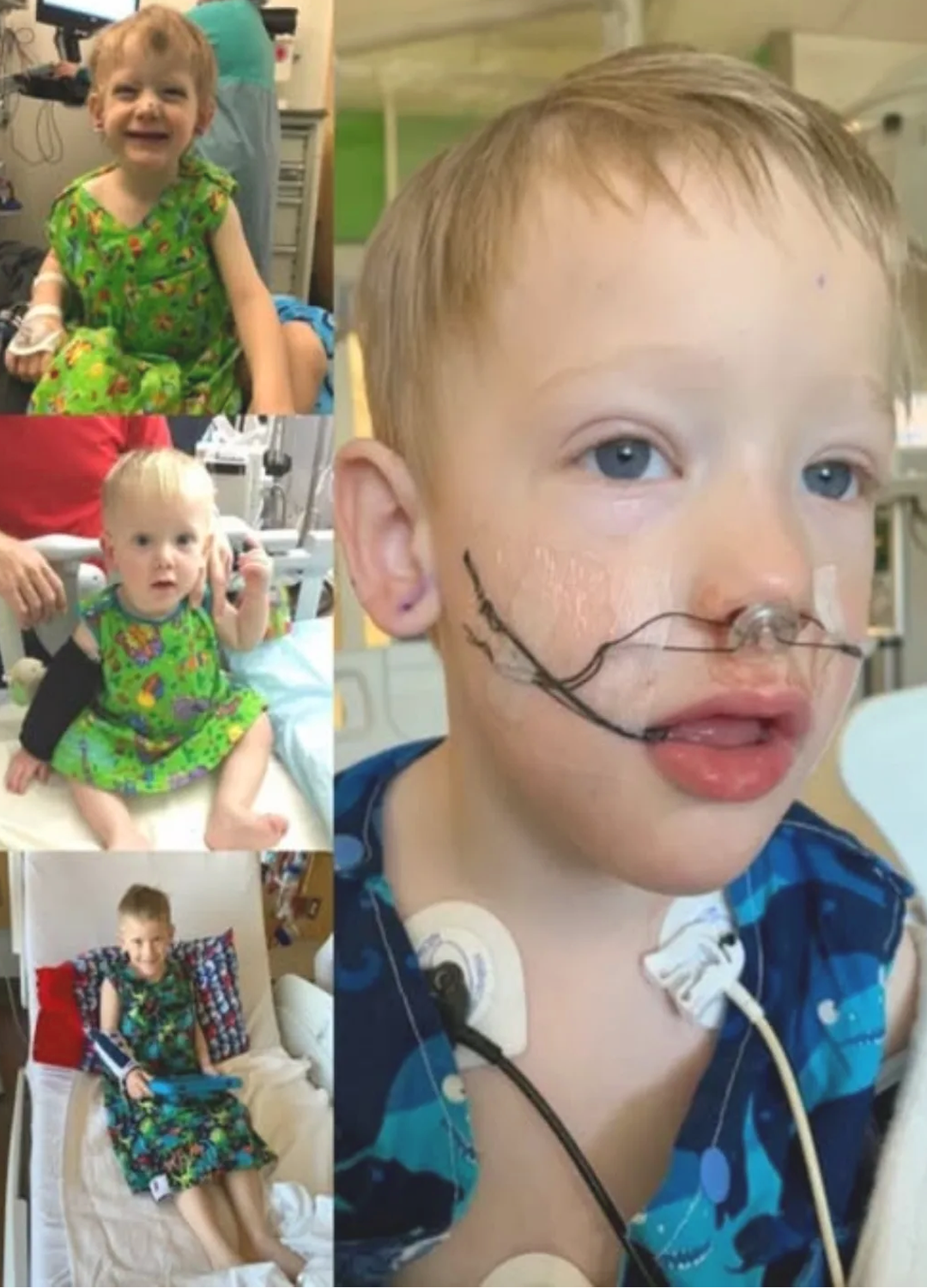
The day the twins arrived was nothing short of chaos. Cooper came first, born in the doorway of the hospital, a tiny, perfect bundle who immediately drew sighs of relief from exhausted parents. Just thirteen minutes later, Max made his entrance, equally small, equally perfect, but unaware that those first hours would quietly set the course of his life in ways no one could have imagined.
In the whirlwind of birth, of tears and laughter and adrenaline, a simple heel-prick newborn screening seemed insignificant at the time—a routine test among many. But it was this small prick, this quiet moment, that would prove to be life-saving.
Jamie, their mother, had suffered an eclamptic seizure during delivery, keeping the family in the hospital longer than expected. That extra time, unbeknownst to anyone, gave the nurses and doctors the opportunity to notice signs that could not be ignored. Max struggled to feed. He couldn’t gain weight, and his tiny body exhausted itself in futile attempts to eat. A pediatrician examined him closely and noticed a cleft palate. Then the phone call came: the results of his newborn screening confirmed a rare and dangerous disorder—Medium-Chain Acyl-CoA Dehydrogenase Deficiency, or MCADD.
MCADD is a condition that prevents the body from breaking down fats properly. For a baby, it is silently deadly. If he went too long without eating, his blood sugar could drop without warning. Unlike other infants, babies with MCADD don’t cry when danger approaches. They go quiet. That silence, so easily mistaken for calm, can be fatal.
Max was immediately referred to specialists who explained the harsh reality: there is no cure, no surgery, no quick fix. The only path to safety was strict, constant nutrition and immediate hospital care whenever illness struck. Each fever, each nausea, each sleepless night could send the family into “triage mode,” monitoring, adjusting, and protecting their son with unwavering vigilance. In the eight years since, Max has been hospitalized more than forty times. Forty times his family has felt the fear, the tension, the helplessness of watching their child teeter between life and danger.
Yet even in those moments of anxiety, Jamie and her family never felt alone. Doctors who answered late-night calls, nurses who became extensions of their family, and a medical team who refused to let fear dictate the outcome—all played a role in keeping Max alive. Their dedication turned despair into hope, transforming moments of potential tragedy into milestones of survival.
And Max has not only survived—he has thrived. Today, at eight years old, he is unstoppable. He is adventurous, exuberant, and full of life. Soccer, wrestling, football, school, and laughter—he engages in it all with the boundless energy of a child who knows how precious each moment is. Every day is a testament to resilience, to the extraordinary ways in which human care, vigilance, and love can tip the scales from danger to life.
Reflecting on Max’s journey, Jamie emphasizes the gravity of the tiny test that changed everything. “It can be life or death,” she says, her voice both steady and reverent. “For Max, it was life.” That single heel-prick, often forgotten by parents after the moment passes, became a silent sentinel. It saved a life before danger could make itself known, and it gave a family the precious gift of years filled with laughter, love, and boundless energy.
Max’s story is more than a tale of a rare disorder. It is a story of courage, of parents who never stopped fighting, of medical teams who answered every call, and of a little boy whose energy and joy stand as proof of life’s fragility and wonder. It reminds us that sometimes the smallest actions—a test, a moment of vigilance, a patient hand—can alter destiny, turning what could have been silence into a lifetime of laughter.
Max may have been quiet when danger came, but his life now speaks louder than anyone could have imagined: full of adventure, full of joy, and full of proof that resilience, love, and the dedication of those around him can triumph over the most silent of threats.