Danh mục: Uncategorized

  • The Voice Beneath the Marble Floor

    The Voice Beneath the Marble Floor

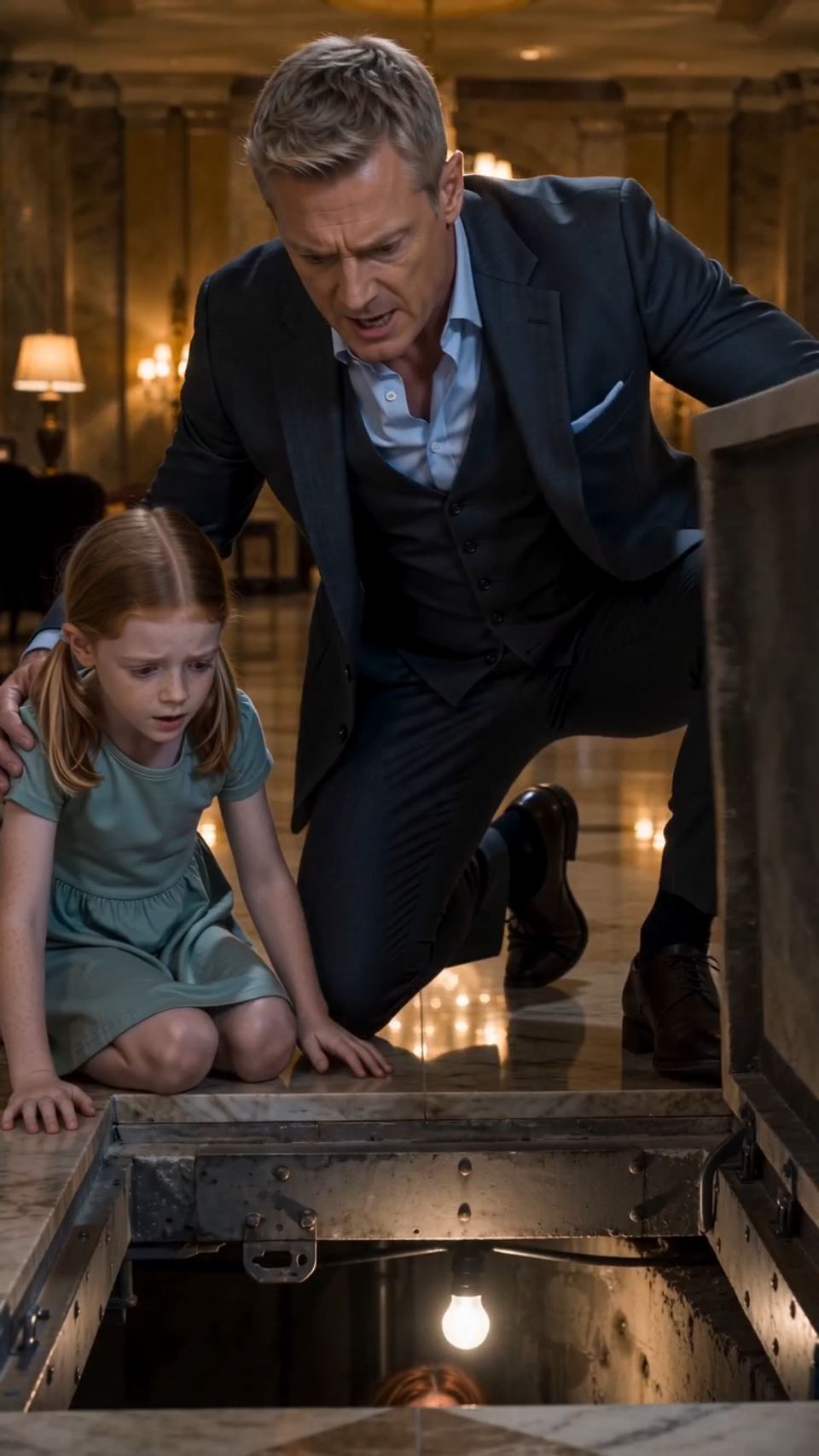
    “Dad! There is someone down here! It’s Mommy!”

    Six-year-old Ellie was on her knees on the polished marble floor, one hand trembling over the iron ring set into the stone.

    At first, David almost smiled.

    His daughter had always imagined things. Shadows in curtains. Faces in clouds. Once she had sworn their old Labrador was trying to talk.

    But there was something different in her voice now.

    Panic.

    He crossed the kitchen fast, the crystal chandelier above them throwing warm gold light across the white floor. “Don’t be silly, sweetie. Mom is at work.”

    Even as he said it, the words felt wrong.

    Lena had texted him that morning. A normal message. Running late. Big client meeting. Kiss Ellie for me.

    David dropped to one knee and grabbed the iron ring.

    The marble hatch was heavier than he remembered. It scraped open with a brutal sound, revealing darkness, a narrow stair, and a weak swinging bulb below.

    The basement had been sealed for years. It was little more than a storage pit left from the house’s original foundation.

    He leaned forward.

    Then he heard breathing.

    Not his own.

    His pulse slammed in his ears as he stared into the dim light below. A woman was curled in the corner, wrists bound with rope, her beige sweater filthy, her reddish-brown hair hanging over her tear-streaked face.

    She looked up.

    “David! Oh God, get me out!”

    His whole body went cold.

    It was Lena.

    Not possible.

    He had spoken to her that morning.

    He had seen her leave for work.

    Ellie started crying behind him. “Daddy, help Mommy.”

    David rushed down the steps, hands shaking so hard he nearly fell. As he reached Lena, she pulled back in terror and whispered, “Don’t touch me until you tell me one thing.”

    Her eyes locked on his.

    “Who is the woman wearing my wedding ring?”

    David froze, still kneeling in the dark.

    For one wild second, David thought Lena had hit her head.

    Then he saw the deep rope marks on her wrists. The dirt on her sweater. The truth in her eyes.

    He cut her free with the utility knife he kept on a shelf near the stairs. Lena couldn’t stand at first. Her legs gave under her, and he had to half-carry her into the kitchen while Ellie sobbed and clung to her mother’s side.

    Lena held their daughter so tightly Ellie whimpered.

    “I thought you were gone,” Lena whispered into her hair.

    David grabbed his phone. “I’m calling the police.”

    Lena’s hand shot out and caught his wrist. “No. Not yet.”

    He stared at her. “You were tied up in our basement.”

    “I know where I was.” Her voice was raw. “I also know that if we call too soon, she may disappear.”

    “Who?”

    Lena looked at him like she was trying to decide whether he was a fool or a liar.

    “The woman who took my place.”

    Ellie was too young to understand, but not too young to feel fear. David led her to the den, turned on cartoons, and came back to the kitchen. Lena sat wrapped in a blanket, pale and shaking, but her mind was clear.

    “I left for work yesterday morning,” she said. “I never got there. A woman stopped me in the parking garage. She knew my name. She said you had collapsed.”

    David went still. “Collapsed?”

    “I got close enough for her to spray something in my face.”

    He sank into the chair across from her. Yesterday morning. Not today. She had been gone for more than twenty-four hours.

    “But I spoke to you.”

    “No,” Lena said quietly. “You spoke to someone using my phone.”

    David opened his messages with numb fingers.

    There they were. Short texts. Familiar enough. Not too familiar.

    Then he looked closer.

    Lena always signed with a red heart.

    Every message from “her” ended with a period.

    Before he could speak, his phone rang.

    The screen said: Lena.

    And from the den, Ellie shouted, “Daddy! Mommy’s car is in the driveway!”

    “You spoke to someone using my phone.”

    David looked from the ringing phone to the front window, where a woman in Lena’s coat was walking to the door.

    David’s first instinct was to lock the door.

    His second was to open it and demand the truth.

    Instead, he stepped aside from the window and whispered, “Stay here.”

    Lena rose anyway, one hand braced on the table. She looked weak, but there was steel in her face David had not seen in years.

    The key turned in the front door.

    The woman entered with a leather tote on her shoulder and Lena’s scarf around her neck. She called out, cheerful and ordinary, “Traffic was awful. Did Ellie eat?”

    Then she saw Lena standing in the kitchen.

    Everything stopped.

    The tote slid from her hand and hit the floor.

    Up close, the resemblance was shocking. Same height. Same hair color. Similar build. But not exact. This woman’s jaw was sharper. Her eyes darker. Her freckles painted on too lightly, as if someone had copied them from memory.

    Ellie appeared at the den doorway and stared. “Why are there two mommies?”

    The woman looked at the child, and something like pain crossed her face.

    David stepped in front of Ellie. “Who are you?”

    The woman’s shoulders dropped. “My name is Mara.”

    Lena gripped the counter. “Why me?”

    Mara swallowed. “Because he said it had to be you.”

    “Who?” David asked.

    She looked at him with a tired, haunted expression. “Your father.”

    The room seemed to tilt.

    David’s father had been dead for eleven months.

    “No,” David said. “That’s impossible.”

    Mara gave a short, broken laugh. “I met Richard Hale three weeks before he died.”

    Lena stared at David. He stared back, both of them lost.

    Mara slowly reached into her coat pocket. David tensed, but she only pulled out an old photograph.

    She set it on the marble island.

    It showed a much younger Richard standing beside a teenage girl with dark eyes and a defiant mouth.

    Mara.

    On the back, in Richard’s unmistakable handwriting, were four words:

    My daughter. Keep hidden.

    “My name is Mara.”

    Lena’s hand began to shake as she turned the photograph over again and again.

    The police came an hour later.

    This time Lena let David call.

    Mara did not run. That changed everything.

    She sat at the dining table with her hands visible, as if she had rehearsed surrender before she ever came through the front door. Lena sat across from her, still wrapped in a blanket. David stood between them, not from anger now, but because he no longer understood where he belonged.

    Mara told them the story in pieces.

    Her mother had worked as a cleaner in a hotel outside Baltimore thirty-four years ago. Richard Hale had stayed there for months while building a real estate project. He promised help. Then he disappeared.

    Years later, when Mara tracked him down, he was old, sick, and terrified his respectable life would crack open. He begged her not to contact David. He paid for an apartment. Sent money. Kept her hidden, just as he had written on the back of the photograph.

    When Richard’s health failed, Mara went to see him one last time.

    “He said he wanted to make things right,” she said. “But not publicly. Never publicly.”

    Lena’s face hardened. “So he asked you to kidnap me?”

    Mara looked horrified. “No. He asked me to watch your family after he died. He said David was fragile. That he couldn’t survive another loss.”

    David let out a bitter breath. “Another loss?”

    Mara looked at him carefully. “He said your mother didn’t leave. She tried.”

    David’s knees nearly gave way.

    His mother had vanished when he was eight. Richard had told him she abandoned them.

    Mara reached into the leather tote and took out a cassette tape and a folded paper.

    “The woman who attacked Lena wasn’t me. It was Paula, your father’s housekeeper. She said if Lena disappeared for a while, I could step in. She said Richard had promised I belonged here too.”

    Lena stared. “She locked me in that cellar.”

    “Yes,” Mara said. “And when I realized what she’d done, I came here to tell the truth.”

    David unfolded the paper. It was an address.

    A care home in Vermont.

    At the bottom, in his father’s handwriting: Eleanor Hale. Tuesdays by the window.

    His mother was alive.

    “Your mother didn’t leave. She tried.”

    David looked up from the note, and for the first time in forty years, hope frightened him more than grief.

    The trip to Vermont took six hours and a lifetime.

    Lena insisted on coming.

    So did Ellie, who sat in the back seat with her stuffed rabbit and asked questions no adult could answer cleanly. Mara followed in her own car after giving a full statement to police. Paula was arrested before noon. She had confessed faster than anyone expected. Richard had promised her money if she helped “manage” the family after his death. Instead, she had built her own desperate plan from his secrets.

    The care home was small, quiet, and filled with winter light.

    David almost turned back at the door.

    Lena touched his arm. “Whatever happened, you deserved the truth.”

    A nurse led them to a sunroom.

    An elderly woman sat by the window with a blanket over her knees, silver hair brushed neatly back. Her hands were thin. Still. Waiting.

    David knew her at once.

    Not from memory, exactly. From the shape of his own face. From the old ache in him that had always belonged to someone.

    “Eleanor?” he asked.

    She turned slowly.

    For one terrible second, her eyes were empty.

    Then they filled.

    “David,” she said, as if his name had been resting in her mouth for decades.

    He fell to his knees beside her chair.

    Richard had told everyone she ran off. The real story came later from records, nurses, and Eleanor herself in fragments. After a breakdown following her sister’s death, Richard had placed her in treatment. When she improved and wanted to come home, he signed papers that moved her farther away and told their son she was gone. It was easier for him. Cleaner.

    Lena wept quietly. Mara stood in the doorway, crying too.

    Ellie walked up to Eleanor and placed a small hand on hers. “I’m Ellie. I found Mommy in the floor.”

    Eleanor gave a shaky laugh.

    That laugh broke something open in all of them.

    Months later, the marble hatch was gone. David had the floor sealed. Not to hide what happened, but to end it.

    On Tuesdays, they drove to Vermont together.

    Sometimes Eleanor remembered everything.

    Sometimes only their names.

    Mara came often. Not as an intruder. As family, awkward and real.

    One spring afternoon, Ellie looked up at David and said, “Grandma likes the window because she can see us arriving.”

    David smiled through sudden tears.

    “Yes,” he said. “And this time, we came back.”

    “And this time, we came back.”

    Outside the window, Eleanor lifted her hand before they even reached the door.
  • A Mother’s Secret, a Hungry Child, and One Broken Moon Locket

    A Mother’s Secret, a Hungry Child, and One Broken Moon Locket

    “Please… I’m hungry.”

    The girl’s voice was so weak it barely carried over the wind.

    Mara Ellison stopped on the stone steps outside St. Jude’s Church.

    “Where are your parents?”

    The girl swallowed hard. “My father died. Mom never came back.”

    Mara’s breath caught.

    The child’s collar slipped open.

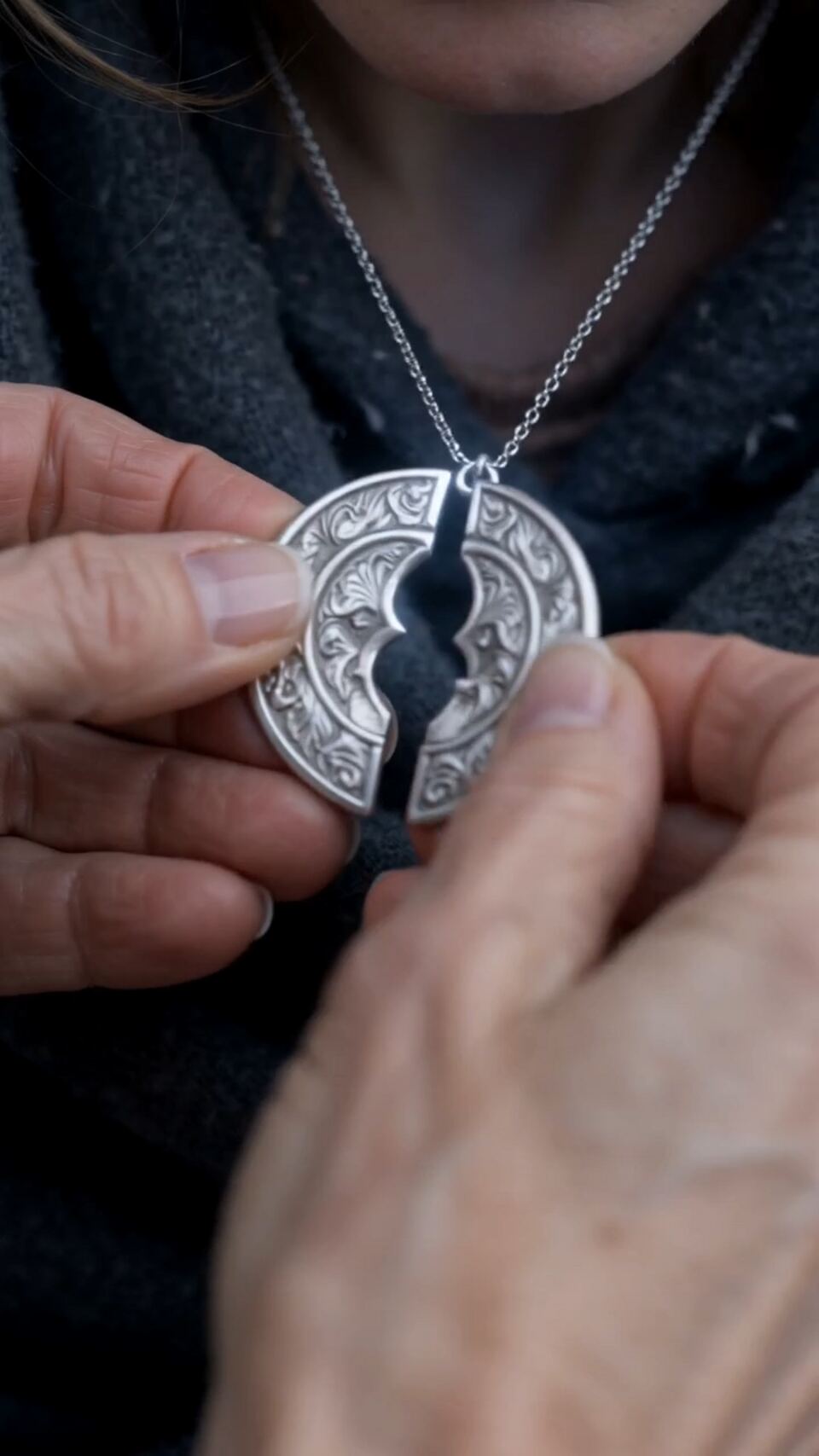
    A silver half-moon pendant hung there on a chain. Broken cleanly down the middle.

    Mara went still.

    Her fingers trembled as she reached into her coat pocket and pulled out another half, old and polished by years of touch. She pressed the two pieces together.

    They formed one full moon.

    The world seemed to go silent.

    “Who gave you this?” Mara asked.

    “My dad,” the girl said. “He said my grandma had the other half.”

    Mara sat down hard on the steps.

    “No… this is impossible.”

    The church bells rang above them, and Mara felt suddenly cold in a way the winter could never explain.

    Then she heard footsteps.

    A man in a dark wool coat climbed the steps, holding two coffees. He was tall, calm, and familiar in a way that made Mara’s chest ache.

    He looked from Mara to the child.

    “Mom?” he said slowly. “This little girl looks so familiar… Who is she?”

    Mara’s hand closed around the pendant so tightly it hurt.

    “Don’t ask me that here.”

    Mara should have told Daniel everything right then.

    Instead, she grabbed his arm and hurried him down the steps.

    “Not here,” she whispered. “Please.”

    Daniel let her lead him away, but his eyes kept going back to the child sitting alone with the soup in her lap. Her face was pale, her hands shaking around the cup. She looked too small for the weight of the moment pressing around her.

    “Mom, what is going on?” he asked once they were out of earshot.

    Mara looked at the church doors. For a second, she saw another winter morning long ago. A tiny silver pendant in her palm. A baby in her arms. A son she had once believed was safe.

    “I don’t know,” she said, though it was not the full truth.

    Daniel frowned. He was forty, successful, and patient in the careful way men become when they have learned not to force old wounds open. But there were things in his face Mara had not seen in years. Familiar things. Fear. Hope. Confusion.

    Inside the church hall, the girl had followed them. She stood near the doorway, clutching the empty paper bag the bakery had given her. A volunteer from the parish, Sister Agnes, hovered nearby.

    “Her name is Lily,” Sister Agnes said quietly. “She’s been sleeping near the shelter behind the train station. She says her father died last month.”

    Mara stared at the child.

    Lily looked up. “My dad said my grandma was kind.”

    Mara almost told her to stop saying that word.

    Grandma.

    Because it was her son’s voice in that broken pendant. Her son’s laugh. Her son’s face when he had left home at nineteen after one devastating argument and never truly come back.

    Daniel watched Mara carefully. “Why do you have one half of that pendant?”

    Mara’s throat tightened. “It belonged to your grandfather.”

    “Then why did you say you gave it to me?”

    She could not answer.

    That evening, Daniel drove Mara home in silence. But before she went inside, he said, “I found something in your coat pocket.”

    He handed her a folded, faded hospital admission card.

    Her name was on it.

    And so was a baby’s.

    Mara did not sleep.

    By dawn, the admission card was spread open on her kitchen table beside the pendant. The card was from thirty-two years ago, from St. Anne’s Hospital, and it bore the name of a newborn boy with no listed father.

    Not Daniel.

    Not the son she had raised.

    Her hands began to shake.

    The next morning, she went to the parish shelter and asked Sister Agnes for Lily’s records. The nun hesitated, then admitted that the child’s father had called himself Thomas Reed. He had died in a warehouse collapse. No family had come forward.

    “Did he ever mention a mother?” Mara asked.

    “Only that she would know the pendant,” Sister Agnes said.

    That was enough to send Mara to the old hospital archives.

    A tired clerk searched for hours before returning with a thin envelope. Inside was a discharge note, a transfer request, and one line that made Mara’s knees weaken: Infant male, separated by order of relative pending investigation.

    Relative.

    Not mother. Relative.

    When Daniel arrived at the archives, he found her sitting on a bench, staring at the papers.

    “You lied to me,” he said, but not with anger. With hurt.

    Mara flinched. “I was trying to protect you.”

    “From what?”

    She looked at the pendant in his hand. “From the truth I spent thirty years trying to survive.”

    At last she told him about the winter night in 1992 when her sister had brought her a baby after a family dispute, claiming the child’s mother had vanished and the father was dangerous. Mara had taken the infant in for only one night.

    Only one night.

    By morning, the baby was gone, and the pendant with him.

    “I thought I had lost my son,” Mara said.

    Daniel’s face changed. “Your son?”

    She nodded. “The baby was not the son I raised. He was my first child. I believed he had died.”

    The clerk returned then, pale and breathless. “Mrs. Ellison… there is one more file. The man named Thomas Reed wasn’t the father.”

    Mara looked up.

    The clerk swallowed. “He was listed as the child’s older brother.”

    The truth was worse than Mara had imagined.

    Thomas Reed had found Lily after her father died and had been helping her in secret for months. He had used the pendant because it was the only proof he had left of the family he had never been able to reclaim. He was not the child’s father by blood.

    He was Mara’s lost son.

    The realization struck Daniel so hard he had to sit down.

    Mara could not speak.

    Thomas had not been dead for months. He had died three days earlier, according to the warehouse report. But before that, he had sent one last letter to St. Jude’s, asking that if anything happened to him, Lily be brought to the woman with the other half of the moon.

    In the envelope was a note in shaky handwriting.

    Mom, I never forgot.

    Mara pressed the paper to her chest and sobbed like the lost mother she had been for three decades.

    Daniel read the note twice, then looked toward Lily, who was coloring at the shelter table with a stub of crayon.

    “She knew him,” he said softly.

    Mara nodded. “He was raising her alone.”

    The final piece came from Sister Agnes. Thomas had feared Mara would reject Lily because the child was born from the man who had taken him away as a baby. But Lily was no stranger. She was Mara’s granddaughter.

    The pendant had not been a clue to wealth or power. It had been a promise.

    That evening, Mara found Lily outside, watching the church lights come on.

    “Did my dad know you?” the girl asked.

    Mara crouched beside her. “He was my son.”

    Lily stared, then blinked hard, trying to understand a world too big for her age.

    Daniel approached quietly. He looked at Mara, then at Lily, and something in him softened.

    “She needs a home,” he said.

    Mara nodded, then hesitated. “I don’t know if I deserve to ask for her trust.”

    Lily answered before anyone else could. “You gave me soup.”

    It was such a small sentence. It broke Mara open.

    “Sometimes one warm meal is how a family begins again.”

    Lily came home with Mara two days later.

    Not as a charity case. Not as a secret. As family.

    The first weeks were awkward and tender. Lily slept with the pendant under her pillow. Mara placed a small table in the kitchen where the child could draw while she cooked. Daniel came by every evening after work, bringing books, apples, and patience.

    He also brought questions.

    Together, they pieced together Thomas’s final years. He had worked rough jobs, moved from shelter to shelter, and kept the truth from Lily because he wanted her safe before he died. He had been trying to find Mara for months but feared she had chosen to forget him.

    Mara cried when she read that line.

    “I never forgot you,” she said into the quiet house after Lily had gone to bed. “I just didn’t know how to find you.”

    Daniel sat beside her at the kitchen table. “You found each other anyway.”

    At the memorial service in St. Jude’s, Mara stood beside Lily and held her small hand as the priest spoke Thomas’s name. There was no grand inheritance, no dramatic courtroom, no public scandal.

    Just a church, an old pendant, and a family mended by grief and mercy.

    After the service, Sister Agnes placed a worn envelope in Mara’s hand.

    “It was in Thomas’s bag,” she said. “He asked me to wait.”

    Inside was a photograph. Thomas at ten years old, standing on church steps, one half of the silver pendant around his neck.

    On the back, in faded pencil, were six words:

    Tell Mom I waited for her.

    Mara sank onto the bench outside the church and cried all over again.

    Lily climbed onto the seat beside her and leaned against her shoulder.

    “You’re not going to leave, right?” the girl asked.

    Mara kissed the top of her head.

    “Never again.”

    And for the first time in thirty years, the moon felt whole.

  • The Boy Who Paid With Coins Said That Unknow Name

    The Boy Who Paid With Coins Said That Unknow Name

    “Excuse me, Is this enough for a hot meal? Or anything…”

    Eli’s small hand shook as he pushed three coins across the diner counter.

    The waitress barely looked at him.

    “Not even close. If you ain’t got money, just leave.”

    She slid the coins back with two sharp fingers. Eli flinched, like the sound hurt him more than the words.

    Then the bell over the door rang again.

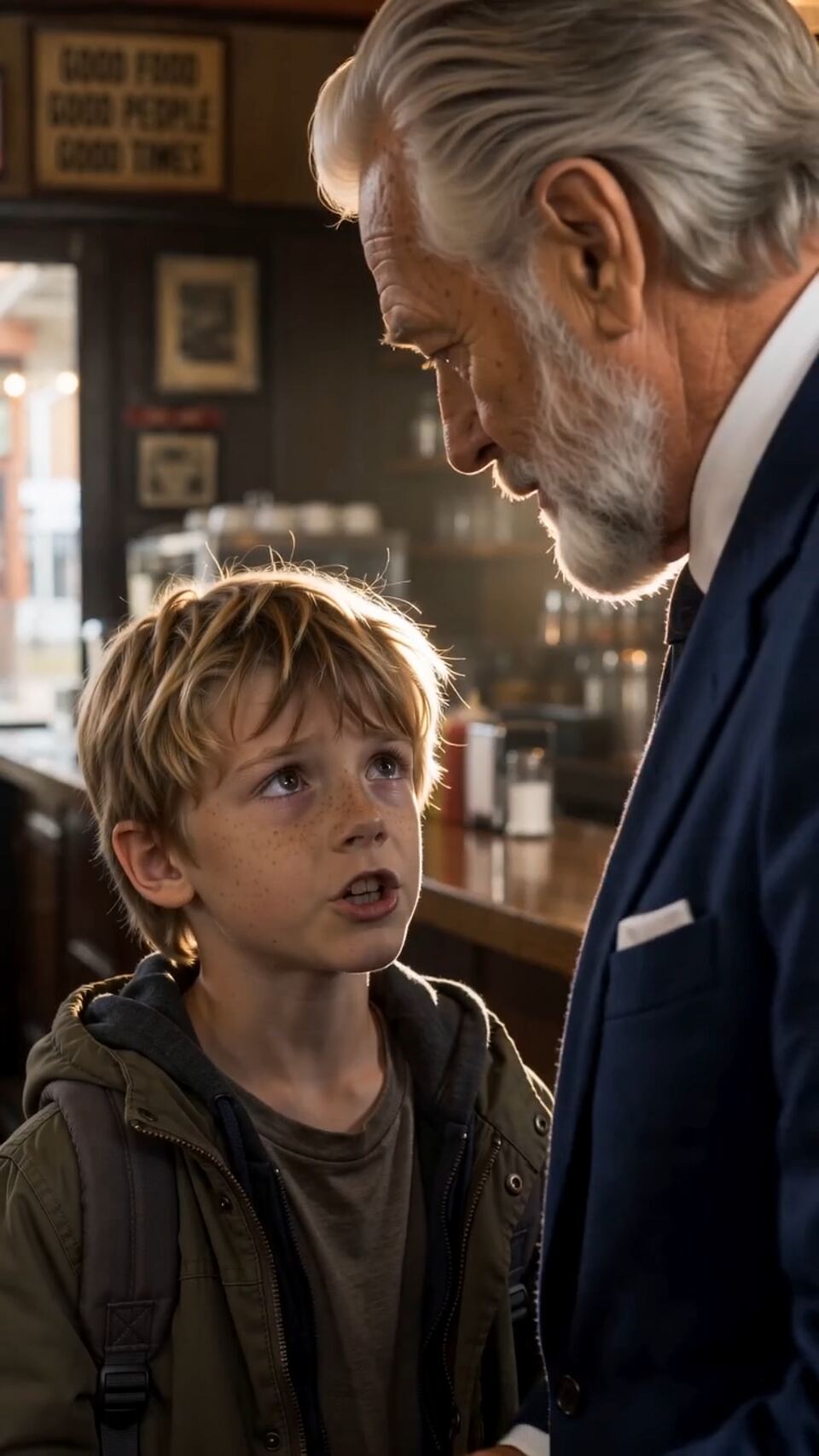
    An older man stepped inside. He paused at the sight of the boy.

    He walked straight to the counter and set down a ring of keys and the watch with a solid clink.

    “M-Mr. Harrison!” the waitress stammered. “I was just…”

    “Get the boy whatever he wants. On my tab.”

    The whole diner seemed to tighten around those words.

    The man turned to Eli, and his face softened in a way that made the boy stare.

    “Go on,” he said. “Take a seat, son.”

    Eli did not move. Not until he looked up and asked the question that changed the room.

    “Excuse me, sir… Do you know my mom, Sarah?”

    The man’s hand froze on the counter.

    “Sarah?” he whispered. “What is her last name?”

    Eli swallowed hard.

    “Harrison. Just like yours.”

    The man’s face went pale before he even answered. Eli saw it. The waitress saw it too, and for once she said nothing.

    The diner owner, Robert Harrison, guided Eli to a booth near the window. He ordered soup, grilled cheese, and a glass of milk. Eli ate carefully, like he was afraid the food might disappear if he moved too fast.

    “Where is your mother now?” Robert asked.

    Eli looked down at the table. “At the clinic. She was coughing blood. They said she had to wait.”

    Robert’s jaw tightened. “How long has she been sick?”

    “I don’t know. She tells me not to worry.”

    That sentence hit Robert harder than any accusation could have.

    He asked for the clinic’s name, and when Eli gave it, his eyes shut for a second. Not in confusion. In recognition.

    The waitress hovered nearby, suddenly unsure of herself. “Mr. Harrison, do you know this woman?”

    Robert did not answer her. He only asked Eli for Sarah’s full date of birth. Eli gave it after a pause, reciting it like a birthday song he had memorized in secret.

    Robert stood so fast his chair scraped the floor.

    “Who brought you here?” he asked.

    “My mom left me with Mrs. Vega at the laundromat. She said she’d be back after the test.”

    Robert reached for his keys, then stopped. His fingers tightened around them.

    At the counter sat the receipt printer’s fresh strip of paper. On top of it was a folded note, pushed there by the waitress when she thought no one was looking.

    Robert opened it.

    Inside was a clinic call-back number and one handwritten line:

    Do not let Sarah come here. She already asked about you once.

    Robert stared at the note, then at Eli.

    “Who wrote this?” he said.

    Eli shook his head. “I don’t know.”

    But the handwriting on the note looked painfully familiar.

    Robert drove Eli to the clinic himself. The boy sat silent in the passenger seat, holding the paper cup of milk with both hands.

    The clinic receptionist recognized Robert immediately. That should have comforted him. Instead, it made the room feel smaller.

    Sarah was not in the waiting area.

    A nurse finally led them to a back office and lowered her voice. “She’s being examined right now. She came in alone. She said she didn’t want her son scared.”

    Robert went still. “Her son?”

    The nurse nodded. “Eli, right?”

    That was when Robert understood this was not a chance meeting. Sarah had known his name. She had known where to find him. She had sent the boy into his diner because she had run out of options.

    When Sarah was brought out, she looked thinner than memory, but her eyes were the same. Sharp. Brave. Tired.

    She saw Robert and closed her eyes for one brief second.

    “I didn’t want this,” she said.

    Robert could barely speak. “You have my name. He has my face. And you were going to die before telling me?”

    Sarah flinched, but she did not look away. “I was going to tell you when I had proof.”

    “Proof of what?”

    She reached into her coat and pulled out an old photograph. It showed Robert years ago, standing outside the diner with a younger Sarah beside him. On the back was a date from more than seven years earlier.

    “I came back for you,” she said. “You never showed.”

    Robert stared at the photo. Memory returned in pieces. A storm. A train delay. A letter he never got because his sister said Sarah had moved on.

    His sister.

    The same one who had mailed the clinic note.

    Robert turned slowly. “You knew she was pregnant.”

    Sarah’s mouth trembled. “Your sister told me you were married.”

    The lie landed between them like broken glass.

    Eli, frightened by their silence, stepped forward and took Robert’s sleeve.

    “Please don’t send us away,” he whispered.

    Robert looked at the boy, then at Sarah, and for the first time in years he felt shame more than shock.

    But the nurse was already returning with a chart in her hand.

    “Mr. Harrison,” she said carefully, “we need you to see this. The test results are not what Sarah expected.”

    The chart was thin, but it changed everything.

    Sarah did not have the illness they feared. She had severe anemia, a lung infection, and exhaustion from months of working nights and skipping meals. Dangerous, yes. But treatable.

    The worst part was the handwritten note at the bottom of the file.

    Recommended follow-up for child: possible genetic screening.

    Robert looked up sharply. “Why would they test Eli?”

    Sarah pressed both hands to her face. “Because of my brother.”

    That was the part she had not said yet.

    Her younger brother had died at thirty-eight from a heart condition no one in the family had understood until too late. Sarah had feared Eli might carry the same risk. She had been trying to get him checked without worrying him.

    Robert sat down slowly.

    Everything he had imagined was wrong. She had not come looking for money or drama. She had been trying to protect the child.

    “I thought you left,” he said.

    “I thought you were married,” she answered. “By the time I learned the truth, I was already raising a son alone.”

    The sister who had lied was not there now, but her note sat on the table like a third voice in the room.

    Robert took it out and read it again.

    Do not let Sarah come here. She already asked about you once.

    Sarah laughed once, bitter and sad. “She said you wanted no part of us.”

    Robert stood. His hands were shaking now. “She kept us apart.”

    “Yes,” Sarah said. “But I also stayed silent. I was angry. I was proud. Then life kept moving.”

    Eli had been listening with the serious stillness children get when adults finally stop hiding.

    “So you’re my grandpa’s brother?” he asked Robert.

    Robert gave a broken smile. “Something like that.”

    “No,” Sarah said softly, looking at Robert. “If you want to be in his life, you need to decide that honestly. Not because of guilt.”

    That was the real test.

    Not the illness. Not the lie.

    Could Robert accept a child he had never known, without using shame or pity as his reason?

    He looked at Eli, then at Sarah, then at the clinic window where afternoon light was fading.

    “I want to know my grandson,” he said.

    Sarah’s head came up. “What did you say?”

    Robert answered before fear could stop him. “Eli is my grandson. And if you’ll let me, I want to be his family.”

    At that moment, the nurse returned with another envelope. It had been dropped off at the front desk an hour earlier.

    On the front, in Robert’s sister’s handwriting, were four words:

    Ask about Eli’s father.

    Robert opened the envelope with the care of a man handling old wounds.

    Inside was a letter from his sister, Margaret, written before her stroke last winter. Her hand shook across the page, but the words were clear.

    I lied because I was afraid. Sarah came to me after your accident and asked if you were married. I told her yes. I thought I was protecting you from pain. Then I found out I was protecting my own pride.

    The letter continued.

    Eli’s father was not a stranger. It was Daniel, Robert’s late brother, who had once loved Sarah too. Margaret had known all along. Daniel had died before the truth could be sorted out. Sarah had chosen silence rather than drag the family into grief and blame.

    Robert lowered the page and closed his eyes.

    Sarah had not stolen anything from him. She had survived what everyone else had hidden.

    He looked at Eli. “You have two families in this story,” he said. “And I have been missing one of them for seven years.”

    Eli’s mouth curved into a careful smile. “Can I still have soup?”

    That sound, so ordinary and alive, nearly undid him.

    In the weeks that followed, Robert paid for Sarah’s treatment without making it a debt. He visited the clinic every afternoon. He brought books for Eli, then a football, then a small toolbox because the boy liked fixing broken things.

    Sarah slowly regained her strength.

    Robert and Sarah did not become the people they had been. Too much had passed between them for that. But they found something gentler. Honest visits. Shared meals. Real apologies.

    Margaret never had the chance to explain herself in person. She died two months later. At her funeral, Robert placed her folded letter in her casket and forgave her out loud, even though the words hurt.

    One spring evening, Eli sat beside him on the diner bench and asked, “Are you going to stay this time?”

    Robert looked through the window at Sarah, laughing with the waitress who had once pushed away his coins.

    “Yes,” he said. “This time, I am staying.”

    Then Eli reached into his pocket and pulled out three worn coins.

    He placed them on the table between them.

    “I kept them,” he said. “To remember the day everything started.”

    Robert covered the boy’s hand with his own.

    Outside, the bell above the diner door rang again, and this time no one was being turned away.

  • ‘Đạo đức cán bộ không đo bằng lời hứa’

    Trưởng ban Tuyên giáo Trung ương Trịnh Văn Quyết nhấn mạnh đạo đức cán bộ không đo bằng lời hứa mà bằng cách sử dụng quyền lực được giao và sự hài lòng của người dân.

    Sáng 3/9, Bộ Chính trị, Ban Bí thư tổ chức hội nghị toàn quốc nghiên cứu, học tập, quán triệt và triển khai 5 nghị quyết, 1 chỉ thị của Bộ Chính trị.

    Trưởng ban Tuyên giáo Trung ương Trịnh Văn Quyết phổ biến những nội dung cốt lõi của Chỉ thị 07, ban hành ngày 13/7/2026, về đẩy mạnh học tập, thực hành tư tưởng, đạo đức, phương pháp, phong cách Hồ Chí Minh trong giai đoạn phát triển mới.

    Chỉ thị 07 thay thế Chỉ thị 05 năm 2016, chuyển trọng tâm từ “học tập và làm theo” sang “học tập và thực hành”, lấy sản phẩm, chất lượng, hiệu quả công việc và sự hài lòng của người dân, doanh nghiệp làm thước đo.

    Theo ông, sự thay đổi này xuất phát từ yêu cầu phát triển mới của đất nước và những hạn chế sau 10 năm thực hiện Chỉ thị 05. Việc học tập ở một số nơi vẫn mang tính hình thức, chưa tạo chuyển biến rõ rệt trong thực tế. “Học nhiều mà chuyển biến ít, đăng ký nhiều mà sản phẩm ít, sơ kết, tổng kết đều đặn nhưng một số việc khó của dân vẫn chưa được giải quyết”, ông nói.

    Trong khi đó, đất nước bước vào giai đoạn phát triển mới sau Đại hội Đảng 14, hướng tới mục tiêu tăng trưởng hai con số và thực hiện hai mục tiêu 100 năm. Tình hình thế giới, khu vực biến động nhanh, khó lường; mặt trận tư tưởng cũng mở rộng sang không gian mạng với nhiều phương thức chống phá mới.

    Vì vậy, Chỉ thị 07 yêu cầu khắc phục bệnh hình thức, tình trạng nói không đi đôi với làm, giáo điều, sáo rỗng. Việc học tập phải gắn với nhiệm vụ, trách nhiệm nêu gương và kết quả phục vụ nhân dân của từng cán bộ, đảng viên. “Chỉ thị 05 trả lời câu hỏi học gì và làm theo thế nào; Chỉ thị 07 trả lời câu hỏi thực hành để tạo ra kết quả gì và đo bằng cách nào”, ông Quyết phân tích.

    Tổng Bí thư, Chủ tịch nước Tô Lâm và lãnh đạo, nguyên lãnh đạo Đảng, Nhà nước dự hội nghị sáng 3/9. Ảnh: Giang Huy

    Tổng Bí thư, Chủ tịch nước Tô Lâm và lãnh đạo, nguyên lãnh đạo Đảng, Nhà nước dự hội nghị sáng 3/9. Ảnh: Giang Huy

    Theo Trưởng ban Tuyên giáo Trung ương, một điểm mới của Chỉ thị 07 là bổ sung nội dung học tập, thực hành “phương pháp Hồ Chí Minh” bên cạnh tư tưởng, đạo đức và phong cách. Đây không đơn thuần là thêm một thành tố mà nhằm tạo cầu nối từ nhận thức đến hành động, từ phẩm chất đạo đức đến hiệu quả công việc. Bốn nội dung phải được thực hiện đồng bộ, tránh chỉ học lý luận hoặc xem nhẹ bất kỳ thành tố nào. “Tư tưởng soi đường, đạo đức giữ gốc, phương pháp mở lối, phong cách nêu gương”, ông nói.

    Phương pháp Hồ Chí Minh trước hết thể hiện ở việc gắn lý luận với thực tiễn, tôn trọng quy luật khách quan, xác định đúng mục tiêu chiến lược và lựa chọn nhiệm vụ trọng tâm, khâu đột phá. Trong lãnh đạo, điều hành, các mục tiêu lớn phải được cụ thể hóa thành chỉ tiêu giao cho từng bộ, ngành, địa phương, có tiến độ và sản phẩm để kiểm tra, đánh giá, tránh chỉ dừng ở khẩu hiệu.

    Ông cho rằng nguyên tắc “6 rõ” gồm rõ người, rõ việc, rõ thời gian, rõ trách nhiệm, rõ sản phẩm, rõ thẩm quyền, cùng việc đẩy mạnh phân cấp, phân quyền gắn với nguồn lực và năng lực thực thi, là cách vận dụng phương pháp làm việc Hồ Chí Minh trong điều kiện hiện nay.

    Phong cách Hồ Chí Minh còn được thể hiện qua tư duy độc lập, tự chủ, không rập khuôn; cách diễn đạt súc tích, trong sáng, dễ hiểu, dễ nhớ, dễ làm; tác phong khoa học, sâu sát thực tiễn, dựa vào nhân dân; lối ứng xử chân thành, nhân văn, khiêm tốn và giản dị.

    Các chuẩn mực này phải được cụ thể hóa thành hành động phù hợp với chức trách, nhiệm vụ của mỗi cán bộ, đảng viên. Vị trí càng cao, tác động của quyết định càng lớn thì yêu cầu tự học, tự rèn, tự soi, tự sửa càng cao. “Đạo đức không đo bằng lời hứa, mà bằng cách người cán bộ sử dụng quyền lực được giao và sự hài lòng của người dân”, ông Quyết nói.

    Trưởng ban Tuyên giáo Trung ương Trịnh Văn Quyết truyền đạt chuyên đề sáng 3/9. Ảnh: Giang Huy

    Trưởng ban Tuyên giáo Trung ương Trịnh Văn Quyết truyền đạt chuyên đề sáng 3/9. Ảnh: Giang Huy

    Chức vụ càng cao, trách nhiệm nêu gương càng lớn

    Chỉ thị 07 xác định nêu gương là phương thức lãnh đạo quan trọng, trước hết đối với người đứng đầu và cán bộ cấp cao. Trách nhiệm này phải được cụ thể hóa thành tiêu chí đánh giá trong công tác cán bộ, tập trung vào bản lĩnh chính trị, tư duy đổi mới, năng lực tổ chức chức thực hiện, đạo đức công vụ và tinh thần phục vụ nhân dân.

    Theo ông, chức vụ càng cao, yêu cầu nêu gương càng phải cụ thể, công khai và chịu sự giám sát của tổ chức, nhân dân. Việc thực hành tư tưởng Hồ Chí Minh cũng phải gắn với khuyến khích, bảo vệ cán bộ dám nghĩ, dám làm, dám chịu trách nhiệm vì lợi ích chung; đồng thời kịp thời thay thế người né tránh, đùn đẩy, thiếu bản lĩnh đổi mới, không dám quyết và không dám chịu trách nhiệm.

    “Học tập, thực hành tư tưởng Hồ Chí Minh mà cán bộ vẫn không dám quyết, không dám làm thì việc học ấy chưa đạt yêu cầu”, ông nói.

    Công tác kiểm tra, giám sát cũng chuyển từ xem xét kế hoạch, nội dung đăng ký sang đánh giá kết quả thực hiện nhiệm vụ, hiệu quả giải quyết những vấn đề nổi cộm, bức xúc và chuyển biến thực tế trong đạo đức công vụ.

    Cùng với sự giám sát của tổ chức đảng, Chỉ thị yêu cầu phát huy vai trò của Mặt trận Tổ quốc Việt Nam, các tổ chức chính trị – xã hội, báo chí và nhân dân; xử lý nghiêm tổ chức, cán bộ, đảng viên vi phạm hoặc báo cáo không đúng thực chất.

    Giai đoạn 2026-2030, việc học tập, thực hành tư tưởng, đạo đức, phương pháp, phong cách Hồ Chí Minh sẽ gắn với xây dựng Đảng và hệ thống chính trị trong sạch, vững mạnh; thúc đẩy phát triển kinh tế – xã hội, đổi mới sáng tạo; bảo đảm quốc phòng, an ninh và giữ vững môi trường hòa bình, ổn định.

    Các giải pháp hướng tới tạo chuyển biến thực chất trong trách nhiệm, phương pháp làm việc và hiệu quả phục vụ nhân dân của mỗi cán bộ, đảng viên.

  • Người dân đô thị đặc biệt được hưởng thêm chính sách gì?

    Người dân đô thị đặc biệt được hưởng thêm chính sách gì?

    Người dân có thể được hỗ trợ khoản khám chữa bệnh ngoài bảo hiểm y tế, học phí ngành trọng điểm, học bổng tài năng và ưu tiên tái định cư tại chỗ khi cải tạo đô thị.

    Luật Phát triển đô thị, được Quốc hội thông qua tại kỳ họp không thường lệ và có hiệu lực từ ngày 1/10/2026, trao cho các đô thị đặc biệt thêm quyền ban hành chính sách riêng về nhà ở, giáo dục, y tế và phúc lợi xã hội.

    Điểm mới đáng chú ý là địa phương có thể mở rộng đối tượng, nâng mức hỗ trợ cao hơn chính sách chung, phù hợp khả năng ngân sách và nhu cầu của người dân. Các chính sách tập trung vào những vấn đề thiết thực như chỗ ở sau giải phóng mặt bằng, chi phí khám chữa bệnh, học phí, chăm sóc người cao tuổi và an toàn thực phẩm.

    Các chính sách tại Luật Phát triển đô thị được thiết kế áp dụng cho TP HCM và các thành phố được công nhận là đô thị đặc biệt. Hiện Hà Nội và TP HCM là hai đô thị đặc biệt của cả nước, song Hà Nội thực hiện theo Luật Thủ đô. Các đô thị khi được công nhận là đặc biệt trong tương lai sẽ được áp dụng cơ chế này.

    Ưu tiên người dân ở lại nơi cải tạo

    Khi cải tạo, chỉnh trang hoặc tái thiết khu đô thị cũ, người dân được ưu tiên tái định cư tại chỗ. Nơi ở mới phải có điều kiện sống ít nhất bằng hoặc tốt hơn nơi ở cũ, đồng thời bảo đảm hạ tầng, tiện ích và khả năng duy trì sinh kế.

    Chính sách hỗ trợ không chỉ hướng đến người có nhà, đất bị thu hồi. Người thuê nhà, lao động phi chính thức, hộ kinh doanh nhỏ, người cao tuổi, người khuyết tật và những người có sinh kế gắn với địa bàn cũ cũng được tính đến khi xây dựng phương án cải tạo.

    Điều này nhằm hạn chế tình trạng người dân có chỗ ở mới nhưng mất việc làm, nguồn thu hoặc phải chuyển đến nơi xa trường học, bệnh viện và các dịch vụ quen thuộc.

    Địa phương được chủ động phát triển nhà ở xã hội, nhà tái định cư, nhà lưu trú và nhà cho thuê theo nhu cầu thực tế. Các loại hình nhà ở có thể được chuyển đổi linh hoạt để tránh tình trạng nơi thừa, nơi thiếu.

    Người bị thu hồi nhà, đất ở nếu được bố trí tái định cư bằng nhà ở xã hội sẽ có đầy đủ quyền sở hữu như với nhà ở thương mại sau khi thanh toán đủ tiền mua nhà. Như vậy, căn nhà không chỉ là chỗ ở tạm thời mà trở thành tài sản thuộc quyền sở hữu đầy đủ của người dân.

    Đô thị đặc biệt cũng có thể ban hành cơ chế ưu đãi để thu hút đầu tư, phát triển và quản lý nhà ở xã hội, nhà công vụ, nhà tái định cư, nhà lưu trú, nhà cho thuê cùng những loại hình phù hợp với từng nhóm dân cư.

    Học bổng, học phí theo nhu cầu từng thành phố

    Trong lĩnh vực giáo dục, đô thị đặc biệt có thể xây dựng chính sách học bổng và ưu đãi riêng cho người có năng khiếu, tài năng hoặc thành tích đặc biệt xuất sắc.

    Người học các ngành, nghề trọng điểm có thể được thành phố hỗ trợ học phí. Danh mục ngành nghề và mức hỗ trợ sẽ do địa phương lựa chọn dựa trên nhu cầu nhân lực, thay vì áp dụng chung cho mọi nơi.

    Người học, nhà giáo và cán bộ quản lý giáo dục còn có thể được hỗ trợ đi học tập, nghiên cứu hoặc thỉnh giảng trong và ngoài nước ở những lĩnh vực thành phố cần ưu tiên phát triển.

    Các trường học cũng có thêm điều kiện đầu tư cơ sở vật chất, trang thiết bị và xây dựng mô hình nhiều cấp học, trường chất lượng cao, trường tiên tiến hoặc cơ sở liên kết giáo dục. Một số trường cao đẳng trọng điểm có thể được đầu tư để đạt chuẩn khu vực, quốc tế.

    Thành phố được đặt hàng các trường đại học, cơ sở giáo dục nghề nghiệp, viện nghiên cứu đào tạo nhân lực cho những ngành đang thiếu. Cơ chế này giúp chính sách học bổng, học phí và đào tạo gắn trực tiếp với cơ hội việc làm, nhu cầu phát triển của từng đô thị.

    Có thể hỗ trợ chi phí ngoài bảo hiểm y tế

    Người dân tại đô thị đặc biệt có thể được hỗ trợ chi phí phòng bệnh và một số khoản khám, chữa bệnh không thuộc phạm vi thanh toán của bảo hiểm y tế. Mức hỗ trợ, đối tượng và loại chi phí cụ thể sẽ do từng thành phố quyết định.

    Đây là phần người dân được hưởng thêm ngoài chính sách bảo hiểm y tế hiện hành, giúp giảm các khoản phải tự chi trả khi khám chữa bệnh. Thành phố cũng có thể đầu tư hệ thống cấp cứu ngoại viện, xe vận chuyển người bệnh và hỗ trợ hoạt động của mạng lưới y tế các cấp.

    Người có công với cách mạng trên địa bàn có thể được hưởng chế độ ưu đãi riêng ngoài chính sách chung. Các chương trình an sinh, phúc lợi xã hội cũng được phép mở rộng đối tượng và nâng mức thụ hưởng, tùy điều kiện của từng địa phương.

    Người cao tuổi, người khuyết tật và nhóm cần trợ giúp sẽ có thêm cơ hội tiếp cận các cơ sở chăm sóc, nuôi dưỡng và dịch vụ xã hội. Thành phố được đầu tư phát triển hệ thống chăm sóc người cao tuổi, cơ sở trợ giúp xã hội theo nhu cầu dân số thực tế.

    Như vậy, thay vì chỉ thực hiện mức hỗ trợ chung trên toàn quốc, đô thị đặc biệt có thể bổ sung chính sách cho nhóm dân cư có nhu cầu cao hoặc đang gặp khó khăn đặc thù.

    Kiểm soát thực phẩm từ nơi sản xuất đến thành phố

    Người dân cũng được bảo vệ tốt hơn trước nguy cơ mất an toàn thực phẩm. Thành phố có thể đầu tư hạ tầng, xây dựng cơ sở dữ liệu để theo dõi nguyên liệu và sản phẩm trong toàn bộ quá trình sản xuất, vận chuyển, phân phối.

    Thông tin về thực phẩm sản xuất tại địa phương hoặc đưa từ nơi khác vào thành phố phải được cung cấp, chia sẻ để phục vụ truy xuất nguồn gốc. Cơ quan chức năng được xây dựng quy trình giám sát, cảnh báo và phản ứng nhanh khi phát hiện nguy cơ.

    Cơ chế này giúp kiểm soát thực phẩm theo chuỗi, thay vì chủ yếu kiểm tra tại điểm bán. Khi xảy ra sự cố, thành phố có thể sớm xác định nguồn hàng, phạm vi ảnh hưởng, thu hồi sản phẩm và cảnh báo người tiêu dùng.

  • Hello world!

    Welcome to WordPress. This is your first post. Edit or delete it, then start writing!