Blog

  • The Woman They Tried To Kill

    The Woman They Tried To Kill

    “Ah!”

    The scream split the air so sharply that everyone in the Ashcroft house turned too late.

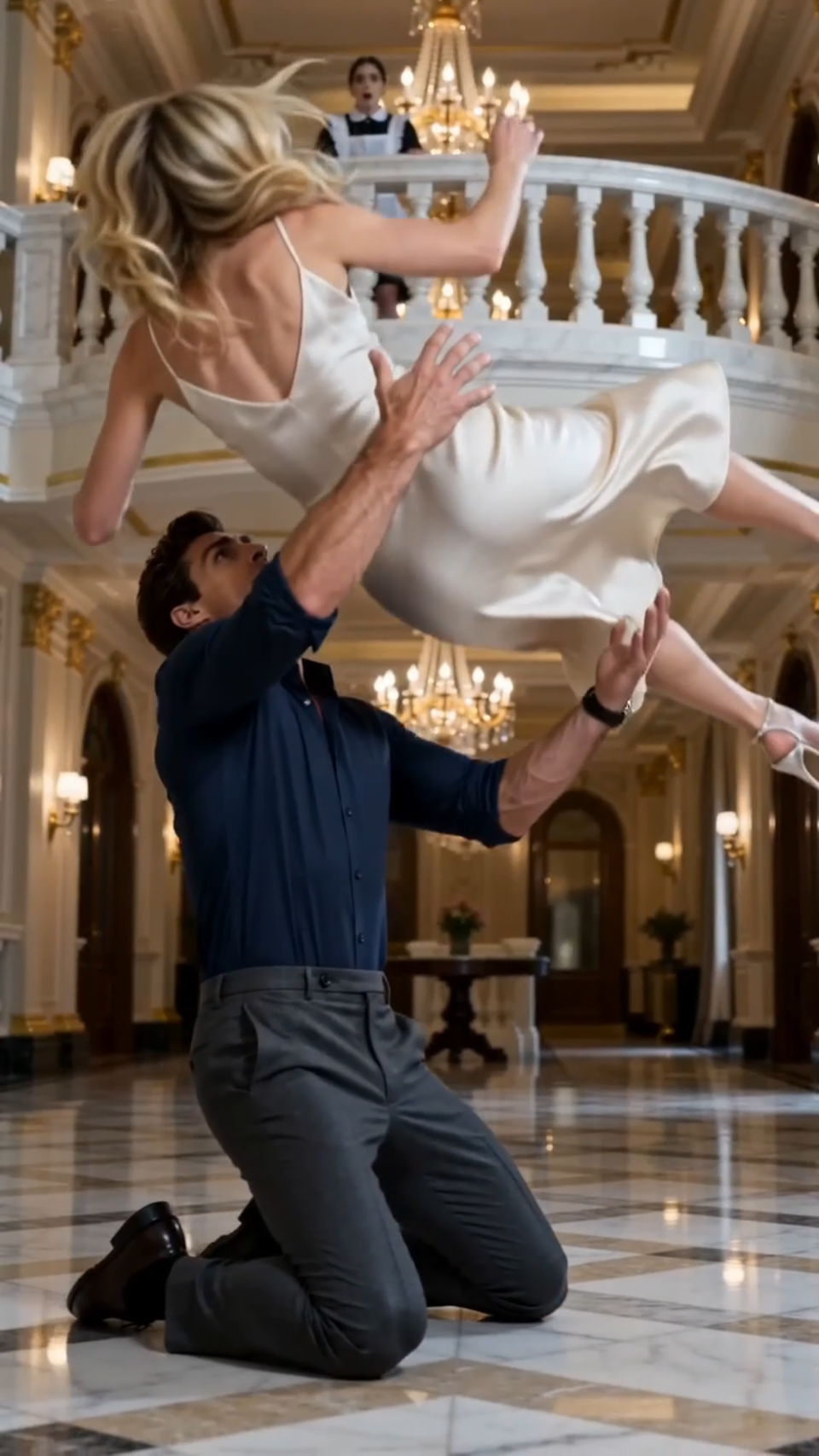
    Eliza Harrow’s pale fingers slipped from the cold white marble banister. For one second, she hung between the second-floor corridor and the polished hall below, her eyes wide, her blond hair loose against her face.

    Then she fell.

    In the foyer, Marta, the housekeeper, clapped both hands over her mouth.

    “Oh my God!”

    Nathan Ashcroft was already moving.

    He hit the final steps so fast he nearly lost his footing, then dropped to his knees and slid across the inlaid marble floor, arms open.

    Eliza landed in them with a heavy force that knocked the breath from both of them.

    For a moment, no one spoke.

    She lay trembling in his arms, chest rising in quick, painful breaths. Tears gathered in her eyes as she stared up at him, as if she still couldn’t believe she was alive.

    “You… saved me.”

    Nathan held her tighter. Relief crossed his face first. Then something darker replaced it.

    He lifted his head toward the second-floor railing.

    “Who pushed her?”

    Above them stood three people: his mother, Vivian Ashcroft, one hand pressed to her pearls; his younger brother, Daniel, pale and frozen; and Marta, who had somehow reached the stairs again, shaking so badly she had to grip the black-and-gold iron rail.

    “No one pushed her,” Vivian said too quickly. “She must have tripped.”

    Eliza opened her mouth, but no words came.

    Nathan’s jaw tightened. “She didn’t trip.”

    Then Marta made a broken sound from the stairs.

    “I saw a hand,” she whispered.

    Every face turned toward her.

    And from the second-floor corridor, a man’s voice none of them expected said, “Then perhaps you should tell them whose hand it was.”

    Nathan went still.

    The speaker was Charles Harrow, Eliza’s estranged father, a man the family had been told was dead for twelve years.

    “She didn’t trip.”

    No one moved for several seconds.

    Charles Harrow stood beneath the brass wall lamp at the end of the upstairs corridor, one hand resting on his cane, the other on the cream paneling as if the effort of standing there cost him something. He was thinner than Eliza remembered from childhood. Older. Gray at the temples. Very much alive.

    Vivian found her voice first. “This is impossible.”

    “It may be inconvenient,” Charles said, “but it is not impossible.”

    Nathan carried Eliza to the green drawing room just off the foyer and set her carefully on the long sofa. Marta brought a blanket, though the house was warm. Eliza clutched it to her chest with shaking hands. Her left wrist was reddening. Finger marks. Someone had grabbed her.

    Nathan crouched beside her. “Did you see who it was?”

    She closed her eyes. The memory came in pieces. Dinner music from the next room. The crystal chandelier reflected in the marble. A voice behind her. A sharp pull. Then empty air.

    “I heard someone say my name,” she whispered. “I turned. Then I felt a hand.”

    “Whose voice?” Nathan asked.

    Before she could answer, Vivian stepped in. “This has gone far enough. Eliza has had a shock. She shouldn’t be questioned.”

    Nathan rose slowly. “Funny. You weren’t worried about her comfort a minute ago.”

    The room tightened around those words. Vivian looked away first.

    Charles entered last, leaning on his cane. Eliza stared at him as though she could force him back into the grave where memory had placed him. “Why are you here?”

    His face softened. “Because your mother asked me to stay away. And because I was a coward long enough.”

    Eliza’s breath caught. Her mother had died believing Charles abandoned them.

    Nathan looked from one to the other. “You knew him?”

    Charles answered before Vivian could. “I know all of you. Better than you think.”

    Then he reached into his coat and placed a sealed envelope on the table.

    “Your mother wrote this the week before she died,” he said to Eliza. “She wanted you to read it if anything ever happened in this house.”

    On the front, in her mother’s unmistakable handwriting, were four words:

    Don’t trust Vivian Ashcroft.

    “I saw a hand.”

    Nathan locked the drawing room door.

    For the first time that night, Eliza felt safer with a door shut than open.

    Her hands shook as she broke the seal. Marta stood near the fireplace, silent and watchful. Charles remained by the window, not daring to come too close. Nathan stayed beside the sofa, close enough to catch her again if the room tipped.

    The letter was short.

    Eliza, if you are reading this, I have failed to protect you from an old mistake. Charles did not leave us by choice. Vivian paid his debts and forced him out of our lives. She said she was saving her family name. I stayed silent because I was afraid of what she could do to us both. If Nathan is the man I believe he is, trust him. But be careful. Daniel knows more than he says.

    Eliza read it twice.

    Then a third time.

    Nathan exhaled hard. “My mother kept your father away from you?”

    Vivian, standing outside the door now and pounding once with the flat of her hand, called out, “Nathan, open this door.”

    He ignored her.

    Marta’s voice came quietly. “Miss Eliza… on the landing, before you fell, Mr. Daniel was there.”

    Eliza looked up. “Was he the one who grabbed me?”

    Marta swallowed. “I saw him reach for you. But I cannot swear if he pushed or tried to stop you.”

    That changed everything.

    Nathan opened the door before Vivian could pound again. “Where is Daniel?”

    No one knew.

    They found him in the library, standing beside the drinks cabinet with a glass he hadn’t touched. His face was white.

    “I didn’t push her,” he said before anyone asked.

    “Then why run?” Nathan demanded.

    Daniel looked not at his brother, but at Eliza. “Because I knew no one would believe me.”

    Eliza stepped forward, the blanket still around her shoulders like armor. “Then tell me what happened.”

    Daniel’s throat worked. “I followed Mother upstairs because I heard her threatening you. I got there just as someone came out of the side hall. Mother grabbed your wrist. I reached for you. Then the light went out for one second and you were over the rail.”

    Nathan turned sharply. “Someone else was there?”

    Daniel nodded.

    “And I know who,” he said.

    But before he could speak, all the lights in the library died.

    From the dark hallway came the shattering sound of glass, and Marta screamed.

    “I didn’t push her.”

    The emergency lights came on seconds later, dim and yellow.

    Marta stood in the doorway, one hand to her throat. At her feet lay a smashed picture frame from the hall console. The glass glittered across the wood floor.

    Nathan crossed the room first. “Are you hurt?”

    She shook her head. “No. But someone ran past me.”

    Charles bent with difficulty and picked up the fallen photograph. It was an old charity gala picture. Vivian in silver. Her late husband beside her. Nathan and Daniel younger, stiff in formal jackets.

    And in the background, half turned away from the camera, was a man with sandy hair and a driver’s badge pinned to his lapel.

    Marta stared at it. “That man.”

    Nathan took the frame. “Our old chauffeur? Peter?”

    “Yes,” Marta said. “He was on the second-floor landing tonight.”

    Daniel’s eyes widened. “Mother told us Peter moved to Scotland years ago.”

    Vivian had appeared in the doorway again, composed at last, though her voice came too bright. “This is absurd. Peter has nothing to do with this family.”

    Charles looked at her with open disgust. “He has everything to do with it.”

    The room held its breath.

    Charles gripped his cane. “Peter was the one who carried messages when Vivian forced me out. And later, when she discovered her husband had used family accounts to pay gambling debts, Peter helped her hide the records. He has been cleaning up this family’s scandals for twenty years.”

    Vivian’s face changed then. Not guilt exactly. Fear.

    Eliza saw it and understood. “He came back because of the letter.”

    Vivian said nothing.

    Nathan stepped closer to his mother. “Did you invite him here tonight?”

    “I asked him to collect something from the upstairs study,” she said.

    “What thing?” Nathan asked.

    Vivian’s silence answered him.

    Charles lifted his chin toward the hall. “The second letter.”

    Eliza turned. “There was another one?”

    “Your mother wrote two,” Charles said. “One for you. One naming what Vivian did.”

    Marta whispered, “If Peter took it, he may destroy it.”

    Nathan was already moving toward the stairs.

    Eliza caught his sleeve. “No. He came because of me. I am done being carried out of danger.”

    For the first time since the fall, her voice did not shake.

    Together they went upstairs to the study.

    The desk drawer was open.

    And on the leather blotter lay a single cream silk thread, torn from Eliza’s dress, beside an empty envelope slit cleanly with a knife.

    “I am done being carried out of danger.”

    Peter did not get far.

    They found him in the service corridor behind the old nursery, cornered not by Nathan, but by Marta.

    The housekeeper stood in her black-and-white uniform with a brass fire poker in both hands, shaking but steady enough. Peter, broad-shouldered and aging badly, held a folded letter and a pocketknife.

    “Put it down,” Marta said.

    He gave a low laugh. “You always were invisible in this house, Marta.”

    “That is why I see everything,” she replied.

    Nathan stepped in front of Eliza. Daniel came up behind Peter from the back stair. Charles, breathless but determined, reached the corridor wall and leaned there.

    Vivian arrived last.

    It was her face Peter looked for.

    “Tell them,” he snapped. “Tell them why you brought me back.”

    Vivian’s shoulders seemed to drop twenty years in one second. “Because if that letter came out, my sons would know what I did.”

    Eliza held out her hand. “Give it to me.”

    Peter hesitated. Then Daniel lunged, knocking the knife away. Marta struck it farther down the corridor with the poker. Nathan seized Peter and pinned him to the wall.

    Eliza unfolded the letter.

    Her mother’s words were plain. Vivian had forced Charles away, yes. But the deeper truth cut harder: years ago, Vivian’s husband had caused a crash while drunk. Eliza’s mother had been in the other car. Her illness afterward, the one that slowly took her life, began that night. Vivian buried the case to protect her family name. Charles had wanted to fight. Vivian paid his debts and exiled him.

    Eliza lowered the paper. Her grief was old, but now it had shape.

    Nathan looked at his mother as if seeing her clearly for the first time. “You let us grow up in a lie.”

    Vivian began to cry. “I told myself I was protecting my family.”

    “You were protecting yourself,” Daniel said.

    Police cars came before midnight. Peter was arrested for assault. Vivian went with them for questioning.

    At dawn, the house was quiet.

    Eliza stood by the same white marble banister where her hand had slipped. Nathan joined her, not touching, just near.

    “You don’t have to stay here,” he said.

    She looked at the morning light on the railing. “I won’t.”

    Then she turned to Charles. He stood a few feet away, uncertain as a stranger.

    “We cannot get back what was stolen,” she said. “But if you want to try being my father now, don’t disappear again.”

    His eyes filled.

    Nathan let out a breath that sounded almost like relief.

    As Eliza walked toward the staircase, Marta called after her, holding up the restored photograph from the broken frame.

    “There is something else,” she said.

    On the back, in fresh handwriting, someone had written a date for next week and three words:

    Tell Rose everything.

    Eliza frowned. “Who’s Rose?”

    No one answered.

    Yet.
  • The Stranger Who Bought Every Dish

    The Stranger Who Bought Every Dish

    “I’m hungry…”

    The little girl’s voice was so soft it almost disappeared beneath the low piano music drifting through the restaurant.

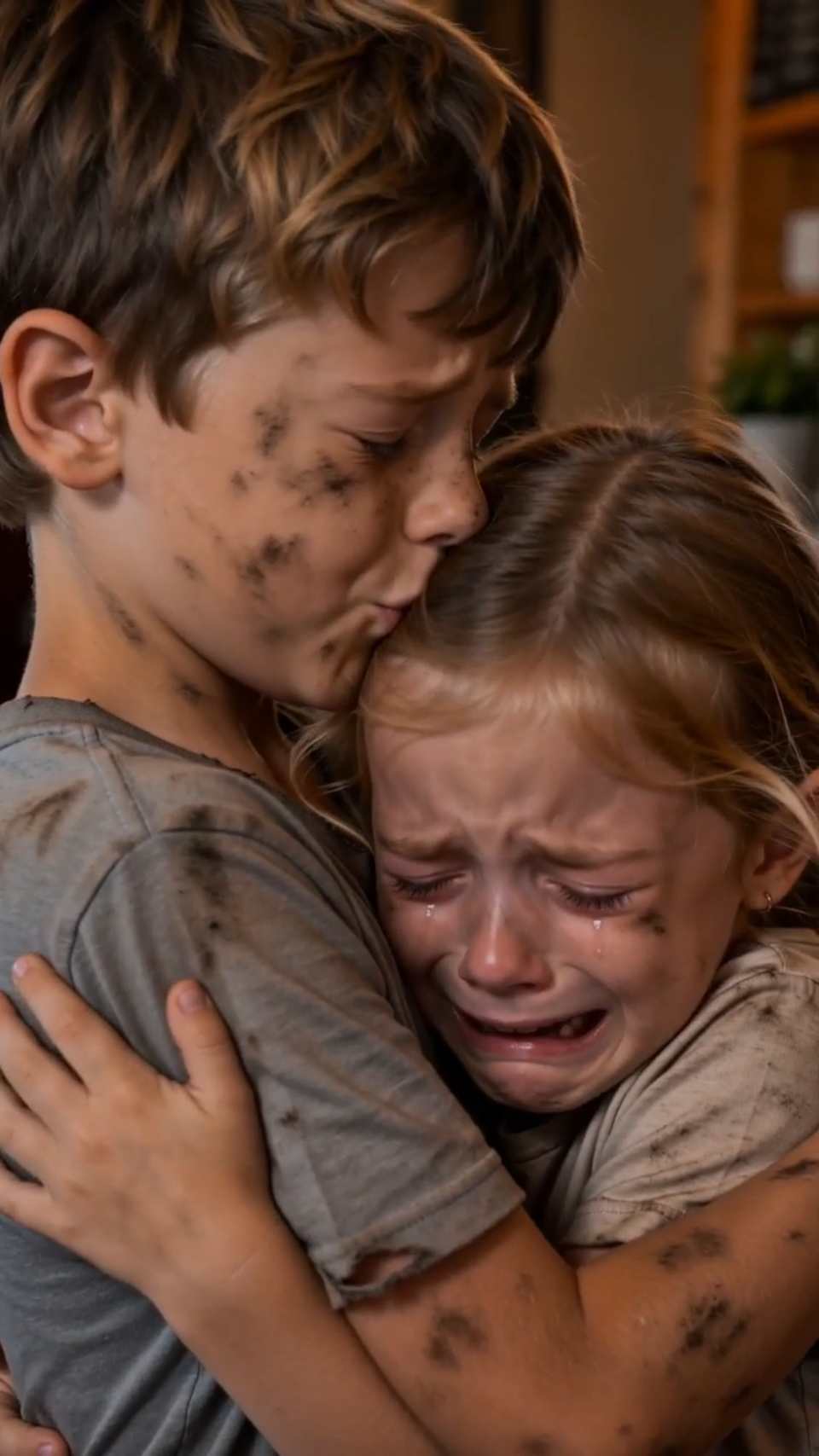
    Ethan tightened his arms around his sister. Daisy’s face was wet with tears, and dirt smudged both her cheeks. He kissed the top of her head the way their mother used to, though he was only ten and still didn’t know how to make fear sound less sharp.

    He looked up at the clerk behind the front counter.

    “Is there any leftover food from today?” he asked, careful to be polite. “We don’t have much money…”

    The woman didn’t even lift her eyes at first. She kept wiping the counter in slow, hard strokes.

    “We don’t give away food here. Move along.”

    Daisy let out a broken sob and buried her face in Ethan’s chest. He felt every eye in the room and wished he could disappear, but hunger was stronger than shame. He stayed where he was.

    That was when a chair scraped behind them.

    A man in a dark suit rose from a table near the window. He looked to be in his late sixties, straight-backed, silver-haired, with the kind of face that had learned both authority and sorrow. He walked over and placed one hand gently on Ethan’s shoulder.

    “Bring out your best dishes,” he told the clerk. “I’m paying for them.”

    She blinked. “Sir? Are you sure?”

    “Everything.”

    The whole room seemed to change shape after that. The clerk hurried away. Daisy slowly lifted her head. Ethan stared at the man, trying to understand why a stranger would do such a thing.

    Then the man crouched to their level.

    “Come with me, kids,” he said softly.

    Ethan’s hand moved on instinct to the crumpled photograph in his pocket. It was old, yellowed, almost torn at the edges. He pulled it out and held it up with shaking fingers.

    “Thank you, sir… You look familiar. Is this you?”

    The man’s face drained of color when he saw the younger version of himself holding a baby.

    And then he whispered one name.

    “Clara?”

    The dishes arrived faster than Ethan thought possible.

    Soup. Bread. Roast chicken. Mashed potatoes. Even a slice of apple pie Daisy stared at as if it belonged to another world.

    The old man watched them eat, but he barely touched his own plate. His eyes stayed fixed on the photograph trembling in Ethan’s hand.

    “Where did you get that?” he asked at last.

    Ethan swallowed hard. “It was my mom’s.”

    The man nodded once, though his face had gone tight around the mouth. “What was her full name?”

    “Clara Bennett.”

    For a moment, the man closed his eyes. When he opened them again, they shone with something too deep for Ethan to name.

    “My name is Walter Bennett,” he said quietly. “Clara was my daughter.”

    Daisy stopped chewing. Ethan just stared.

    That couldn’t be right.

    Their mother had never spoken about grandparents. Only once, when she was sick and half-asleep, she had clutched Ethan’s wrist and whispered, Keep Daisy safe. And if things get bad, find the man in the picture. He’ll know your eyes.

    Ethan had thought fever made people say strange things.

    Walter asked no questions about money, or where they had slept, or why they looked as if no one had washed their faces in days. He simply listened as Ethan, in broken pieces, explained.

    Their mother had died three months earlier.

    Their landlord had thrown them out after a neighbor reported the children were alone.

    Since then, they had been moving from shelters to bus stations, staying ahead of people who wanted to separate them.

    At that, Walter’s hand clenched around his napkin.

    “Who wanted to separate you?” he asked.

    Ethan hesitated.

    “A woman from social services came with our aunt. Aunt Lisa said Daisy would be ‘easy to place,’ but nobody wanted a ten-year-old boy.”

    Walter went completely still.

    Then he said, very carefully, “Clara didn’t have a sister.”

    Ethan’s spoon slipped from his hand.

    On the back of the photograph, under old water stains, Walter asked to see what was written.

    There, in faded ink, were six words Ethan had never noticed before:

    Not Lisa. Trust no one she sends.

    Walter took them to a small brick house across town, not a mansion, not some grand place from a movie, but a warm home with books on every table and a blue quilt folded over the couch. Daisy fell asleep there within minutes, still holding a dinner roll in her hand.

    Ethan did not sleep.

    He sat at the kitchen table while Walter made tea neither of them drank.

    “Tell me everything about this Aunt Lisa,” Walter said.

    Ethan told him what he knew. Lisa had appeared at the hospital when their mother got worse. She cried loudly, called Clara “my poor sister,” and told nurses she would handle the children if anything happened. Later, she came to the apartment with forms, saying she was trying to help.

    But Clara had sent her away once. Ethan remembered that now.

    His mother had been weak, but fierce. “You leave my children alone,” she had said.

    Walter pressed his fingers to his forehead. “Lisa Mercer worked with Clara at a care home years ago. They were never related.”

    “Then why would she lie?” Ethan asked.

    Walter looked toward the living room, where Daisy slept beneath the quilt.

    “Because she knew something,” he said.

    The next morning, Walter took Ethan with him to the county records office while a kind neighbor stayed with Daisy. Walter moved with purpose now, like a man waking from a long punishment. They found Clara’s death certificate. Then hospital paperwork. Then emergency contact records.

    Lisa’s name was there.

    So was a note added six weeks before Clara died: Childrens’ grandfather notified. No response.

    Walter stared at it as if it were written in fire.

    “I never got a call.”

    A clerk searched deeper and found a scanned message log. The listed phone number for Walter had one wrong digit.

    Not an accident. A change.

    Someone had made sure Clara’s father would never be reached.

    As they were leaving, Walter’s phone rang. He answered, listened, and his expression hardened.

    “It was my neighbor,” he said. “A woman came to my house asking if the children were with me.”

    “Lisa?” Ethan asked.

    Walter nodded.

    Then he added the part that made Ethan’s stomach turn.

    “She wasn’t alone. She brought a police officer.”

    Walter did not run.

    That surprised Ethan more than anything.

    Instead, he drove straight to the old care home where Clara had worked before illness took over her life. The director there, a retired nurse named Marilyn, remembered both Clara and Lisa too well.

    Marilyn brought out a file box from storage.

    “Clara told me if anything happened to her, this might matter one day,” she said.

    Inside were letters, pay stubs, and one sealed envelope with Walter’s name on it. His hands shook as he opened it.

    Clara’s handwriting was thin but steady.

    Dad, If you’re reading this, then Lisa finally did what I feared. I should have called you years ago, but I was ashamed. After Daniel died, I couldn’t manage the medical bills and the rent. Lisa offered help, then started stealing from residents at the care home. When I threatened to report her, she told me she would say I was an unfit mother and make sure I lost my children. I reported her anyway. She was dismissed, but not charged. After my diagnosis, she came back. She wanted access to my records and wanted me to sign temporary guardianship papers. I refused. If she reaches for Ethan and Daisy, please don’t let her have them. She doesn’t want children. She wants the monthly survivor benefits Daniel left for them.

    Walter lowered the letter slowly. His eyes were wet, but his voice was clear.

    “My daughter died trying to protect them.”

    Marilyn handed him one more thing: a voicemail recording Clara had left at the office after hours when she was too weak to come in. In it, Clara named Lisa directly and said she feared her.

    Now they had proof.

    But proof had to reach the right person.

    Back at the house, the police car was already parked outside. Daisy stood in the doorway with Walter’s neighbor, scared but trying not to cry. Lisa, well-dressed and outraged, turned the moment Walter stepped out of the car.

    “There they are,” she snapped. “Those children belong with family.”

    Walter kept walking until he stood between Lisa and the children.

    Then he held up Clara’s letter.

    And the officer asked, “Ma’am, would you like to explain this before I listen to the recording?”

    Lisa tried.

    She said Clara had been confused from medication. She said Walter was an old man making reckless decisions. She said she had only wanted to help.

    But the letter was detailed. The hospital records showed altered contact information. The voicemail carried Clara’s frightened voice. And when the officer called in a supervisor, the questions became sharper.

    By evening, Lisa was the one being asked to come downtown.

    Daisy cried only once, when the police car pulled away. Not because she loved Lisa. Because children cry when adults fight, even when they understand almost nothing.

    Walter knelt beside her and opened his arms. She went to him without hesitation.

    The next weeks were full of paperwork, court visits, home inspections, and long talks. Walter did not hide from any of it. He told the judge the truth: he had failed Clara once by letting pride and an old argument keep them apart. He would not fail her children now.

    Ethan told the judge the truth too.

    “We stayed together because Mom asked me to keep Daisy safe,” he said. “But I think… I think we can be safe here.”

    That mattered.

    So did the photograph.

    Walter framed it and placed it on the mantel: his younger self, baby Ethan in his arms, and all the lost years between them. Beside it, he put a newer picture taken in his kitchen. Daisy smiling with pie on her face. Ethan standing straighter than before. Walter in the middle, one hand on each shoulder.

    Months later, on a cold Sunday afternoon, Walter took them back to the restaurant.

    The same clerk stood at the counter. This time she recognized them, and shame flooded her face before she could speak.

    Walter said nothing cruel. Ethan didn’t either.

    They simply sat down together at a table near the window.

    There was soup, bread, roast chicken, mashed potatoes, and apple pie.

    Enough food.

    Enough room.

    Enough love, at last.

    Daisy leaned against Walter and whispered, “Are we staying?”

    Walter looked at Ethan first.

    Ethan saw the question in his eyes, and for the first time in a long while, the answer felt easy.

    “Yes,” Ethan said. “We’re home.”

    As they finished dessert, Walter slid an envelope across the table to Ethan. Inside was a summer camp brochure and a note in careful handwriting:

    For when you’re ready to be ten years old again.

  • She Threw Poisoned Hot Coffee at The Millionaire

    She Threw Poisoned Hot Coffee at The Millionaire

    “What the hell are you doing?”

    The whole diner heard it.

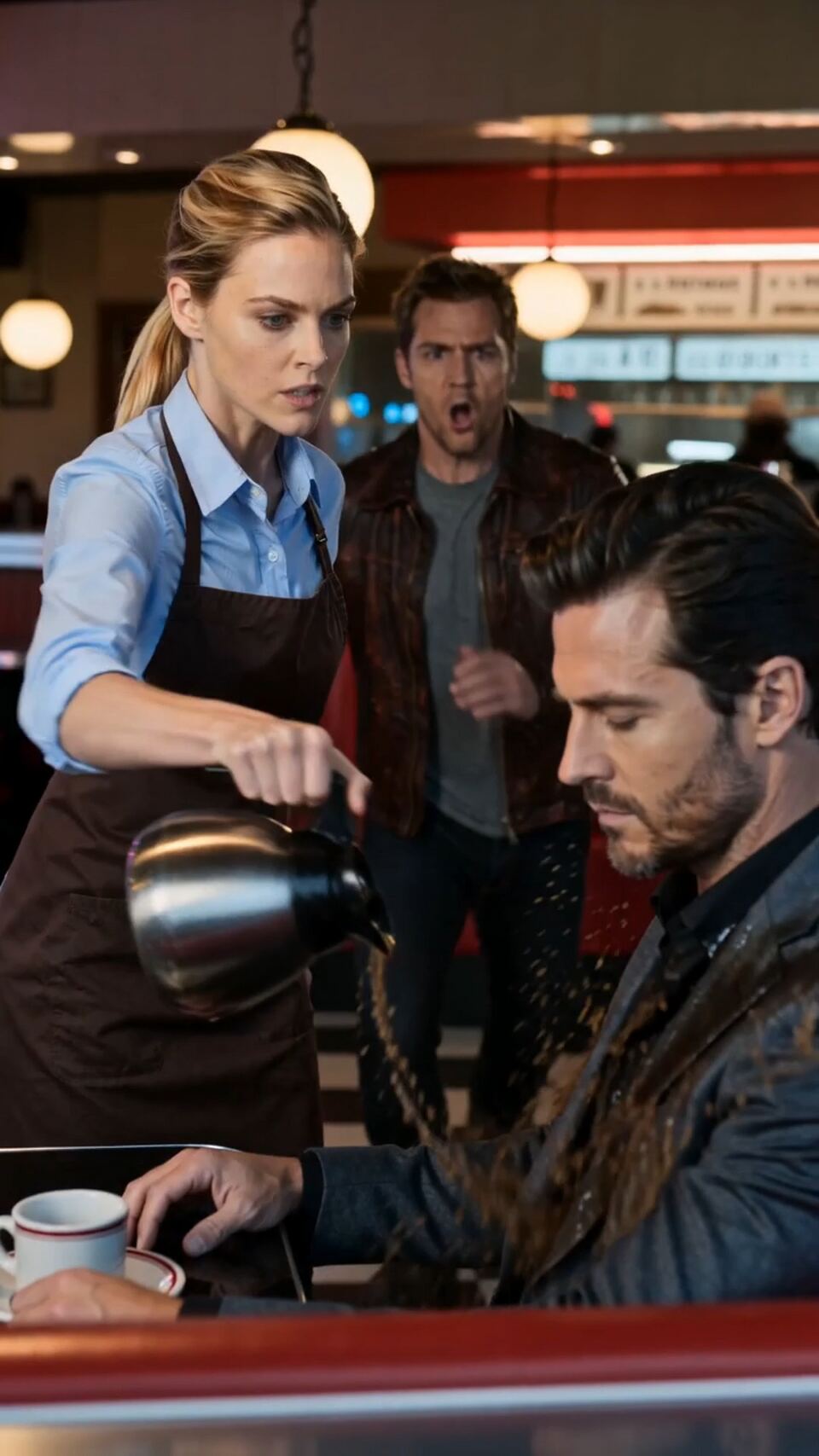
    One second, I was standing beside the red-brown leather booth with a full coffee pot in my hand. The next, I was dumping hot coffee straight onto Dom Bozack’s expensive dark gray suit.

    Coffee splashed across his black shirt and dripped to the black-and-white tile floor.

    My hand shook so hard I nearly dropped the pot.

    The man in the dark brown leather jacket lunged at me at once. He grabbed my wrist so hard I bit back a cry. His fingers dug into my skin.

    “Let her go,” Dom said.

    He didn’t raise his voice.

    He didn’t need to.

    The man loosened his grip, but he stayed close enough to block me. I could smell rain and cigarette smoke on his jacket. Dom sat very still in the booth, wet and furious in a way that looked colder than shouting.

    He lifted his eyes to me.

    “Why did you do that?”

    My throat was dry. My heart was pounding so hard it hurt.

    “That coffee was poisoned.”

    For a moment, nobody moved.

    The leather-jacket man gave a laugh too quick to be real. “She’s insane, Dom.”

    I swallowed and forced myself to point.

    “Ask him what’s in his pocket.”

    Dom turned his head slowly.

    The man touched his coat pocket without meaning to. Just once. But that was enough. His face had gone pale under the diner lights.

    “Why are you shaking?” Dom asked.

    “I’m not.”

    Dom reached into his inside pocket, pulled out a thick stack of cash, and slapped it on the table beside the glass salt shaker, the pepper bottle, and the open menu.

    “Keep the change.”

    Then he stood. Tall. Broad. Dangerous.

    He came so close I stopped breathing.

    “That’s it?” I asked.

    His gaze stayed on me for half a second too long. “That is all for tonight.”

    He walked out into the rain.

    Ten minutes later, I stood outside with my paper takeout bag in one hand, staring at a black car by the curb while a driver opened the back door.

    “Am I being kidnapped?” I whispered.

    The driver lowered his head. “Mr. Bozack wants to see you.”

    When I looked into the dark back seat, I wasn’t expecting to find Dom.

    I was expecting him even less with a gray-haired woman beside him, holding a photograph of my mother.

    “Get in, Nora,” she said. “We need to talk about Elena.”

    I froze with one foot in the rain.

    Nobody had said my mother’s name in years. Not like that. Not with the voice of someone who had known her.

    The woman in the back seat wore a camel coat and pearl earrings. She looked about seventy. Tired, elegant, and sick of secrets. Dom sat beside her, his soaked shirt hidden now under a dark overcoat. He watched me, unreadable.

    “How do you know my mother?” I asked.

    “Please,” the woman said. “Get in before someone sees.”

    That was not comforting.

    Still, I got in.

    The driver shut the door. The city sounds vanished. Inside, it smelled like leather and rain.

    The woman handed me the photograph. It was old and bent at the corners. My mother was maybe twenty, laughing beside a younger version of the woman in the car. They stood in front of a lake I didn’t recognize.

    “My name is Vivian Bozack,” she said. “Elena worked for my family when she first came to this country.”

    Worked for.

    Not friend. Not sister.

    Worked for.

    I stared at her. “My mother cleaned houses.”

    Vivian nodded. “Yes. Mine was one of them.”

    That landed harder than I expected.

    Dom spoke for the first time. “How did you know the coffee was poisoned?”

    I looked at him. “Because your guy switched cups when he thought nobody was watching.”

    “The man in the leather jacket?” Vivian asked sharply.

    I nodded. “He poured from a little silver vial into the cup near the wall, then moved the cups when another customer asked me for napkins.”

    Dom’s jaw tightened.

    Vivian closed her eyes for one second. “Marek.”

    So the leather-jacket man had a name.

    “I want to go home,” I said.

    “You can,” Dom said. “After one more question.”

    I hated how calm he sounded.

    “What question?”

    Vivian leaned toward me. “Did your mother ever leave you a letter? A note? Anything she told you to keep hidden?”

    I almost said no.

    Then I remembered the salt-stained recipe box in my apartment kitchen. The one my mother made me promise never to throw away.

    Before I could answer, Dom’s phone buzzed. He looked down, and for the first time, something changed in his face.

    He turned the screen toward Vivian.

    Marek was gone.

    And the text sent from Marek’s phone said: She knows about the pocket. Find the girl first.

    I should have gotten out of that car.

    Instead, twenty minutes later I was unlocking my apartment door with Dom Bozack standing behind me and one of his men waiting in the hall.

    Not Marek.

    Marek had disappeared.

    I lived above a laundromat in a building that always smelled faintly of soap and old pipes. I felt suddenly ashamed of the narrow kitchen, the scratched table, the faded curtains my mother had hemmed by hand.

    Vivian saw everything.

    So did Dom.

    Neither said a word.

    I went straight to the top shelf over the refrigerator and pulled down the old wooden recipe box. The corners were worn smooth. My mother had kept index cards inside it, stained with oil and cinnamon and time. Soup. Rice pudding. Roast chicken. Cheap meals stretched with love.

    “She told me to keep this,” I said. “I thought it was because of the recipes.”

    “It may still be,” Vivian said softly.

    My hands trembled as I flipped through the cards.

    Halfway down, I found an envelope taped beneath a card for apple cake.

    My name was written on the front in my mother’s careful block letters.

    For Nora. Only if someone comes asking about the lake.

    I sat down because my knees gave out.

    “Read it,” Dom said.

    I shot him a look. “Don’t tell me what to do in my own kitchen.”

    For the first time, I thought I saw the faintest sign of respect in his face.

    I opened the letter.

    Nora, if this is being read, then the past has found you. I did not steal from the Bozacks, though someone said I did. I took only what belonged to my child: proof of her father.

    The room tilted.

    Vivian pressed a hand to her mouth.

    I kept reading.

    If Dominic ever stands before you, tell him I left the Saint Christopher medal where his father proposed to me. He will know the place. He must know the truth about the fire.

    I lowered the letter slowly.

    Dom had gone still.

    “Dominic?” I whispered.

    He stared at me. “My full name is Dominic.”

    Vivian looked between us like she was seeing two ghosts.

    Then she said the impossible thing.

    “Elena was carrying my husband’s child when she vanished.”

    “That means you may not have saved a stranger tonight, Nora. You may have saved your brother.”

    “No.”

    That was all I could say at first.

    No to the word brother.

    No to my mother lying by silence.

    No to the idea that the man in the expensive coat, the man who looked like danger in human form, could belong anywhere near my life.

    Dom didn’t argue. He stood by the window while rain tapped the glass. Vivian sat at my kitchen table with my mother’s letter spread in front of her like evidence at a trial.

    Finally, Dom spoke.

    “My father had a hunting cabin by Lake Mercer.”

    The photograph.

    The lake.

    “He took my mother there every fall,” Vivian said, her voice breaking. “Twenty-eight years ago, the cabin burned. Your mother disappeared the same week. My husband claimed she’d stolen cash and jewelry and run away.”

    “And you believed him?” I asked.

    She shut her eyes. “I wanted not to.”

    Dom turned back toward us. “My father died six years ago. Before he died, he kept asking for a medal. A Saint Christopher medal.”

    The one in the letter.

    “He knew where it was,” I said.

    “Or what it proved,” Dom answered.

    We drove to Lake Mercer before dawn.

    The cabin was gone, but the stone chimney still stood. Wet weeds pushed up through the old foundation. The lake behind it was gray as steel.

    I followed the path from the letter’s clue, around the ruined chimney to a flat stone bench blackened long ago by smoke. Underneath, inside a crack, Dom found a small tin box wrapped in rotted cloth.

    Inside was a scorched Saint Christopher medal.

    And a folded document sealed in plastic.

    Vivian opened it with shaking hands.

    A birth certificate.

    Mine.

    Father: Anthony Bozack.

    My mother had not stolen proof. She had hidden it.

    Then tires crunched on gravel behind us.

    Marek stepped out from a sedan, gun in hand, face wrecked with fear.

    “I didn’t want to poison him,” he said. “Your father made me start years ago. Then Dom found out too much.”

    Dom moved in front of me without thinking.

    Marek’s hands shook. “The fire wasn’t an accident. Anthony set it to get rid of Elena.”

    And then Marek pointed the gun not at Dom, but at Vivian.

    Everything narrowed to breath, rain, and the dark circle of the gun.

    Vivian stood beside the stone bench, one hand gripping my arm. Dom stayed in front of us, shoulders squared, wet wind flattening his coat against him.

    “Marek,” he said, calm again. “Put it down.”

    Marek laughed once, ragged and broken. “You think this ends with me? Your father kept records. Payments. Threats. He said if Elena ever came back, the old lady would protect the family name.”

    Vivian flinched as if struck.

    “I was wrong,” she whispered.

    I looked at her. Not because she had caused all of this alone. But because she had lived beside it. She had chosen comfort over truth until truth came to her door in a diner uniform.

    Marek waved the gun wildly. “I just followed orders.”

    “No,” I said.

    My voice surprised all of us.

    “You poisoned a man. You grabbed me. You ran because you knew exactly what you did.”

    His eyes snapped to me.

    That was enough.

    Dom moved fast. So fast I barely saw it. He knocked Marek’s wrist aside as the gun fired into the wet ground. The sound rolled across the lake. Dom drove him down hard. By the time the driver and the second guard reached us from the car, it was over.

    Later, after the police took Marek away, we stood by the old chimney and watched morning come up over the water.

    Vivian touched the medal in my palm. “Your mother deserved better from all of us.”

    I believed she meant it.

    Dom looked at me. For once, there was no threat in his face. Only weariness. And something careful.

    “We can prove what my father did,” he said. “The records, the letter, Marek’s statement. Your mother won’t stay buried under his lie.”

    I nodded, but tears still came.

    Months later, I left the diner by choice, not fear. Vivian helped reopen the Lake Mercer cabin land as a retreat house for single mothers starting over. I kept the recipe box on my new kitchen counter.

    Dom and I were still learning what brother and sister could mean when it began this late.

    It meant awkward lunches.

    Hard questions.

    Small acts of loyalty.

    One Sunday he came by with a bakery box and set it next to the salt shaker on my table.

    “Apple cake?” I asked.

    He gave a short nod. “From your mother’s recipe card. Mine came out terrible.”

    I laughed for the first time in front of him without effort.

    Then he pulled a second envelope from his coat.

    “What now?” I asked.

    He looked almost uneasy.

    “We found one more letter in my father’s records,” he said. “It’s addressed to you. But the handwriting isn’t his.”

    I turned it over.

    It was my mother’s.

    And this one began, My dearest Nora, if Dominic has found you, then I have one more truth to tell.

  • The Maid Who Stayed When Everyone Walked Away

    The Maid Who Stayed When Everyone Walked Away

    “You’re completely useless now, Gabriel!”

    The words cut through the ballroom louder than the string music.

    Vanessa, in her off-the-shoulder red dress, strode across the polished floor with fury in her face and contempt in every step. Before anyone could stop her, she ripped off her engagement ring and hurled it onto the plaid blanket covering Gabriel’s legs.

    The ring landed in his lap with a small, ugly sound.

    Around them, conversation dropped to whispers.

    Vanessa turned at once and slipped her arm through the elbow of Adrian Holloway, a wealthy investor in a charcoal custom suit, a champagne flute balanced in his hand as if nothing ugly had just happened.

    “A broken man belongs in the trash, sweetie,” Adrian said with a smug smile.

    “Exactly,” Vanessa said, laughing.

    Gabriel sat motionless in his wheelchair.

    Six months earlier, after the accident on the coastal road, doctors had told him there was no promise he would walk again. Since then, his father’s house had filled with flowers, specialists, pity, and silence. Tonight had been meant to calm gossip about his postponed wedding. Instead, it had become a public burial of his dignity.

    Then Maya moved.

    She wore the black-and-white uniform of the household staff. No jewels. No title. No invitation to speak.

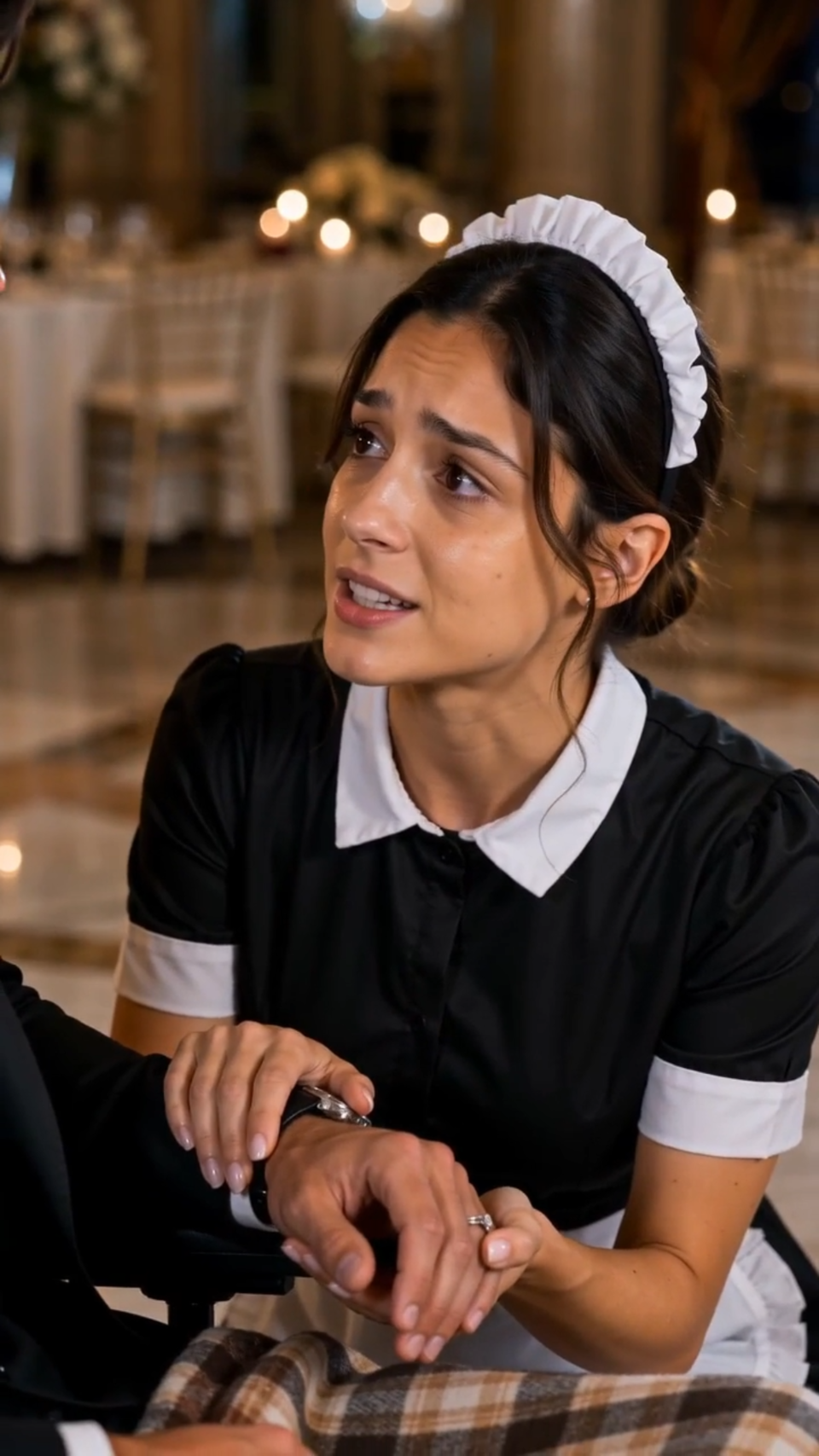
    She crossed the room, knelt beside him, and took his cold hand in both of hers.

    Her voice was soft, but every person in the room heard it.

    “Sir Gabriel… please don’t listen to them. You are so much more than what they see.”

    He looked at her.

    For one suspended moment, the grief in his eyes changed into something steadier. Harder.

    “Thank you, Maya,” he said quietly.

    Then he threw back the plaid blanket.

    Gasps broke across the ballroom.

    Gabriel rose from the wheelchair and stood tall.

    Vanessa’s fingers loosened around Adrian’s arm. His champagne tilted.

    Gabriel reached for Maya’s hand and drew her to his side.

    “I don’t need this wheelchair anymore,” he said. “You were the only one who stayed by my side.”

    Before anyone could recover, an elderly woman near the back dropped her glass and whispered, “Stayed? That’s not all she did. She was in the car that night.”

    The ballroom changed in an instant.

    People who had been hungry for humiliation now leaned toward scandal.

    Vanessa’s face drained of color. Adrian looked annoyed more than shocked, as if the evening had simply gone off schedule. But Gabriel’s eyes had already found the woman who had spoken.

    It was Mrs. Eudora Bell, his late mother’s oldest friend. She lived quietly in Charleston now and almost never attended parties. Yet here she was, one gloved hand shaking at her side.

    “What did you say?” Gabriel asked.

    Maya tried to step back, but he still held her hand.

    Mrs. Bell took a breath. “I said she was there. The night of your accident.”

    The room burst into murmurs.

    Vanessa recovered first. “That’s absurd. She’s a maid.”

    Maya flinched at the word, though she kept her chin lifted.

    Gabriel turned to her. “Maya?”

    Her dark eyes filled, not with guilt, but with dread. “I didn’t tell you because I was asked not to.”

    “By whom?” Gabriel said.

    No answer came from her. It came from his father.

    “By me.”

    Every head in the room turned toward Charles Bennett, still broad-shouldered at seventy-two, standing rigid near the marble fireplace. He had been silent through Vanessa’s cruelty. Now his voice carried the weight of command and old mistakes.

    “I hired Maya after the accident,” Charles said. “But I knew her before that night.”

    Gabriel stared at him. “How?”

    Charles looked not at his son, but at Maya. “Because her mother worked for this family for twenty years.”

    Vanessa gave a short laugh. “So this is what this is? A servant drama?”

    “No,” Mrs. Bell said sharply. “It is a conscience finally waking up.”

    Charles closed his eyes for a moment. “Maya dragged Gabriel out of the car before it caught fire.”

    The room fell still.

    Gabriel’s fingers tightened around Maya’s hand. He remembered rain. Glass. The smell of gasoline. Then nothing.

    “You saved me?” he asked.

    Maya swallowed. “I tried.”

    “Why keep it secret?” he said.

    Maya looked toward Vanessa, then Adrian, then back at Gabriel. “Because the accident wasn’t as simple as everyone said.”

    Adrian set down his champagne.

    And for the first time that night, he looked afraid.

    At that moment, a young valet hurried into the ballroom holding a dented silver phone. “Sir Gabriel,” he said, breathless. “This was found behind the hedge near the east drive. It was hidden in the bushes. It’s yours… and it has a voicemail from the night of the crash.”

    Gabriel took the phone with a hand that did not shake.

    The screen was cracked, the silver casing scraped. He had not seen it since the accident. He remembered reaching for it in the car, then the scream of tires.

    “Play it,” Charles said.

    “No,” Gabriel replied. “Not here.”

    Vanessa’s mouth tightened. “What exactly are you implying?”

    “I’m done implying.”

    He looked at Maya. “Come with me.”

    They left the ballroom for his father’s library, though the crowd lingered outside the half-closed doors, hungry enough to hear through wood. Charles entered behind them. So did Mrs. Bell. Adrian tried to follow, but Gabriel turned and shut him out.

    Inside, the room smelled of leather and old paper. Gabriel sat at the desk, the wheelchair left untouched by the fireplace.

    He pressed play.

    At first there was only road noise. Then Vanessa’s voice, sharp and impatient.

    “If you don’t sign the transfer this week, Adrian says the board will freeze you out.”

    Gabriel frowned. “Transfer?”

    Charles looked confused. “What transfer?”

    The recording continued.

    A male voice answered. Adrian’s.

    “He can barely think straight on pain medication. Push him now.”

    Then Gabriel’s own voice, weary and angry. “Get out of my car, both of you.”

    A car door slammed. Wind rushed over the speaker. Then another sound came. Maya’s voice.

    “Sir, wait. Your brake light was hanging loose when they pulled in. Please don’t drive.”

    Silence filled the library.

    Gabriel lifted his head slowly. “You were warning me.”

    Maya nodded. “I came to return your jacket. I heard them arguing outside. I saw Adrian near the rear of your car.”

    Charles swore under his breath.

    Mrs. Bell pressed her hand to her chest. “Dear God.”

    Gabriel replayed the final seconds. There was the engine. Rain. Then Maya shouting his name.

    The official report had blamed wet roads and speeding.

    But now another truth had entered the room.

    Vanessa had wanted papers signed.

    Adrian had been near the brakes.

    And Maya had tried to stop him.

    Gabriel stood. “Call the police,” Charles said at once.

    Maya stepped forward. “Wait.”

    Everyone turned to her.

    Her face had gone pale, but her voice held.

    “There is something else you need to know before you do that,” she said. “The transfer papers weren’t about business. They were about this house… and about me.”

    “My mother died believing your family had done the right thing by us. She was wrong.”

    Then she pulled a folded letter from her apron pocket, old and worn at the edges, and placed it on the desk.

    It was written in Gabriel’s mother’s hand.

    Gabriel knew his mother’s handwriting at once.

    Even after twelve years, the sight of it hit him harder than standing in that ballroom had. The loops were elegant, steady, unmistakable.

    Maya did not sit. She stood across from him with both hands clasped, as if bracing herself against old weather.

    “My mother kept that letter hidden,” she said. “She made me promise never to use it unless I had no other way to protect myself.”

    Charles stared at the page as if it were something alive.

    Gabriel unfolded it carefully.

    It was dated three weeks before his mother’s death.

    Charles, if anything happens to me, please honor what we discussed. Elena’s cottage by the east garden is to be hers in full, with funds set aside for Maya’s schooling. No one is to turn them out. They have given this family more loyalty than they ever received.

    Below it was his mother’s signature.

    And beneath that, Charles’s.

    Gabriel looked up. “You signed this.”

    Charles sank into a chair. Suddenly he seemed every one of his years. “I did.”

    “Then what happened?”

    He rubbed a hand over his face. “After your mother died, I buried myself in work and in grief. The cottage title was never transferred. The account she intended was folded back into the estate. I told myself I would fix it.”

    Maya let out a small, broken laugh. “You never did. When my mother got sick, we sold everything for treatment. After she died, I came here because there was nowhere else to go.”

    Charles looked at her with naked shame. “I know.”

    Vanessa had not been chasing romance. She had been chasing leverage. If Gabriel married her and signed property control during his recovery, she and Adrian could force redevelopment of the east garden land. That included the old cottage.

    Adrian wanted the grounds for a luxury project. Vanessa wanted status. Both needed Gabriel weak.

    Gabriel felt anger rise, but not the hot, reckless kind. This was cleaner than that. Colder.

    He picked up the plaid blanket someone had brought in after the ballroom scene. For months it had meant helplessness. Tonight he folded it over his arm like a closed chapter.

    “I’m not calling the police just to save myself,” he said. “I’m calling them because they nearly killed me, and because they stole from you.”

    Maya’s eyes widened.

    Charles stood. “I’ll make a statement.”

    Gabriel nodded. “You will.”

    A pounding came at the library door. Adrian’s voice cut through it.

    “If you make this public, Charles, I have documents that will destroy your family name.”

    Gabriel opened the door himself.

    Adrian was holding a thin file.

    And Vanessa was crying.

    But the tears on her face were not for Gabriel.

    “They’re for me,” Maya whispered. “Because she knows what’s in that file.”

    The file in Adrian’s hand contained copies of debt notices, old payroll records, and a forged agreement that appeared to show Maya’s mother had surrendered any claim to the cottage years earlier.

    “It will be enough to muddy everything,” Adrian said. “Enough to make her look like a liar and your father look senile.”

    Vanessa clutched his sleeve, mascara shining under the chandelier light. “Let’s go,” she whispered.

    Gabriel saw it then.

    She was not crying over lost love. She was terrified of Adrian.

    Maya saw it too.

    “Ask her about the signature dates,” Maya said quietly.

    Gabriel held out his hand. “Give me the file.”

    Adrian laughed. “Why would I?”

    Because Charles had already called security. Two men stepped into the hall behind him.

    Adrian’s confidence cracked. He shoved the file toward Vanessa as if she were a shield. Papers spilled across the floor.

    Mrs. Bell bent surprisingly fast for her age and picked one up.

    “This letterhead,” she said, “didn’t exist until four years after Elena died.”

    Charles took another page. “And this payroll stamp is from the management company I hired only recently.”

    Vanessa looked from the pages to Adrian with dawning horror. “You told me it was legal.”

    “It was necessary,” he snapped.

    That was enough.

    She stepped away from him.

    Then, voice shaking, she said, “He admitted he tampered with the brake line. He said it was only meant to scare Gabriel before the contract meeting.”

    The hallway erupted.

    Adrian lunged for the papers, but security caught him before he reached them.

    By midnight, the police had taken statements. Adrian was gone in handcuffs. Vanessa left alone, barefoot, carrying her red heels in one hand and the ruin of her choices in the other.

    Weeks later, the cottage by the east garden was finally transferred into Maya’s name. A trust was created in her mother’s memory, just as Gabriel’s mother had intended. Charles apologized without excuses. It did not repair everything, but it was a beginning.

    Gabriel walked each morning now, slowly, without the wheelchair.

    One afternoon he brought the plaid blanket to Maya’s porch. She smiled when she saw it.

    “I thought you’d burned that thing,” she said.

    He laughed. “I almost did.”

    Instead, they spread it over two chairs in the garden and sat beneath the late sun.

    “You stayed when I had nothing to offer,” Gabriel said. “That is how I know what matters now.”

    Maya looked at him for a long moment. “And what matters now?”

    He did not answer right away.

    Beyond them, movers carried the last boxes out of the main house’s west wing, making room for something new Charles had proposed: a recovery center in Elena’s name for trauma patients with nowhere to go after discharge.

    Gabriel took Maya’s hand, not as a patient, not as a master, but as a man asking for the truth of another chance.

    “You,” he said.

    She did not pull away.

    And from the garden path, Charles watched them with quiet, humbled eyes, as if learning at last that a family could begin in the place where pride finally ended.

  • One Broken Headlight Brought His Family Back

    One Broken Headlight Brought His Family Back

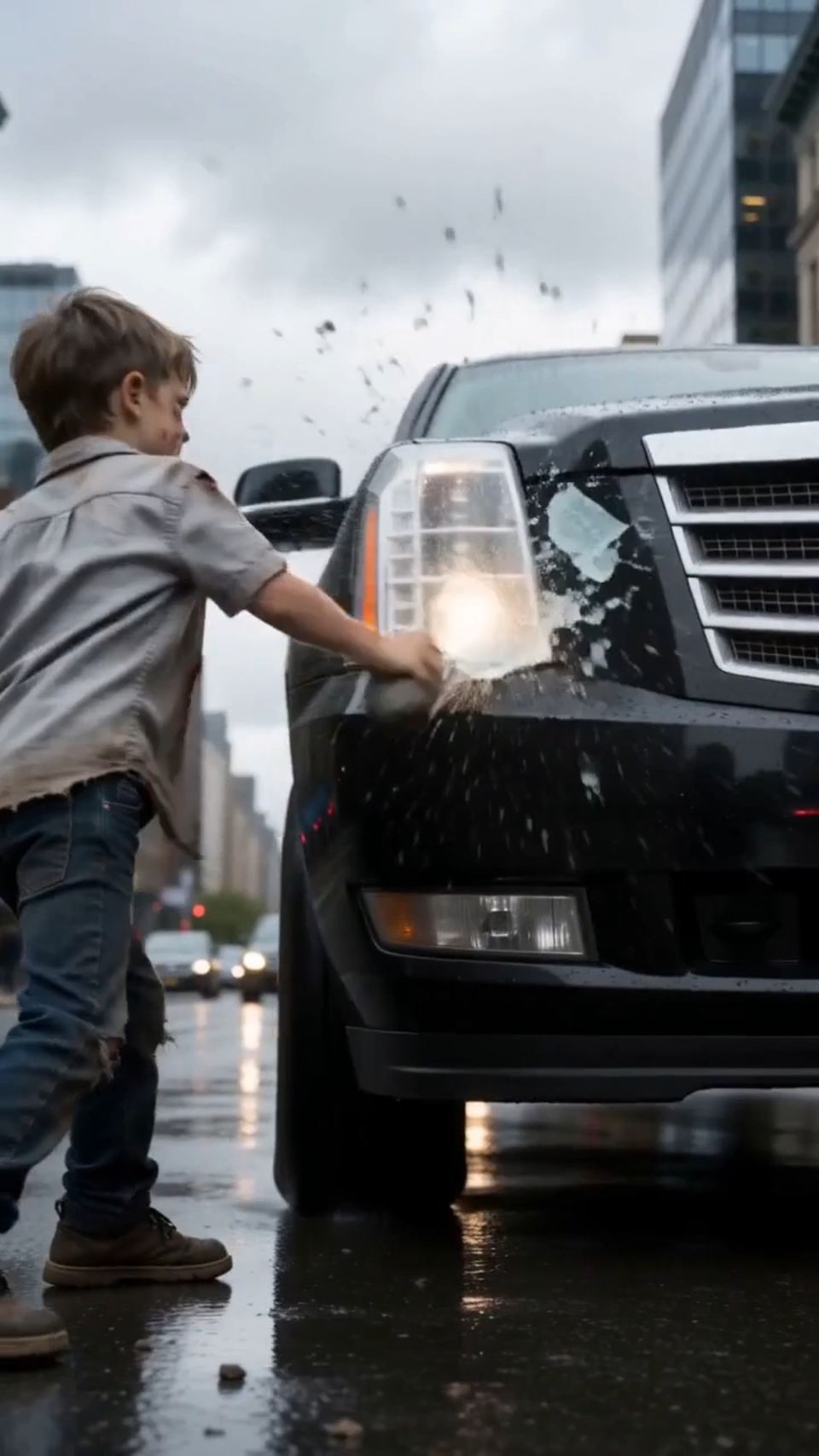
    The stone shattered the SUV’s left headlight.

    Adrian Hale’s driver slammed on the brakes.

    Adrian stepped into the street, furious.

    “Hey! What is wrong with you?”

    The boy did not run.

    He stood in his torn gray shirt, his face bruised and streaked with tears.

    “It’s all your fault!” he screamed. “You left us! My mom is dying now!”

    The accusation stopped Adrian cold.

    “Your mother? What’s her name?”

    The boy pulled a torn photograph from his pocket.

    Adrian took it.

    His knees nearly gave way.

    The photograph showed Adrian seven years earlier, sitting in a hospital room with a newborn baby in his arms. Olivia stood beside him, exhausted but smiling.

    Adrian remembered the exact moment.

    The baby’s name was Ethan.

    His son.

    Two days after the picture was taken, Adrian flew overseas to save his family’s collapsing company. While he was gone, Olivia’s car supposedly plunged from a bridge and burned.

    Police found her purse and the baby’s blanket.

    Adrian was told there were no survivors.

    He had buried two empty coffins because the bodies were supposedly too badly burned to recover.

    Now the boy from the photograph stood in front of him.

    “Ethan?”

    The child looked frightened.

    “How do you know my name?”

    Adrian knelt in the road.

    “Because I am the man in this picture.”

    Ethan stared at his face.

    Then he struck Adrian’s chest with both fists.

    “Mom said you didn’t want us!”

    Adrian did not stop him.

    “Where is she?”

    Ethan led him to a church shelter on the edge of the city.

    Olivia lay in a narrow bed, dangerously pale. An oxygen tube rested beneath her nose.

    When Adrian entered, her eyes widened.

    “No,” she whispered. “You cannot be here.”

    He approached slowly.

    “I thought you were dead.”

    Olivia began to cry.

    “I waited seven years for you.”

    “I buried you. I buried both of you.”

    Olivia reached beneath her pillow and removed a folder filled with unopened letters.

    Every envelope was addressed to Adrian.

    Every one had been returned.

    Stamped across the front were the same words:

    Recipient refuses contact.

    Adrian had never seen them.

    Then Olivia spoke the name of the person who had returned every letter.

    “Your wife, Camille, made sure you never found your son.”

    Camille had been Adrian’s executive assistant when Ethan was born.

    She knew his schedule, controlled his calls, and had access to every private document in his office.

    While Adrian was overseas, Camille visited Olivia.

    She claimed Adrian regretted becoming a father.

    She carried forged custody papers and a check.

    “She told me to take the money and disappear,” Olivia explained. “I refused.”

    Three nights later, Olivia’s car was forced from the road.

    A passing truck driver pulled Olivia and baby Ethan out before the vehicle caught fire. Olivia suffered a head injury and remained unconscious for twelve days.

    Someone registered her at the hospital under a false surname.

    When she woke, her identification, phone, and baby bag were gone.

    Camille appeared beside her bed.

    She said Adrian knew Olivia had survived but wanted nothing to do with her or Ethan.

    “She showed me a document carrying your signature,” Olivia said. “It surrendered your parental rights.”

    Adrian shook his head.

    “I never signed anything.”

    Camille warned Olivia that if she returned, Adrian’s attorneys would declare her unstable and take Ethan away.

    Alone and injured, Olivia believed her.

    She moved between shelters and temporary jobs, raising Ethan without support. Whenever she tried contacting Adrian, her letters were returned.

    Three years later, Camille married him.

    Adrian had been so destroyed by grief that he never questioned the woman who claimed to have helped arrange Olivia’s funeral.

    “I thought Camille saved me,” he said.

    “No,” Olivia answered. “She isolated you.”

    A doctor entered and explained that Olivia needed emergency heart surgery. Years of untreated damage had weakened her heart.

    Adrian immediately offered to pay.

    Olivia turned away.

    “I don’t want your money.”

    “I am not trying to buy forgiveness. I am trying to keep Ethan’s mother alive.”

    At that moment, Adrian’s sixty-five-year-old mother, Evelyn, arrived.

    She had rushed to the shelter after receiving his call.

    When Evelyn saw Ethan, she covered her mouth and sobbed.

    The boy had Adrian’s eyes and Olivia’s smile.

    He was also wearing a silver bracelet Evelyn had placed around her newborn grandson’s wrist.

    She had believed it burned in the crash.

    Evelyn embraced Ethan.

    “My grandson.”

    But the reunion was interrupted by Adrian’s attorney.

    He had examined Ethan’s birth trust.

    Adrian’s late father had left twenty percent of the family company to Adrian’s firstborn child.

    When Ethan was declared dead, those shares reverted to Adrian.

    As Adrian’s wife, Camille had gained voting control over them.

    Adrian finally understood her motive.

    She had not only stolen his family.

    She had built her power on Ethan’s false death.

    Then Olivia’s phone rang.

    Camille’s voice came through the speaker.

    “If you want your surgery paid for, sign away Ethan’s inheritance.”

    Adrian returned home with Ethan’s photograph in his pocket.

    Camille was hosting a charity luncheon for grieving mothers.

    She stood beneath a chandelier, accepting praise for her compassion.

    Adrian walked through the guests and placed the photograph in front of her.

    Her smile disappeared.

    “Where did you get that?”

    “My son gave it to me.”

    Camille recovered quickly.

    “Olivia is manipulating you. She disappeared voluntarily.”

    Adrian played the recording of her phone call.

    Several guests put down their champagne glasses.

    Camille’s expression hardened.

    “You were falling apart. I protected you.”

    “You declared my son dead.”

    “You needed someone strong enough to save the company.”

    A voice answered from the doorway.

    “No. You needed everyone to believe your lies.”

    Miriam Clarke, a sixty-two-year-old retired nurse, entered carrying hospital records.

    She had treated Olivia after the crash.

    Camille had introduced herself as Olivia’s sister and ordered the hospital to conceal the admission from Adrian for “security reasons.”

    Miriam became suspicious after Camille removed Ethan from the nursery without authorization.

    She reported the incident, but the records disappeared.

    For seven years, Miriam kept copies.

    Camille looked toward the side entrance.

    Two investigators blocked her path.

    Adrian’s mother entered behind them.

    Evelyn had brought a metal box recovered from the family archive.

    Inside were the original trust documents and copies of every letter Olivia sent.

    Camille had hidden them instead of destroying them because she planned to use them if Adrian ever tried to leave her.

    One letter contained a photograph of Ethan on his first birthday.

    Another showed him taking his first steps.

    Adrian sat down.

    He had missed every moment.

    Camille pointed toward Olivia’s letters.

    “She could have tried harder.”

    Evelyn slapped her hand against the table.

    “Do not blame a frightened young mother for failing to defeat a system you controlled.”

    Camille’s bank records revealed payments to the investigator who falsely identified Olivia’s burned car.

    The supposed death certificate had been produced using another woman’s medical records.

    Police arrested Camille for fraud, conspiracy, identity theft, and financial exploitation.

    But before officers took her away, she smiled at Adrian.

    “You think Olivia will love you again?”

    Adrian said nothing.

    “You chose me,” Camille continued. “Every day for seven years.”

    The words struck because they contained an ugly truth.

    Camille created the lie.

    But Adrian had trusted convenience over unanswered questions.

    At the hospital, Ethan waited beside his mother’s bed.

    When Adrian entered, the boy looked up.

    “If Mom dies, will you leave me again?”

    Adrian knelt before him.

    “Never.”

    Ethan’s eyes filled with tears.

    “You said that when I was a baby.”

    Adrian looked at the old photograph.

    He did not remember saying it.

    But Olivia did.

    She had written his promise on the back.

    Whatever happens, Ethan, your father will always come back for you.

    Olivia’s surgery was scheduled for dawn.

    Before signing the consent papers, she changed Ethan’s emergency guardianship.

    She did not choose Adrian.

    She chose Evelyn.

    Adrian felt the decision deeply, but he did not protest.

    His mother had lost seven years too, yet she had immediately listened to Olivia without defending herself.

    Adrian still had to earn that trust.

    “I understand,” he told Olivia.

    She studied him.

    “The man I loved would have fought me.”

    “The man you loved thought power could solve everything.”

    “And who are you now?”

    “A father asking for the chance to become better.”

    Olivia signed the papers.

    Before nurses took her away, she called Ethan to the bed and kissed his forehead.

    Then she looked at Adrian.

    “If I don’t survive, don’t raise him to believe wealth makes him more important than other people.”

    “I won’t.”

    “Teach him to listen when someone is frightened.”

    Adrian lowered his eyes.

    “I will.”

    The operating room doors closed.

    For six hours, Adrian, Ethan, and Evelyn waited together.

    Evelyn finally revealed why she blamed herself.

    Shortly before the supposed accident, Olivia had called her and said Camille was threatening her. Evelyn dismissed it as jealousy and advised Olivia to focus on motherhood.

    “I was more concerned with keeping peace than finding the truth,” Evelyn admitted.

    Ethan took his grandmother’s hand.

    “You found us now.”

    His simple forgiveness broke her.

    When the surgeon appeared, Adrian stood so quickly that his chair overturned.

    “The surgery was more difficult than expected,” the doctor said. “Her heart stopped twice.”

    Ethan began to cry.

    “But we restored a stable rhythm. The next twenty-four hours are critical.”

    Adrian remained outside Olivia’s room all night.

    He did not make business calls.

    He did not ask assistants to handle Ethan.

    He made sandwiches, found a clean shirt for his son, and listened while Ethan described the years Adrian had missed.

    Ethan loved dinosaurs.

    He hated thunderstorms.

    He slept with the hospital photograph beneath his pillow because Olivia told him his father had once loved them.

    At sunrise, Olivia opened her eyes.

    Adrian did not rush toward her.

    Ethan reached her first.

    Olivia held him and looked across the room.

    “You’re still here.”

    Adrian nodded.

    “I said I would come back.”

    Tears slipped down her cheeks.

    “You came seven years late.”

    “I know.”

    For a long moment, neither spoke.

    Then Olivia extended her hand.

    Adrian took it carefully.

    But she whispered a warning.

    “Holding my hand does not mean everything is forgiven.”

    Olivia recovered slowly.

    Adrian purchased a house near the hospital, but he did not ask Olivia and Ethan to move into his mansion.

    He understood that a grand house could not replace safety.

    Instead, he rented a modest home in their neighborhood and began visiting when Olivia allowed it.

    He drove Ethan to school.

    He attended medical appointments.

    He learned how his son liked his sandwiches cut and which bedtime story made him laugh.

    When Olivia spoke about raising Ethan alone, Adrian listened without explaining his own pain.

    Camille was convicted. Her marriage to Adrian was annulled because it had been built on fraud, and Ethan’s identity and inheritance were legally restored.

    Adrian placed the shares in an independently managed trust that even he could not control.

    Evelyn created a support program for single mothers facing legal intimidation. Miriam became one of its advisers, helping women preserve medical and custody records.

    Adrian named the program Olivia’s Promise.

    Olivia objected.

    “I don’t want to be remembered as a victim.”

    Adrian changed the name.

    The program became The Second Voice, created for people who had spoken once and were ignored.

    One year later, Ethan turned nine.

    Adrian gave him the SUV’s broken headlight mounted inside a wooden frame.

    The plaque read:

    The day my son refused to let me drive past him.

    Ethan laughed.

    “I still owe you for the car.”

    “You gave me back my life.”

    That evening, Adrian and Olivia stood outside while Ethan played with Evelyn.

    Adrian removed a small box from his pocket.

    Olivia immediately stiffened.

    “It isn’t a ring,” he said.

    Inside was the original photograph of Adrian holding newborn Ethan, carefully restored.

    Beside it was a new photograph of the three of them.

    “I am not asking you to forget what happened,” Adrian said. “I am asking whether I can continue showing up.”

    Olivia looked at the photographs.

    For years, she dreamed of punishing the man she believed abandoned her.

    Now she understood they had both been robbed.

    But understanding was not the same as trust.

    That had to be built.

    Day by day.

    Choice by choice.

    Olivia reached for Adrian’s hand.

    “You can stay for dinner.”

    It was not a dramatic reunion.

    It was something more honest.

    A beginning.

    Two years later, Olivia chose to marry Adrian in a small garden ceremony. Evelyn stood beside Ethan, crying openly as he carried the rings.

    No empty coffins.

    No hidden letters.

    No one making choices in Olivia’s name.

    When the ceremony ended, Ethan looked up at his parents.

    “Are we finally a real family?”

    Olivia knelt and hugged him.

    “We were always a real family.”

    Adrian wrapped his arms around them both.

    The stone broke a headlight, but it also stopped a father from driving past the family he thought he had buried.

  • The Boy in Velvet Ran to the Maid-The Mother He Never Forgot

    The Boy in Velvet Ran to the Maid-The Mother He Never Forgot

    Elena Voss was on her knees, polishing a streak of water from the marble floor, when she heard the child crying.

    It was the kind of cry that cut through everything.

    The low murmur of hotel guests.

    The soft squeak of her mop.

    The rolling suitcases near the glass doors.

    She lifted her head.

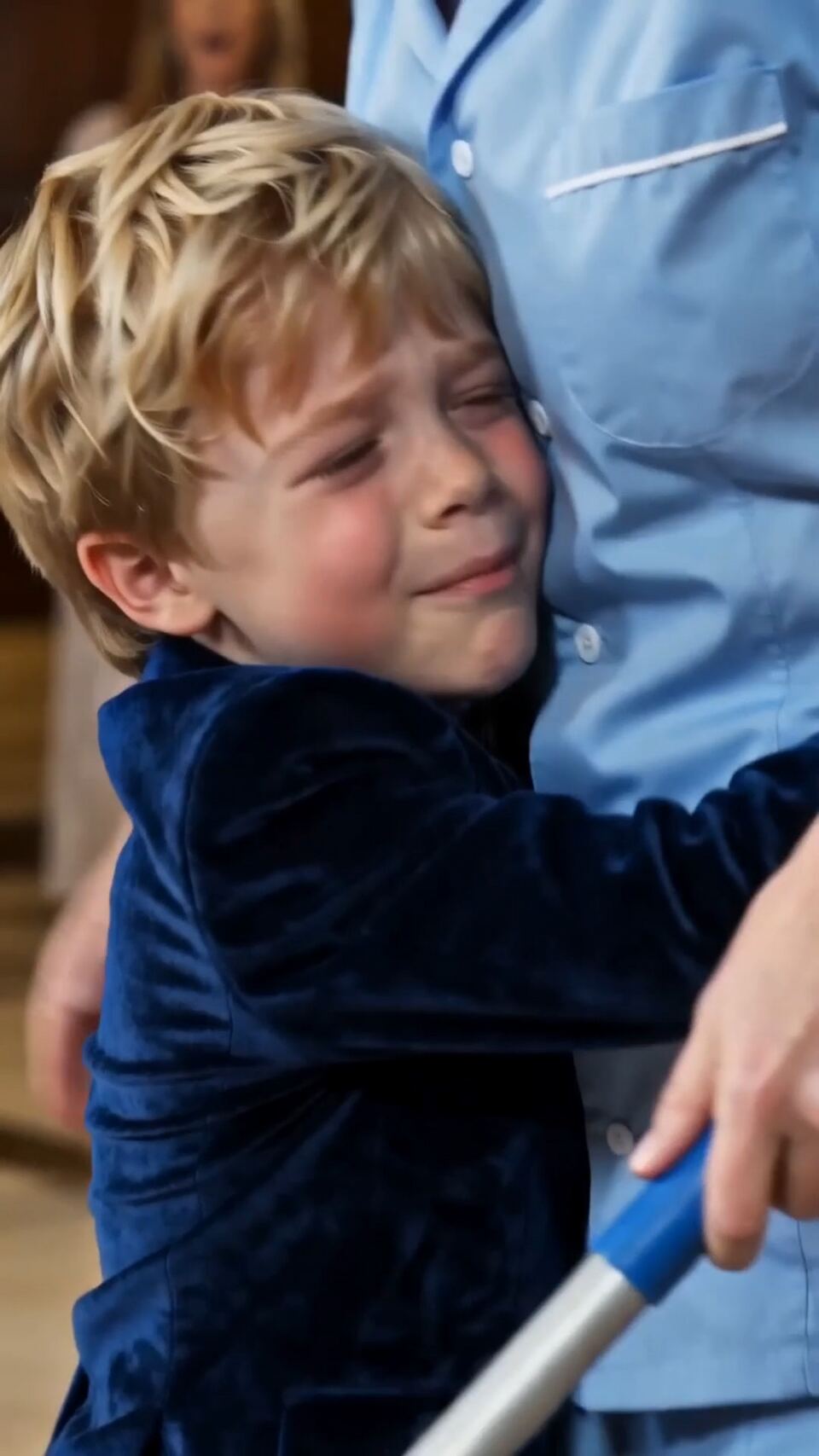
    A little boy in a deep blue velvet suit was running toward her. His pale blond hair was falling out of place. His green eyes were wild with tears.

    Before Elena could rise, he crashed into her and wrapped both arms around her waist.

    Her cleaning cloth slipped from her hand.

    He buried his face against her pale blue housekeeping uniform and sobbed as if his heart were breaking.

    “Mommy, you came back! I knew you would come back!”

    Elena froze.

    For one awful, impossible second, the whole world dropped away.

    Then the ache she had buried for five years came roaring back.

    His hair smelled of soap and sun.

    Her hands trembled. She wanted to hold him. God, she wanted to. But fear stopped her.

    Around them, the lobby went still.

    The front desk staff stared. Guests rose from velvet chairs. A bellboy beside the brass luggage cart looked as if he had forgotten how to breathe.

    Then high heels struck the marble.

    A woman in an emerald satin gown rushed toward them, pearls shaking at her throat, fury burning in her face.

    “How dare you touch my son?”

    She raised her hand.

    Elena flinched.

    But the slap never came.

    A man’s hand caught the woman’s wrist in midair.

    He was tall, silver-haired, dressed in a dark gray three-piece suit. His jaw was tight. His gray eyes were fixed on the woman with cold fury.

    “Stop!” he said. “She is his real mother.”

    The woman stared at him.

    “What…?”

    The boy clung harder to Elena.

    Guests whispered.

    “Oh my God… his real mother?”

    The woman stumbled backward, her pearls crooked now, and collapsed at the edge of the carpet.

    “No… this can’t be happening!”

    Elena looked up at the man holding the woman back.

    And when she recognized him, her breath caught.

    It was Henrik Dahl.

    The man who had testified, five years earlier, that her baby had died.

    “You told me my son was dead.”

    Henrik’s face turned ashen.

    “I know,” he said. “And I have been trying to tell you the truth ever since.”

    The hotel manager wanted everyone moved.

    The guests wanted answers.

    The little boy wanted only Elena.

    He would not let go of her hand, even when they were taken into a private sitting room behind the lobby. He sat pressed against her side on a cream sofa, still hiccuping from tears, his velvet sleeve wrapped around her wrist as if she might vanish if he loosened his grip.

    Elena could barely breathe.

    Across from her sat the emerald-dressed woman, stiff and pale, her pearl necklace still twisted. Beside the door stood Henrik Dahl, broader now than she remembered, older in the face, carrying guilt like a second suit.

    The manager brought water no one drank.

    The boy looked up at Elena with red-rimmed eyes. “You’re really here.”

    She touched his cheek carefully, as if she were touching fire. “What’s your name, sweetheart?”

    “Lucas.”

    Her heart lurched.

    That was the name she had whispered to her newborn son before he was taken from her room.

    The emerald woman snapped, “Children repeat things. He is confused.”

    Henrik turned to her. “He’s not confused, Marianne.”

    So that was her name.

    Marianne folded her hands so tightly her knuckles whitened. “You have no right to do this here.”

    “No,” Henrik said. “I lost that right years ago.”

    Elena stared at him. “Then start talking.”

    Henrik’s voice was low. Five years ago, Elena had worked as a seasonal waitress at a mountain resort in Austria. She had gone into labor early. There had been complications. She had lost consciousness. When she woke, Henrik, then the resort’s legal adviser and her late mother’s oldest friend, told her the baby had not survived.

    Elena had believed him because grief leaves no room for suspicion.

    Henrik swallowed hard. “The child was alive. Marianne arranged for him to be removed before you woke.”

    Marianne stood up. “That is absurd.”

    Lucas shrank closer to Elena.

    Henrik reached into his jacket and pulled out a thin file.

    “I found the nurse’s statement last month,” he said. “And the amended birth record.”

    Elena’s hands shook.

    Then Lucas looked between them and asked the question that tore the room open.

    “If she’s my mother,” he whispered, “why did nobody come get me?”

    Henrik closed his eyes.

    And Marianne said, too quickly, “Because she left you.”

    The lie hit Elena harder than a slap.

    Lucas looked at her with sudden fear, and she understood at once what Marianne had been feeding him all these years. Not the whole truth. Not even a clean lie. Just enough poison to make him ache.

    Elena knelt in front of him.

    “Listen to me, Lucas.” Her voice shook, but she kept it steady for him. “I did not leave you. I was told you died. I buried an empty box because I had no body to bury.”

    His small mouth parted.

    Henrik looked down. Marianne stared at the window.

    Elena went on. “If I had known you were alive, I would have crossed every country in Europe to find you.”

    Lucas studied her face with the grave seriousness children sometimes have. Then he lifted one hand and touched the tear she had not realized had fallen.

    “I dreamed about you,” he said.

    Marianne made a small, angry sound. “Enough. This is emotional manipulation.”

    Henrik’s patience broke. “You stole a child.”

    “I saved him,” Marianne shot back. “You know nothing about what happened after my sister died.”

    The word sister landed like broken glass.

    Elena looked up sharply. “Your sister?”

    Henrik answered. “Lucas’s legal mother, Ingrid, was Marianne’s older sister. Ingrid couldn’t have children. She and her husband had been trying to adopt for years.”

    Marianne’s face hardened. “And then Ingrid died of a stroke when Lucas was two. He was all I had left of her.”

    “That still didn’t make him yours,” Elena said.

    Marianne’s eyes flashed with something rawer than arrogance now. Grief. Fear. Possession.

    The manager returned then, uneasy, saying the police had been called by a guest in the lobby. Elena should have felt relief. Instead, she saw panic flicker across Lucas’s face.

    He tugged her sleeve. “Will they take me away?”

    There it was. The real choice. Not revenge. Not humiliation. The child.

    Elena took a breath. “No one is dragging you anywhere today.”

    Marianne looked stunned.

    Henrik said quietly, “Elena, she may run.”

    “Then she runs after she tells the truth,” Elena said.

    She turned to Marianne. “You don’t get to hide behind his fear anymore. Tell me why he recognized me.”

    Marianne hesitated.

    Lucas answered for her.

    “Because I found the picture in Aunt Marianne’s drawer.”

    Elena’s pulse kicked.

    “What picture?”

    Lucas pointed with his free hand. “You holding me. In a blue blanket.”

    Henrik stared at Marianne.

    And for the first time, Marianne looked afraid not of scandal, but of what else the boy might remember.

    “He knew me because you kept proof.”

    Then Lucas added softly, “There was a letter too. With my name on it. Not the name Aunt Marianne uses.”

    They went upstairs to Marianne’s suite.

    Not because anyone trusted anyone.

    Because Lucas refused to stay behind, and because the truth was no longer in the lobby. It was in a drawer.

    A hotel security officer waited by the door. Henrik stood near the entry. Elena stayed close to Lucas as Marianne crossed the room with trembling hands.

    The suite was expensive in a way Elena had spent years cleaning around but never inhabiting. Gold trim. Fresh flowers. Silk curtains. Too much space.

    Marianne opened a writing desk.

    Inside lay a small photograph, worn at the edges.

    Elena took it first.

    She was younger in it. Exhausted. Hair damp. In a hospital bed. A blue blanket in her arms. A newborn’s face barely visible.

    Lucas leaned in.

    “That’s me.”

    Elena pressed her lips together to stop them shaking.

    Under the photo was an envelope.

    The front read: For Lucas, when I can no longer protect him.

    Henrik looked stunned. “You never told me about a letter.”

    “I didn’t trust you either,” Marianne said.

    Elena unfolded the pages.

    The letter was written by Ingrid.

    Not Marianne.

    In careful handwriting, Ingrid confessed that Henrik had brought her the baby through a private arrangement after the false report of death. She had been horrified, but by then she had already held him, fed him, named him. She wanted to return him. Her husband refused. So did Marianne. They told Ingrid that Elena was unstable from grief and had signed away her rights.

    That part was a lie.

    Then came the line that made Elena grip the desk.

    If Lucas ever calls another woman Mommy without being taught, believe him. He has his first mother’s eyes, and children remember love in ways adults do not.

    Marianne sat on the edge of the bed and covered her face.

    “I loved him,” she whispered. “After Ingrid died, he was all I had.”

    Elena looked at her for a long moment. Then at Lucas.

    He was crying silently now.

    “Did you know?” Elena asked him gently. “Not the facts. But did you feel something was wrong?”

    He nodded. “Aunt Marianne got mad when I asked about the picture.”

    Henrik moved toward the phone. “This goes to the police now.”

    But Lucas grabbed Elena’s hand with both of his.

    “If she goes away,” he said, “do I lose her too?”

    The room went still.

    Elena looked at the twisted pearl necklace on the desk, then at the photo in her hand.

    She had waited five years for justice.

    Now justice had a child standing in the middle of it.

    “I will not let the truth break him a second time.”

    Then someone knocked sharply at the suite door.

    The security officer opened it.

    A woman in a dark blazer stepped in and said, “I’m with child services. And the boy has already named the only person he wants to leave with.”

    The woman from child services introduced herself as Dana Mercer. Calm voice. Kind eyes. No rush to judgment.

    She asked to speak with Lucas alone, but only if Elena stayed in the room. He chose the armchair beside her and held the edge of her sleeve the whole time.

    Children do not always have the words for betrayal.

    But they know where they feel safe.

    By evening, the police had taken Henrik’s statement and Marianne’s. Neither was handcuffed in front of Lucas. Elena was grateful for that much. The law would do what it would do later.

    For now, Dana focused on the child.

    There would be hearings.

    DNA testing, though Elena already knew.

    Temporary placement.

    Therapists.

    Questions from officials in two countries.

    It was overwhelming.

    But for the first time, Elena was not standing outside her own life.

    Henrik asked to speak to her alone before he left. They stood near the same brass cleaning cart where everything had begun.

    “I cannot ask forgiveness,” he said. “Only tell you why I finally came forward. Ingrid mailed me a copy of the letter before she died. I was a coward for years. Then I saw Lucas starting to ask questions, and I knew silence had become another crime.”

    Elena looked at him. “You don’t get absolution from me today.”

    “I know.”

    “But you will testify.”

    “I will.”

    Later, Marianne approached. No emerald gown now. Just a plain hotel robe over borrowed clothes. Her pearl necklace was gone.

    She looked smaller.

    “I did love him,” she said.

    Elena answered with the hardest truth she knew. “Love without honesty becomes hunger.”

    Marianne closed her eyes and nodded.

    Three weeks later, Lucas came to stay with Elena in a small rented apartment above a bakery in Innsbruck. Temporary, the court said.

    Lucas called her Elena for two days.

    On the third morning, he padded into the kitchen in socks, wrapped his arms around her waist while she stood at the stove, and rested his cheek against her back.

    Just like in the hotel lobby.

    “Mommy,” he said softly, as if trying the word in daylight.

    Elena covered his hands with hers.

    Outside, church bells rang over the street.

    Inside, the kettle began to sing.

    And on the table beside them sat the old photograph in the blue blanket, waiting for the day Lucas would be old enough to hear every part of the story.

    This time, no one would hide it from him.

    “I’m here, Lucas. And this time, I won’t be taken from you.”

    When the letter from the court arrived a month later, Elena stared at the return address for a long time before opening it.

  • A Rose for the Sister She Lost

    A Rose for the Sister She Lost

    “Would you like a rose, ma’am?”

    The little girl asked it with such bright hope that Elena Maris couldn’t help smiling.

    “Of course, sweetheart.”

    “These are beautiful. I’ll take one.”

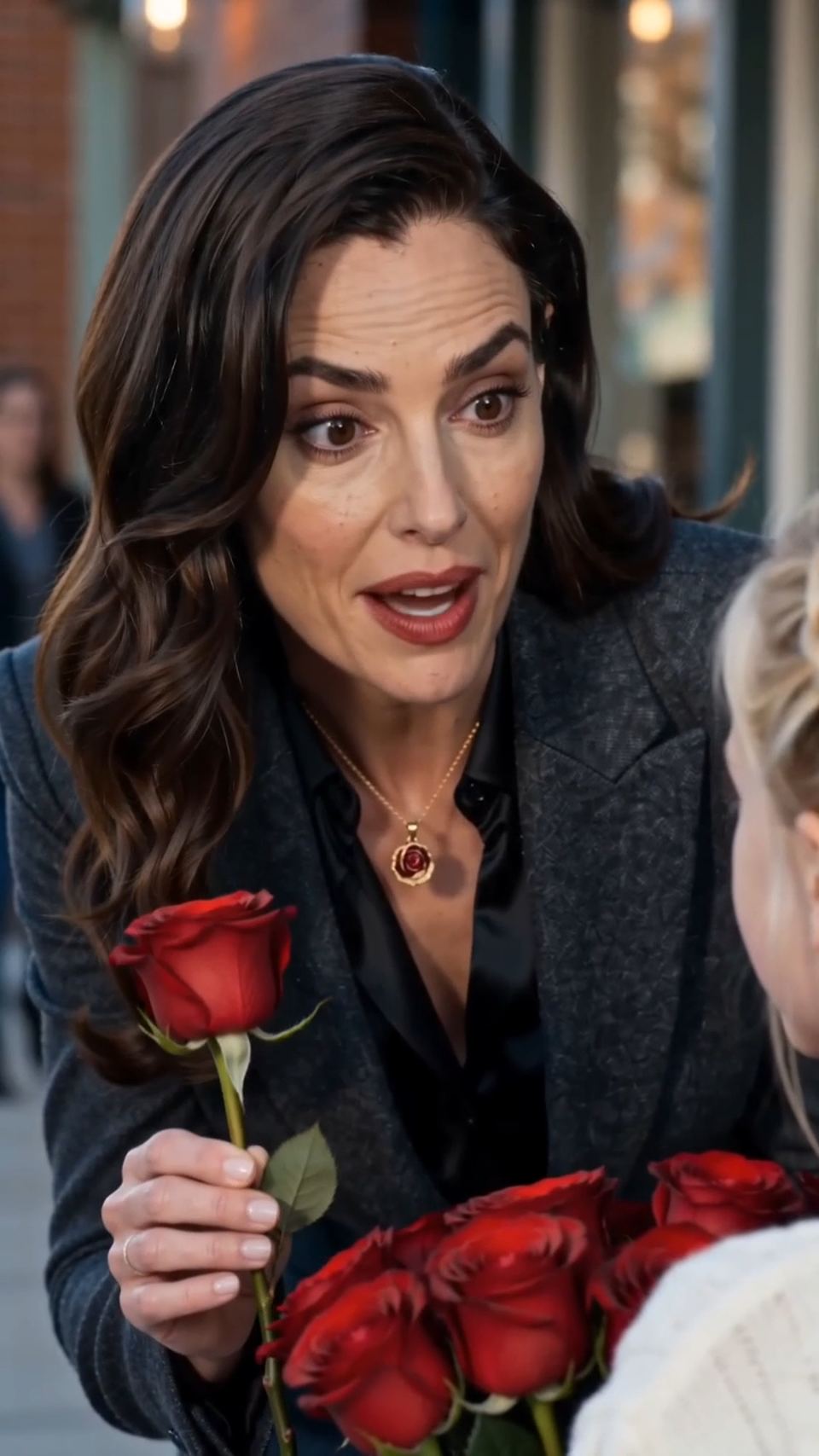
    As Elena reached in, the gold pendant slipped from beneath her black silk blouse. It hung at her throat, a ruby rose set in gold.

    The girl’s smile vanished.

    She stared hard at the pendant, blue eyes wide, her body leaning forward as if pulled by a string.

    “Ma’am… your pendant looks just like my mom’s.”

    Elena gave a polite laugh at first. Then something cold moved through her chest.

    “No, sweetheart. This is my family’s pendant.”

    The girl hugged the silver bucket tighter. “Does it say Rosewood on the back?”

    Elena froze.

    The red rose trembled in her hand. No one knew about the engraving. Hardly anyone alive even knew the word.

    “Rosewood…” she whispered.

    She looked down at the child again, no longer seeing just a girl on the street. She saw the braided blond hair, the serious little mouth, the certainty.

    “Where is your mom now?” Elena asked.

    The girl’s face changed. Not fear. Not exactly.

    Just the careful expression of a child who had learned adults often asked questions but did not always help.

    “She’s across the street,” the girl said softly. “But she told me if I ever saw that pendant, I had to ask your name first.”

    Elena turned so quickly she almost dropped the rose.

    Across the street, beside the vintage cafe window, a woman stood half-hidden near a wooden flower rack. She wore a brown coat too thin for the season, her shoulders tight, one hand pressed against the wall as if steadying herself. Her hair was lighter than Elena’s, not dark but honey-blond. For one strange second, she looked familiar and impossible at once.

    The little girl crossed carefully through a break in the foot traffic. Elena followed.

    The woman lifted her face.

    Elena stopped in the middle of the pavement.

    Twenty-two years fell away and came back all at once.

    “Clara?”

    The woman’s lips parted. Her eyes filled before she spoke. “You still say my name the same way.”

    Elena felt the world tilt.

    Clara was her younger sister. Clara, who had vanished at nineteen. Clara, who had left home after one savage fight with their father and never answered another call. Their mother had died waiting for news. Their father had insisted Clara was gone by choice and should stay gone.

    But here she was. Older. Thinner. Alive.

    The little girl stood between them, looking from one face to the other.

    “You told me she might not remember you,” the girl whispered to her mother.

    Clara gave a broken smile. “I said she might not believe me.”

    Elena looked at the child’s blond braids, then back at Clara. “This is your daughter?”

    “Yes. Her name is Ivy.”

    Elena’s fingers closed around the rose stem until a thorn bit her skin. “Why now? After all these years, why this street, this city, this moment?”

    Clara swallowed hard. “Because I didn’t come back for me.”

    She reached into her coat pocket and pulled out an old folded envelope, worn soft at the edges.

    “It was hidden in our father’s desk,” she said. “And if what’s inside is true, our mother lied to both of us before she died.”

    They sat in the back corner of the cafe, where the bell on the door rang every few minutes and the smell of coffee almost covered Elena’s shaking nerves.

    Ivy sat with hot chocolate and a slice of orange cake, quiet but listening.

    Clara laid the envelope on the table between them.

    Elena recognized their mother’s handwriting immediately.

    For my daughters, if I fail to tell you in time.

    Her throat tightened.

    Clara looked down. “I found it three weeks ago. I went back to the old house after Dad died.”

    Elena stared at her. “Dad died six months ago.”

    “I know.” Clara’s voice stayed flat. “No one told me. A neighbor did.”

    Shame moved through Elena. Their father had cut Clara’s name out of conversation so completely that Elena had obeyed the silence without even noticing.

    She unfolded the letter.

    Their mother wrote of fear, of pressure, of a child born before her marriage and given away through a private arrangement made by Elena’s grandfather. A baby girl. Hidden to protect reputation. Hidden under the Rosewood name.

    Elena looked up, confused. “This was years before we were born.”

    Clara nodded. “We had an older sister.”

    The words landed like a crack through ice.

    Their mother had kept one pendant. The other had gone with the baby.

    Elena touched the ruby rose at her throat.

    Clara reached slowly beneath her coat collar and drew out another pendant. Same gold rose. Same red stone. Same chain, repaired twice.

    Ivy leaned in. “Mom’s says Rosewood too.”

    Elena could barely breathe. “Then who got the first baby? Where did she go?”

    Clara pushed a second paper across the table. It was not old. It was a photocopy from a clinic file.

    “Before she died,” Clara said, “Mom paid to search for her.”

    Elena read the final line once, then again.

    Female infant placed through St. Agnes Maternity Home. Records sealed. Follow-up contact requested by adoptive mother: Margaret Vale.

    Margaret Vale was not a stranger.

    She was the woman who had raised Elena and Clara’s closest childhood friend, Nina.

    And Nina had died four months ago.

    At the bottom of the page was one handwritten note in blue ink:

    Her daughter may still be alive. Ask about the girl called Mara.

    They drove to St. Agnes the next morning, though it was no longer a maternity home. The old brick building had become an assisted living center, with trimmed hedges and fresh paint that could not hide its age.

    Elena brought the letter.

    Clara brought the second pendant.

    Ivy carried the scratched silver flower bucket in her lap because she refused to leave it behind. “It brought you together,” she said.

    Inside, a retired nun named Sister Beatrice agreed to speak with them after seeing the pendants. Her hands trembled when she touched the engraved backs.

    “I remember those,” she said quietly. “Your mother came here twice. Once with her father. Once alone.”

    Elena felt anger rise sharp and hot. “Did she give up her baby willingly?”

    Sister Beatrice held her gaze. “No young woman in this building was ever as free as people liked to say.”

    Clara closed her eyes.

    The room stayed still except for the soft tick of a wall clock.

    Sister Beatrice told them the baby had been placed with Margaret Vale, a widow who had recently lost her own child. But there had been another twist years later. Margaret became ill. Her daughter, Mara, had entered foster care briefly at age twelve before being reclaimed by a cousin.

    Elena whispered, “Mara Vale?”

    Sister Beatrice nodded. “Then she changed her surname when she married. Mara Bennett.”

    Clara looked at Elena in confusion. Elena was already on her feet.

    “Mara Bennett worked at the library with me for eleven years.”

    She saw it all at once. The familiar smile. The shared love of old poetry. The strange pull she had never understood. Mara had left town ten years ago after her husband got a trucking job in Oregon. They had exchanged Christmas cards for a while, then lost touch.

    “Do you have an address?” Elena asked.

    Sister Beatrice hesitated, then opened a drawer. “Not for Mara. But for her son. He wrote last year asking about family records.”

    She handed over a card.

    On it was the name Daniel Bennett, and beneath it, a town only ninety miles away.

    Then Ivy tugged Elena’s sleeve and pointed to the back of the card.

    In childish block letters, someone had added a note:

    My mother passed in March. I still have her pendant.

    Rain began just as they reached the small town.

    Daniel Bennett opened the door before Elena could knock twice. He was in his forties, broad-shouldered, tired-eyed, with a face that held traces of someone she had loved without knowing why.

    When he saw the two pendants in Elena’s and Clara’s hands, he went pale.

    “My mother said this day might come,” he said.

    Inside his modest house, beside a lamp and a shelf of old paperbacks, stood a framed photo of Mara. Elena’s knees weakened. It was her old friend. Her sister. Gone before the truth could be spoken aloud.

    Daniel brought out a small wooden box.

    Inside lay the third pendant.

    And a note.

    If anyone wearing the rose finds you, listen before you judge me.

    Mara’s letter was short. She wrote that Margaret Vale had told her, late in life, that she had been adopted through church channels. She had searched quietly but stopped when she learned her birth mother had died. She had met Elena by chance at the library and nearly told her many times. But by then Elena was caring for their sick father, bitter and closed off, and Mara feared reopening an old wound with no proof.

    “I think she knew,” Elena said, tears running freely now. “Not at first. But later. She knew.”

    Daniel nodded. “She kept every card you sent.”

    Clara covered her mouth and sobbed.

    Ivy stepped close to the table and set down one final rose from her bucket beside Mara’s photograph.

    “We found her,” Elena whispered. “Too late, but we found her.”

    They could not get back the years.

    They could not ask Mara what she needed, or what she suffered, or whether she had forgiven the people who shaped her life in secret.

    But they could say her name together.

    Weeks later, Elena, Clara, and Ivy met every Sunday at the same cafe street. Elena wore her pendant openly. Clara did too. Daniel sometimes came with his teenage daughter, who had Mara’s laugh.

    On the first Sunday of spring, Ivy sold roses again, only this time for the assisted living home’s family fund.

    A gray-haired woman bought one, then stared at Elena’s pendant with tears in her eyes.

    “I knew a girl once,” she said carefully, “who wore one just like that at St. Agnes.”

    Elena looked up.

    There were still stories left untold.

  • A Shoemaker’s Kindness Came Back Thirty Years Later

    A Shoemaker’s Kindness Came Back Thirty Years Later

    “This is all I have…”

    The boy said it so quietly that Martin almost missed him over the rain tapping the shop window.

    Evan was eight. His hands shook as he set two coins on the counter. One coin rolled, hit the wood, and stopped near Martin’s old ruler.

    Martin looked at the shoe, then at the boy’s thin shoulders.

    “Who sent you out in this weather?” he asked.

    “No one,” Evan whispered.

    The answer landed hard. Martin had seen hungry children before. He had seen shame, too. It sat on Evan like wet clothing.

    Without another word, Martin sat him on the chair by the stove and took the damaged shoe to the workbench. The shop smelled of leather polish, glue, and rain. Evan watched every movement as if kindness itself might disappear.

    Martin patched the torn toe, replaced the loose sole, and tied the laces with careful hands. Then he pushed the shoe back.

    Evan stared.

    Martin slid the two coins across the counter and said, “Keep it, son. You need it more.”

    The boy’s lip trembled. He took the shoe, but not the coins.

    “I’ll bring them back,” he said.

    Martin smiled. “You already did something better.”

    Years later, Martin still remembered that voice.

    And he never imagined that boy would return carrying the very shoe that had once been almost thrown away.

    The rain had returned to the old street, softer now, but steady.

    Martin looked up from a half-mended heel when the bell over the door rang. A tall man stepped inside, carrying a dark leather case. He wore a deep blue suit, polished black shoes, and a face Martin had not seen in thirty years.

    Still, the brown eyes were the same.

    “Do you remember me, Mr. Martin?”

    Martin’s pencil slipped from his fingers. “Evan?”

    The man gave a small, emotional nod.

    Inside the case was the repaired childhood shoe, the yellowed note Martin had tucked inside it years ago, and the same two coins. Evan laid them carefully on the counter as if they were sacred.

    “I kept everything,” he said. “I never forgot what you did for me.”

    Martin stared at the shoe, then at Evan’s face. “You were just a boy.”

    “And you were the first person who treated me like I mattered.”

    His voice cracked on the last word.

    For a moment, the shop was silent except for rain and the faint hum of the old lamp. Then Evan reached into his pocket and took out folded papers.

    Martin frowned. “What is that?”

    “Property transfer documents,” Evan said, not looking away. “This shop saved my life. Now I want to save it.”

    Martin’s throat tightened. “I don’t need saving.”

    “I know,” Evan said. “But you may need help sooner than you think.”

    He glanced toward the back room, where a faded notice was pinned beside old invoices.

    Martin followed his gaze and felt his stomach drop.

    It was the eviction warning he had been trying not to read.

    Martin had hoped to hide the notice for one more week. That hope died in Evan’s face.

    “You can’t stay here long enough to finish repairs?” Evan asked.

    “I can finish this boot before supper,” Martin said. “That’s all that matters.”

    But it mattered. The landlord had raised the rent again, and the shop’s roof still leaked. Martin’s hands were steady, but his savings were not.

    Evan listened without interrupting. When Martin finally stopped, embarrassed by how much he’d revealed, Evan set the shoebox on the counter.

    “I came back for more than thanks,” he said. “I need to tell you something.”

    He reached into the box and pulled out the yellowed note Martin had written years ago: For the boy who paid with two coins. May life be kinder to you than the streets were today.

    Evan swallowed hard. “My mother kept this in her Bible.”

    Martin blinked. “Your mother?”

    “Her name was Lena.” Evan looked up. “She worked here as your cleaner for six months after my father left.”

    Martin stared. Lena had been young, quiet, always tired. He remembered her, but only vaguely.

    Evan took a breath. “She died last winter. Before she died, she told me I needed to find you. She said you were the only man who ever asked if I was warm enough.”

    Martin sat down slowly.

    “She also told me why you gave me the shoe and the coins back,” Evan said. “You weren’t just kind. You recognized me.”

    Martin’s chest went tight. He looked at the boy he had helped and suddenly saw a name, a memory, a face from long ago.

    Then Evan said the words that changed everything.

    “My mother said you were my uncle.”

    Martin could not speak.

    He had been twenty-four then, too proud and too angry after a family quarrel that had torn him from his sister, Lena. He had not seen her child. He had not known she had named the boy after their father.

    Evan placed a hand on the counter. “She said you left before she could tell you.”

    Martin shook his head, stunned. “She disappeared from the neighborhood. I looked for months.”

    Lena had not disappeared. She had been hiding. Martin learned that slowly, in pieces, as Evan told him how his mother had raised him alone, working nights, moving from flat to flat, too stubborn to ask for help.

    And now the truth stung more than rain ever could.

    Martin had not only lost a shop. He had lost a sister.

    Evan opened the leather case again and pulled out a second envelope. Inside was a letter in Lena’s hand, shaky but clear.

    If Evan finds you, forgive us both. I was ashamed. I thought I had no right to ask for your help after the things I ran from. But he always asked about the man who fixed his shoe.

    Martin held the letter with trembling fingers. His sister’s handwriting blurred.

    “I thought you came to repay a debt,” he said.

    “I came to ask if I still had family,” Evan replied.

    The words broke something open in Martin.

    He stood, went to the back room, and returned with a small tin box. Inside were old photographs he had never shown anyone. In one, a young Lena laughed beside him under a market awning. In another, Evan as a toddler sat on her lap, a tiny shoe on one foot and a sock on the other.

    Evan stared. “She kept these?”

    “All this time,” Martin said softly. “And I kept failing to look closely enough.”

    At that moment, a loud bang rattled the front window.

    The landlord had arrived with a locksmith.

    The locksmith stood beside the landlord on the wet sidewalk, keys in hand.

    “You were served notice,” the landlord said. “You have until Monday.”

    Martin moved toward the door, but Evan stepped in front of him.

    “No,” Evan said calmly. “You don’t understand what this place is.”

    He turned to Martin. “Open the box.”

    Martin looked at him, confused, then lifted the shoebox lid one last time. Beneath the shoe and the note was a folded document Lena had hidden there years ago: a handwritten agreement showing she had paid rent in advance for the shop’s back room during hard months, enough to keep Martin afloat after their father’s death.

    “He never knew,” Evan whispered.

    Martin closed his eyes. Lena had protected him, just as he had once protected her son.

    By morning, Evan had arranged for a local historical society to list the shop as a long-standing family business, which delayed the eviction while the case was reviewed. But that was not the real gift.

    The real gift was dinner.

    That night, Evan brought his wife, his daughter, and a photograph of Lena smiling beside a Christmas tree. He put her picture in the front window of the shop.

    “This is my mother,” he told Martin’s customers the next day. “And this is my uncle.”

    The words filled the little room with a warmth the rain could not touch.

    Martin kept his shop. More than that, he got his sister back in memory and his nephew in the flesh. Evan came every Sunday after that, not with money, but with tea, bread, and stories.

    And on the counter, next to the old ruler, Martin placed the two coins in a small glass dish.

    Not as payment.

    As proof that kindness never really leaves.

  • At the Gala, He Called the Waitress His Wife

    At the Gala, He Called the Waitress His Wife

    “Because she’s not just a waitress. She’s my wife.”

    The words hit the ballroom like a dropped glass.

    Claire froze with her tray trembling in her hands. The champagne inside the flutes quivered, but somehow none of it spilled. Around her, the guests in silk and diamonds stared as if she had turned into smoke.

    Drew Mercer stepped away from the blonde woman clinging to his arm and walked toward Claire.

    He had once been the man she married in a courthouse with no flowers, no guests, and no promises except survival. Now he stood under a crystal chandelier in a room full of people who clearly believed he belonged somewhere else.

    The blonde woman looked outraged. “Your wife?”

    Claire’s face burned. “Drew, don’t.”

    But he was already close enough to see the tears she was trying not to shed.

    A man near the orchestra lowered his voice. Another guest whispered Claire’s name like it was a scandal.

    Then Drew said, quietly but clearly, “You left without telling me why.”

    Claire’s throat tightened. “I had no choice.”

    Before Drew could answer, an older woman in pearls stepped forward from the edge of the crowd.

    She was wearing the Mercer family emerald pin.

    And Claire went pale, because this was the first person from Drew’s past who had ever known her name.

    The woman with the emerald pin did not look surprised.

    That frightened Claire more than the shouting had.

    “You are Claire Bennett,” she said. Not a question. “You were supposed to be gone.”

    Drew turned sharply. “You know her?”

    The woman’s mouth tightened. “I know enough.”

    Claire had not seen Eleanor Mercer in six years. Not since the night she packed one bag, left Drew a single note, and disappeared before dawn. Back then, she had been young enough to believe love could survive silence. Then life had taught her otherwise.

    Now Eleanor stood in the center of the gala like a judge.

    “You work here?” Eleanor asked. “As a server?”

    Claire lifted her chin. “Yes.”

    Drew stared at her uniform. “Why?”

    Because she had bills. Because she had a mother in a care home. Because pride did not pay rent. But none of that mattered now.

    “That isn’t the issue,” Claire said.

    “Oh, it is,” said the blonde woman, whose name Claire suddenly remembered as Vivienne Hale. “If she really is your wife, why are you here with me?”

    That question landed harder than she meant it to.

    Drew looked from Vivienne to Claire. “I came tonight because Eleanor told me you would be here.”

    Claire blinked. “What?”

    Eleanor’s eyes did not soften. “I asked him to come. I needed proof.”

    The music had resumed, but no one was dancing now. People were pretending not to listen while listening to everything.

    Claire took one careful breath. “Proof of what?”

    Eleanor reached into her clutch and removed a folded letter, yellowed at the edges.

    It was addressed in Claire’s handwriting.

    Claire had not seen that envelope since the night she vanished.

    And on the back, in another hand, was a sentence that made her knees weaken.

    “Do not tell Drew about the baby.”

    Claire could not hear the orchestra anymore.

    The room tilted around her, and for one terrible second she thought she might drop the tray and the whole evening with it. Drew caught her elbow before she fell.

    “Baby?” he said, his voice rough. “What baby?”

    Claire pulled away as if his touch burned. “Not here.”

    Eleanor’s face had gone rigid. “You had no right to keep it from him.”

    “I had every right,” Claire snapped, and the sharpness in her own voice startled her.

    She had spent years learning how to survive by being small. Quiet. Useful. Invisible. But this was not a night for silence anymore.

    Drew followed her into a side hallway lined with gilt mirrors and soft lamps. The noise of the gala dulled behind the doors. For a moment, they were alone.

    “Tell me the truth,” he said.

    Claire looked at the letter in Eleanor’s hand. Her own handwriting stared back at her like a ghost.

    Six years ago, Drew had just been hired for the job that would change his life. Claire had been working double shifts at a bakery, trying to care for her mother and hide her fear of what the future would do to them. Then she got pregnant. Then she learned Drew’s father was already pressing him toward another woman, another life, another path.

    Worse, Claire had been told something about Drew that she never confirmed. Something she still hated herself for believing.

    “I left because I thought you chose her,” she said.

    Drew shook his head. “Vivienne? I never chose Vivienne.”

    “Then why did your family tell me to disappear?”

    He went still.

    That answer mattered. She saw it in his face.

    Before he could speak, Eleanor stepped into the hallway. “Because if you stayed, the baby would have ruined everything.”

    Claire stared at her. “My baby was not a problem to be managed.”

    “No,” Eleanor said softly. “It was the one thing your husband was willing to lose his inheritance over.”

    Drew’s eyes widened.

    Claire turned to him, confused, angry, and suddenly afraid of what else might be true.

    Then Eleanor handed him the second page of the letter.

    It was not Claire’s handwriting.

    It was a medical report.

    And the name on it was Claire’s mother.

    Claire read the report twice before the words made sense.

    Her mother, Anne Bennett, had been diagnosed with advanced heart failure six years ago. The treatment had cost more than Claire could pay. The report showed a private payment. Full coverage. Anonymous donor.

    Claire looked up slowly. “You paid for her care?”

    Eleanor’s eyes flickered. Not with guilt. With something close to grief.

    “I did,” she said. “But not for the reason you think.”

    Drew stared at her. “You knew Claire was pregnant.”

    “I knew more than that.”

    The hallway seemed too small now. Too bright. Claire could hear her own pulse.

    Eleanor drew a breath. “Your mother came to me. She said you were terrified and alone. She asked me to protect your future, because she believed the child would drag you into a life neither of you could survive.”

    Claire shook her head. “No. My mother would never say that.”

    “She said it because she was dying,” Eleanor replied. “And because I told her the truth. I told her Drew’s father planned to use your marriage to force him into a financial arrangement with Vivienne’s family.”

    Drew turned sharply. “That’s what this was?”

    Vivienne had followed them after all, pale now and furious. “You make it sound as if I was the villain.”

    “You were part of it,” Eleanor said.

    Vivienne flinched. For the first time, her arrogance cracked. “I was nineteen. My father told me Drew would lose everything if he stayed with Claire. I believed him.”

    Claire looked at her, stunned by the honesty.

    Drew said nothing. He was staring at the medical report.

    “There’s more,” Eleanor admitted. “Your child was born in another state. The adoption papers were filed the same week Claire left.”

    Claire’s breath stopped.

    “I never gave a child up,” she whispered.

    Eleanor handed her a final page.

    It was a birth certificate.

    Under “Mother,” it said Claire Bennett.

    Under “Father,” it said Drew Mercer.

    And at the bottom, in a small nurse’s stamp, was the name of the hospital where Claire’s mother had died.

    Claire felt her whole life split open.

    “If the baby wasn’t adopted,” Drew said slowly, “then where is our child now?”

    Eleanor closed her eyes.

    And Claire realized with cold certainty that someone in this family had lied about more than love.

    The answer came from the most unexpected person in the room.

    A teenage server, no older than sixteen, had been standing near the door through most of the confrontation. Claire had noticed her earlier because she kept staring at the floor, clearly terrified of the wealthy guests.

    Now the girl stepped forward.

    “I think I know,” she said.

    Eleanor turned white. “Lily, this is not your place.”

    But Lily held up a folded photograph with trembling fingers.

    It showed a small boy, maybe six years old, standing beside a piano bench in a modest house. On the back was written: “Daniel Bennett Mercer, age 6.”

    Claire made a sound she did not recognize as her own.

    Drew took the photo and stared at it. His hands shook. “This is my son.”

    Lily nodded. “He lives with my aunt. She works at the hospice where your mother stayed. She said the boy was brought there years ago after his father disappeared and his mother got sick.”

    Claire looked at Eleanor. “You knew.”

    “I was trying to keep him safe,” Eleanor said, and for the first time she sounded old.

    The truth came apart in pieces after that. Drew’s father had paid to hide the pregnancy. Claire’s mother, desperate and dying, had signed temporary guardianship papers she did not understand. Eleanor had let it happen because she believed Drew would be destroyed by scandal. Vivienne’s family had walked away once the money was secured. Everyone had chosen fear, and a child had paid for it.

    Drew set the photograph down carefully.

    “No more lies,” he said.

    They found Daniel that night at the hospice, asleep in a small room with a baseball cap on the bedside table and a sketch of a woman with dark hair tucked under his pillow. He woke slowly, wary at first, then stared at Claire as if he had seen her in dreams.

    “Mom?” he whispered.

    Claire knelt beside the bed and cried for the first time in years.

    Not from shame now.

    From relief.

    A month later, Claire no longer wore the black-and-white uniform. She sat at a kitchen table in a small rented house with Drew, Daniel, and a stack of school forms between them. Eleanor visited on Sundays. Vivienne wrote a letter of apology that Claire did not answer right away. She was learning that forgiveness did not have to be rushed to be real.

    Drew held Claire’s hand across the table.

    “You should have trusted me,” he said softly.

    “I know,” Claire answered. “And you should have come looking.”

    He smiled, tired and tender. “I am now.”

    On the windowsill sat the old yellowed letter and the photograph Lily had found.

    One had nearly destroyed them.

    The other had given them back their son.

    And when Daniel laughed in the next room, Claire finally understood that sometimes the truth does not arrive to punish you.

    Sometimes it arrives to bring you home.

  • The Fisherman and the Baby by the Rocks

    The Fisherman and the Baby by the Rocks

    “Oh my God…”

    Erik Nilsen had seen storms tear nets apart, watched boats vanish into fog, and once pulled a dead seal from the rocks with his own hands.

    Nothing had prepared him for the baby lying on the black coast stones.

    Her wet platinum curls clung to her forehead.

    And below her tiny sweater, half-hidden by the tide, was a silver-blue tail that flicked weakly against the rock.

    The child lifted her head and stared at him with wide green eyes, as calm as if she had been waiting for him all along. Then she made a soft sound, more curious than afraid.

    Erik looked behind him. No boat. No footprints. No person in sight.

    Only the orange buoy wedged between the stones, battered and old, as if it had washed up with her.

    His rough hand hovered in the air.

    “Is this real?”

    The question came out in a whisper, almost lost beneath the wind.

    The baby reached for him.

    That simple touch hit him harder than any wave.

    Erik had lost his wife, Solveig, three years earlier. He had never had children. He had spent months learning how to live inside his own silence.

    He noticed then that the orange buoy had a name scratched into it.

    LINA.

    Before he could turn it over, a voice shouted from the cliff path.

    “Erik? What are you doing down there?”

    He looked up.

    A woman in a dark raincoat stood above him, one hand gripping the railing. He recognized her at once. Mara, the village nurse.

    But when she saw the baby, her face changed completely.

    Not surprise.

    Fear.

    And that was when Erik understood this child was not only lost.

    She was being searched for.

    Mara came down the path slowly, as if every step cost her something.

    Erik stood with the baby pressed against his chest, wrapped now in his wool jacket. The child had stopped crying the moment he held her. Her small fingers curled into the fabric at his shoulder.

    “Where did she come from?” Mara asked.

    “I found her on the rocks,” Erik said. “There was no one else.”

    Mara’s gaze kept moving to the tail, then away again.

    “Did anyone see you?”

    “No.”

    That answer seemed to relieve her and frighten her at the same time.

    She knelt, keeping her distance. “Erik, listen to me. You need to bring her to the clinic. Right now.”

    “Why are you looking at her like that?”

    Mara hesitated.

    The baby made a small sound and opened her hand. Inside her palm was a shell, white and spiral-shaped, too perfect to be natural. Erik had not seen it before. Maybe she had been clutching it all along.

    Mara’s face went pale.

    “That shell,” she said.

    “Do you know it?”

    “I know who may be looking for her.”

    Erik felt his jaw tighten. “Then say it.”

    Mara stood, suddenly unable to meet his eyes. “Her mother disappeared six months ago near the outer cove. The whole village heard the rumors. Some said she drowned. Others said she ran.”

    “Her mother?”

    Mara nodded once. “A foreign woman. Alone. She had the same eyes.”

    Erik looked down at the baby.

    The child had fallen asleep against him, trusting as a lamb.

    Mara took a breath. “If people find out what she is, they will panic. And if the wrong people hear about her first…”

    She stopped.

    “Wrong people?” Erik said.

    Before she could answer, headlights cut through the rain at the top of the cliff road.

    A black van.

    Not a fishing truck. Not a delivery van.

    It rolled to a stop and stayed there, engine running.

    Erik felt the baby stir in his arms.

    Mara went rigid.

    Then the side door of the van opened, and a tall man in a long dark coat stepped out holding a folder sealed in plastic.

    He called down to the rocks.

    “We were told to find the child.”

    Erik moved before he thought.

    He backed into the shadow of the cliff wall, one arm around the sleeping baby, the other raised instinctively in front of her. Mara grabbed his sleeve.

    “Don’t let them take her yet,” she said.

    “Who are they?”

    “I don’t know,” she whispered. “But they came to the clinic yesterday asking about an infant with a tail.”

    Erik stared at her. “And you didn’t tell me?”

    “I didn’t know if I should. I was trying to keep her safe.”

    The man on the cliff path started down with careful, measured steps. He looked too calm for someone bringing bad news.

    “My name is Owen Vale,” he called. “I’m from the maritime registry. The child belongs in protective custody.”

    Erik barked a bitter laugh. “Protective custody? She was left on a rock in the rain.”

    Owen stopped a few feet away. His eyes dropped to the baby, then to the orange buoy tucked under Erik’s arm.

    “That buoy,” he said quietly. “Where did you get it?”

    “She was lying beside it.”

    Owen’s expression changed for the first time. Not surprise. Recognition.

    He opened the folder and pulled out a photograph sealed in a clear sleeve.

    Erik saw a woman standing on a dock in a long blue coat, one hand resting on her stomach. Her face was tired but proud.

    “Her name was Elin Svala,” Owen said. “And she left this child with instructions.”

    Mara frowned. “Left her? Where?”

    Owen did not answer at once. He held up another page. It was a handwritten note, stained by seawater.

    If anything happens to me, take my daughter to the man who kept the orange buoy.

    Erik stared at the words until they blurred.

    “I never saw this woman,” he said.

    Owen looked at him. “She knew you anyway.”

    The baby shifted and opened her hand again. The white shell slid into Erik’s palm.

    On the underside was a tiny engraving.

    E.N.

    Erik’s breath caught.

    Mara touched her mouth. “Those are your initials.”

    Erik remembered the buoy. Years ago, he had carved E.N. into it while repairing a broken mooring line for a stranger at the harbor. A woman with black hair had thanked him and asked his name.

    He had forgotten her face.

    But she had not forgotten him.

    Owen lifted his chin. “There is more. The child’s mother is not the only one who left a message.”

    He pulled out one final page and turned it toward Erik.

    It was a birth record.

    And the father’s name on it was written in Erik’s own handwriting.

    Erik could only stare.

    “No,” he said, though the word sounded weak even to him. “That isn’t possible.”

    “It is,” Owen replied. “We checked the ink, the clinic stamp, and the witness signature. You signed this twelve years ago.”

    Mara looked from one man to the other. “You have to explain that.”

    Erik shut his eyes.

    Then memory came back in broken pieces.

    A storm. A ferry delay. A night in the harbor shelter after a rescue effort. A woman crying because she had no family, no papers, and no place to go. He had given her dry clothes, hot tea, and the only spare room at the fisherman’s hostel. She had told him her name was Elin. He had never thought of himself as important enough to remember.

    But she had.

    And now the child in his arms was looking up at him with his same green-gray eyes.

    He swallowed hard. “I didn’t know.”

    “I believe you,” Owen said. “But someone else will not.”

    That someone arrived an hour later.

    A white SUV stopped above the cliff, and a man in a tailored coat stepped out with two officials from child services. He carried himself like the rules belonged to him.

    “Mr. Nilsen,” he said, “you are being asked to release the child immediately.”

    Erik tightened his hold. “No.”

    The child woke at his voice and began to cry, a frightened little sound that made his chest ache.

    Mara stepped forward. “She’s exhausted and cold. If you take her now, she will panic.”

    “We have procedures,” the man said.

    “Then follow them after you hear me out,” Erik snapped.

    He lifted the orange buoy.

    “This was with her. It has my initials on it. There is a note from her mother. And if your procedures can’t wait ten minutes, then they are not meant to protect children.”

    No one answered.

    Then Owen spoke.

    “There is another issue. Elin was not fleeing alone. She was hiding the baby from her former partner. A man named Henrik Soren. He has been asking about the child since last winter.”

    Mara went pale again. “Henrik is in the village?”

    Owen nodded. “He checked into the harbor inn last night.”

    Erik looked down at the baby, then toward the road where the van had disappeared.

    For the first time, the danger was no longer abstract.

    It had a name.

    And it was close.

    By dawn, the storm had passed.

    The sea looked almost innocent, silver under a washed-out sky. Erik stood outside the small cliff house with the baby asleep against his shoulder, while Mara packed warm blankets and formula into an old canvas bag.

    No one had taken the child away.

    Not yet.

    Owen had persuaded the officials to wait for the family hearing at the town hall. Henrik Soren had been found at the harbor inn and was under watch. The village had begun to wake up, whispering, watching, wondering.

    But the truth was no longer hiding.

    Inside the house, Erik placed the orange buoy on the table beside the shell with the engraved initials. He had spent the night reading Elin’s note again and again.

    Take my daughter to the man who kept the orange buoy.

    She had trusted a memory.

    And that memory had brought her child home.

    When the baby stirred, Erik smiled despite the tears in his eyes.

    “I think she knows you now,” Mara said quietly.

    “She knows I’m the one who stayed.”

    At the town hall, Henrik tried to claim he had only wanted to protect Elin. But the records Owen brought, along with messages Elin had hidden with a friend in Bergen, told a different story. He had tried to force her to give up the baby after learning the child was born with a rare genetic condition tied to the sea. Elin had run.

    Not because she was unstable.

    Because she was brave.

    The hearing ended with the baby placed temporarily in Erik’s care until the court could review everything. The officials called it temporary custody.

    Erik called it mercy.

    Weeks later, the village gathered at the harbor for the baby’s naming ceremony. Not a legal one. A promise one.

    Mara held the child while Erik spoke.

    “We called her Lina,” he said, glancing at the buoy on the bench beside him. “Because she was found by the sea, but she belongs to people who stayed.”

    The crowd fell quiet.

    Then a woman Erik had never seen before stepped forward from the back of the pier. She wore a blue scarf and carried an envelope.

    “I was Elin’s closest friend,” she said. “She asked me to bring this if anything ever happened.”

    Inside was one last photograph.

    Elin, smiling weakly on a dock.

    And beside her, a little boy of about eight, looking through a window from inside a care home.

    “He was kept there by Henrik’s family,” the woman said. “Elin was searching for him too.”

    Erik looked up sharply.

    The baby in his arms began to laugh in her sleep.

    And for the first time, the sea did not feel like an ending.

    It felt like a beginning.