Blog

  • He Chose His Daughter Over the New Bride

    He Chose His Daughter Over the New Bride

    “She said after you say ‘I do,’ I have to leave forever.”

    Daniel Whitmore felt the world stop.

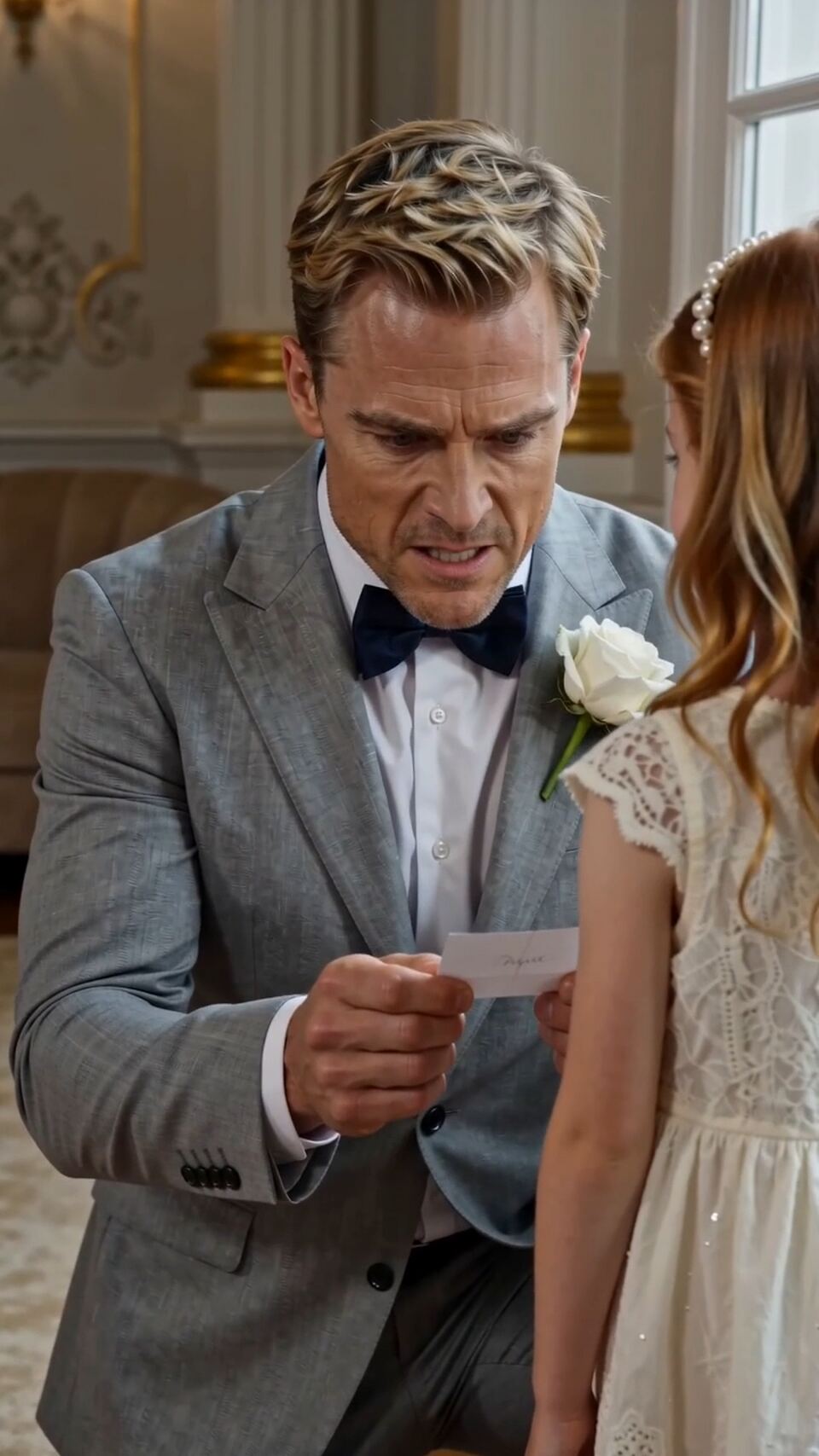
    His daughter, Lily, was standing by the window in the private bridal lounge, her face wet with tears.

    Daniel knelt in front of her.

    “Lily, look at me.”

    She tried, but her eyes trembled.

    “Who told you that?”

    Lily pulled a folded note from her small purse. Daniel took it carefully. The paper was crumpled, as if she had held it for a long time before finding the courage to show him.

    The handwriting was elegant.

    Too elegant to belong to a child.

    After the wedding, your father will have a new family.

    Daniel squeezed the note so tightly that the paper almost tore.

    He had lost his wife, Clara, three years earlier. Since then, Lily had been his entire world. The reason he had agreed to remarry was not because he wanted to forget Clara, but because he believed Lily deserved a bigger family, a woman who had promised to love her as her own.

    That woman was Vivian.

    The bride.

    At that moment, the door opened.

    Vivian stepped inside in her champagne satin wedding gown, her face tight with impatience.

    “Darling, the bishop is waiting.”

    Daniel did not move.

    Lily hid behind him.

    Vivian looked at the child, and her smile faded.

    “Leave her with the nanny.”

    The sentence was cold. Natural. As if she were talking about a coat someone had left on a chair.

    Daniel slowly lifted his eyes.

    Vivian seemed to realize too late that something had changed.

    “Daniel, do not do this now. Everyone is waiting.”

    He stood.

    In one hand, he held the note. With the other, he took Lily’s hand.

    His voice was low, but every word landed harder than a shout.

    “The wedding is off. You will never touch my daughter again.”

    Vivian froze.

    The color drained from her face.

    From the hallway came the murmurs of guests. The wedding music was still playing beyond the doors, as if no one knew the marriage had already died before it began.

    Vivian took one step toward him.

    “Daniel, that child is lying.”

    Lily let out a sob.

    Daniel looked at the woman he had almost made his wife.

    “Then explain why this is your handwriting.”

    Vivian opened her mouth.

    No words came out.

    And for the first time, Daniel understood that his daughter’s fear had not begun that morning.

    It had been growing silently inside his own home.

    Vivian had entered Daniel’s life at the exact moment he was most vulnerable.

    She appeared elegant, patient, and understanding. She did not try to replace Clara too quickly. She did not pressure Lily in front of others. She did not create big emotional scenes. Instead, she was perfect.

    Too perfect.

    She brought Lily books.

    She planned family dinners.

    She told Daniel that Clara would always have a place in the house.

    And he, exhausted by years of grief, wanted to believe her.

    Now, sitting in the private office of the church with Lily beside him, Daniel looked at Vivian as if he were seeing a stranger.

    “I want the truth,” he said.

    Vivian took a slow breath and tried to recover her sweetness.

    “Daniel, Lily is a sensitive child. She has had problems since her mother died. The therapists told you that.”

    Lily lowered her head.

    Daniel felt a deep stab of guilt.

    For months, Vivian had repeated that idea. Lily was fragile. Lily was jealous. Lily was confused. Every time the little girl cried, Vivian said it was normal. Every time Lily did not want to be alone with her, Vivian called it resistance to change.

    Daniel had listened.

    He had tried to be fair.

    And maybe, by trying to be fair, he had failed to be a father.

    “The therapists you recommended,” he said.

    Vivian stiffened.

    Before she could answer, the door opened again. Nora came in, Lily’s old nanny, an older woman who had worked for the family since Clara was alive.

    Nora’s eyes were red.

    “Mr. Daniel, forgive me.”

    Daniel turned to her.

    “For what?”

    Nora pulled a small envelope from her handbag.

    “Because I should have spoken sooner.”

    Vivian stepped forward sharply.

    “Nora, stay out of this.”

    The older woman ignored her.

    “Mrs. Clara asked me to give you this if anyone ever tried to separate Lily from you.”

    Daniel took the envelope.

    His name was written on it in Clara’s handwriting.

    His heart tightened.

    He opened the letter with trembling hands.

    Daniel, if you are reading this, then I was not wrong. There are people close to our family who do not love Lily. They love what Lily will inherit.

    Daniel lifted his eyes slowly.

    “What does this mean?”

    Nora swallowed.

    “When Mrs. Clara died, part of her shares were placed in Lily’s name. While Lily is underage, you control them. But if you remarry and sign the marriage addendum, your new wife can become a co-administrator.”

    Vivian went pale.

    Daniel understood.

    The wedding was not about love.

    It was about control.

    Lily was not a difficult child.

    She was an obstacle.

    The ceremony was canceled quietly at first, but rumors spread like fire.

    Guests waited in the main hall among white flowers, gold candles, and string music. No one knew whether to stand, leave, or pretend this was only a small delay. Daniel walked out with Lily’s hand in his and ordered his assistant to send everyone home.

    Vivian followed him, her gown dragging over the carpet.

    “You cannot humiliate me like this in front of everyone.”

    Daniel stopped.

    “Humiliate you?”

    The word came out with bitter disbelief.

    “My daughter thought she was going to lose me today.”

    Vivian pressed her lips together.

    “She needed discipline.”

    “No. She needed me to listen.”

    That same afternoon, Daniel gathered his lawyers at the mansion. The house was still decorated to welcome a new wife. Fresh flowers. Prepared glasses. Engagement photos on the tables. Everything looked false.

    Lily stayed with Nora in the library, hugging her stuffed rabbit.

    Daniel entered his study and opened Clara’s will fully for the first time in years.

    He had avoided reading all of it.

    It hurt too much.

    Now he understood that pain had become a closed door behind which others had hidden secrets.

    His lawyer, Samuel Price, read in silence, then looked at Daniel gravely.

    “Your late wife left a significant trust for Lily. Companies, properties, shares. While Lily is a minor, you manage everything. But if you remarry, your new wife can become co-administrator if you sign the marriage addendum.”

    Daniel looked at the document Vivian had asked him to sign that morning.

    “She told me it was a formality.”

    Samuel shook his head.

    “It is not.”

    Then Nora entered with something else.

    An old phone that had belonged to Clara, kept for years in one of Lily’s memory boxes.

    “I found it in the child’s room,” Nora said. “Lily used it to listen to her mother’s voice.”

    Daniel turned it on.

    There was one final voice message.

    Clara.

    Her voice filled the room.

    “Daniel, if anything happens to me, do not trust Vivian Cross. I saw her with my brother in the office. They were talking about Lily, the inheritance, and speeding things up. I did not have time to explain. Please protect our daughter.”

    The air left Daniel’s lungs.

    Vivian had not acted alone.

    Clara’s brother, Adrian, was involved too.

    Lily’s uncle.

    The man who had cried at Clara’s funeral.

    And the man now listed among the wedding guests.

    Daniel did not call Adrian immediately.

    He waited.

    He knew a guilty man always appeared when he believed he could still control the story.

    At seven in the evening, while workers removed flowers from a reception that would never happen, Adrian entered the mansion with a serious face and a gentle voice.

    “Daniel, I heard about the wedding. Vivian is devastated. Perhaps you acted too quickly.”

    Daniel stood by the fireplace with Clara’s phone in his hand.

    “Lily was devastated too.”

    Adrian sighed.

    “She is a child. Children exaggerate.”

    Daniel felt something inside him close.

    That was the language of everyone who had tried to silence Lily.

    “Clara left a message.”

    Adrian froze.

    Only for one second.

    But Daniel saw it.

    “What message?”

    Daniel pressed play.

    Clara’s voice filled the room again.

    Adrian could no longer pretend surprise.

    Daniel looked at him.

    “What were you and Vivian planning?”

    Adrian rubbed a hand over his face, finally tired of acting.

    “Clara did not understand how money works. She wanted to tie everything to a child. I only wanted to protect the family legacy.”

    “By protecting it from her own daughter.”

    “Vivian would have been a good mother to Lily if the child learned her place.”

    Daniel took a step forward.

    “She threatened to send her away.”

    Adrian lifted his chin.

    “A boarding school would have been better for everyone.”

    The library door opened.

    Lily stood there, with Nora behind her.

    She had heard.

    Her face broke.

    “You wanted me gone too, Uncle Adrian?”

    The man did not answer.

    He did not need to.

    Daniel walked to his daughter and lifted her into his arms.

    “No one is sending you anywhere.”

    Then Samuel, the lawyer, entered with two police officers. During the afternoon, he had sent Clara’s recording, Vivian’s note, and the marriage addendum documents to the authorities. He had also found suspicious transfers between Adrian and an account connected to Vivian.

    Vivian arrived minutes later, still wearing the wedding dress, unaware that everyone was waiting for her.

    When she saw the officers, she stopped crying.

    “Daniel…”

    He did not move.

    Vivian looked at Lily.

    For the first time, there was no contempt in her face.

    Only fear.

    Daniel said one sentence:

    “My daughter was not the problem. She was the reason you wanted to marry me.”

    And this time, Vivian could not deny it.

    Vivian and Adrian did not go to prison immediately, but their lives collapsed in a matter of days.

    Accounts were frozen. The investigation revealed attempts to manipulate Lily’s trust, falsify psychological evaluations, and pressure employees into saying the child was emotionally unstable. The therapists Vivian had recommended were investigated as well.

    Daniel stopped protecting appearances.

    For the first time, he spoke publicly.

    Not about money.

    Not about reputation.

    He spoke about his daughter.

    “I thought I was giving her a mother,” he said to the press. “But I nearly gave my trust to someone who wanted to erase her. My greatest mistake was not listening to her sooner.”

    Lily did not watch that interview live. Daniel did not want her exposed. But days later, she asked him whether it was true that he canceled the wedding because of her.

    Daniel knelt in front of her in the garden, just as he had done that day at the church.

    “I did not cancel the wedding because of you.”

    Lily frowned.

    “You did not?”

    He smiled sadly.

    “I canceled it because I finally understood that no wedding is worth more than my daughter.”

    Lily hugged him so tightly that Daniel closed his eyes.

    The mansion changed after that.

    The engagement photographs disappeared. The wedding dress was returned. The rooms Vivian had chosen to redecorate became full of Lily’s things again: drawings, books, dolls, paper flowers, and small memories of Clara.

    Nora stayed with them.

    Samuel helped restructure the trust so no one could touch it without independent supervision.

    And Daniel learned something he should have known from the beginning: loving a child was not only protecting her from obvious dangers. It was believing her when her voice trembled.

    A year later, Daniel held a small ceremony in the garden.

    It was not a wedding.

    It was Clara’s anniversary.

    They invited only people who had truly loved her. Lily wore a pale blue dress and placed a white rose beside her mother’s photograph.

    Daniel spoke in front of everyone.

    “Clara left me many things. A home. A story. A daughter. But more than anything, she left me a warning: family is not always the person smiling beside you. Family is the person who protects your heart when you cannot protect it yourself.”

    Lily took his hand.

    “Would Mommy be proud?”

    Daniel looked at the sky.

    “Yes, my love.”

    Then he looked at her.

    “Of you most of all.”

    The ceremony ended with soft music, small laughter, and homemade food. Nothing luxurious. Nothing perfect.

    Only real.

    That night, while Daniel tucked Lily into bed, she asked:

    “Will you ever get married?”

    He kissed her forehead.

    “Maybe. But if it ever happens, you will be the first to know. And if someone does not love you well, they will have no place here.”

    Lily closed her eyes, finally peaceful.

    Daniel turned off the light.

    In the hallway, he stopped in front of Clara’s photograph.

    “I am sorry,” he whispered.

    But for the first time, he did not say it from guilt.

    He said it as a promise kept.

    The wedding that never happened had saved his daughter.

    And for Daniel, that was the only ceremony that truly mattered.
  • The Sister She Mourned, the Child She Never Knew

    The Sister She Mourned, the Child She Never Knew

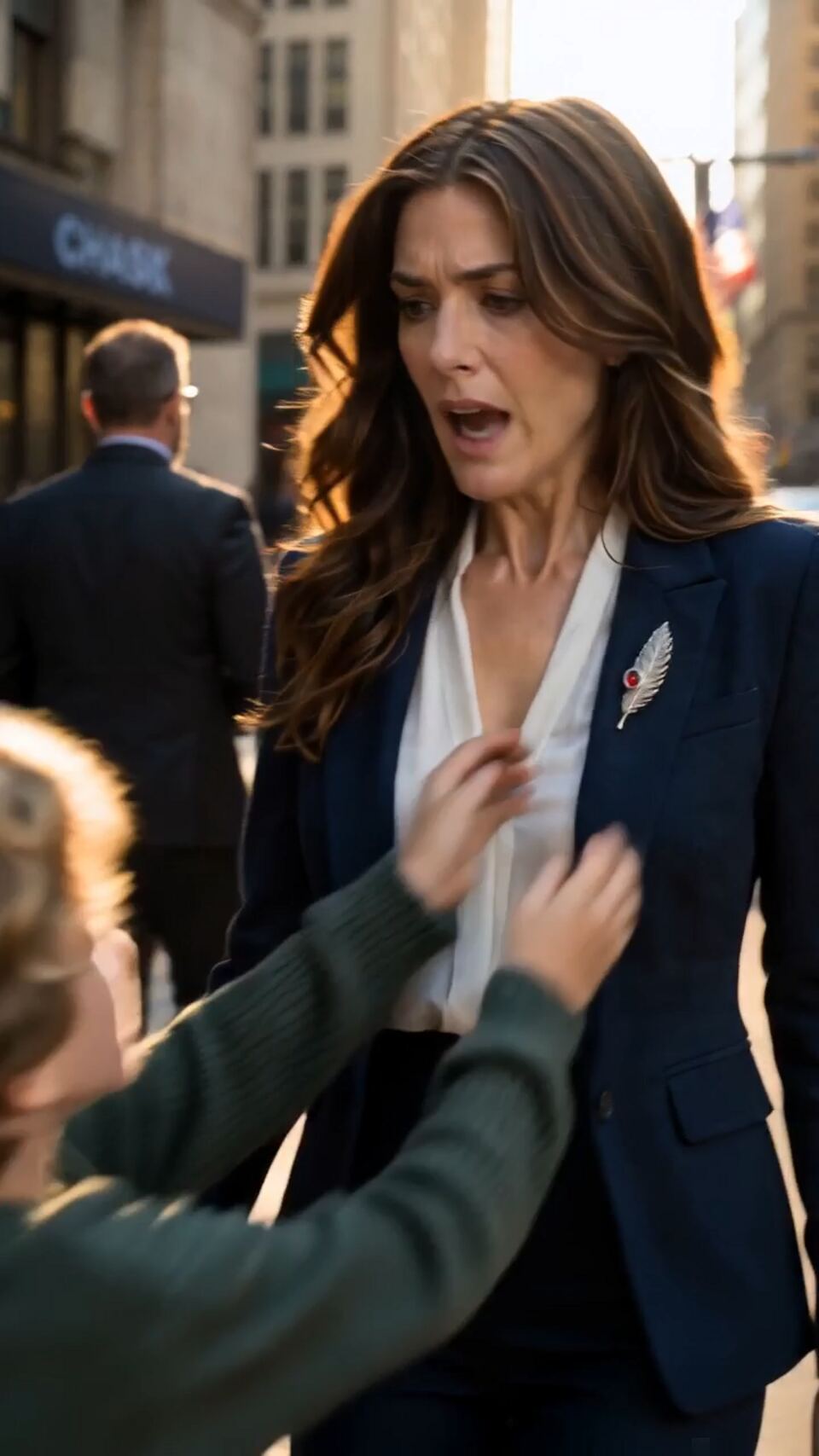
    “Hey, don’t touch me.”

    The words came out sharper than Claire Bennett intended.

    She had been walking fast, coffee in one hand, phone in the other, already late for a meeting downtown.

    Then a little boy stepped right into her path.

    He was maybe seven. He lifted both hands like he was offering something fragile to the morning.

    A silver brooch.

    Leaf-shaped.

    Set with a tiny dark red stone.

    Claire’s breath caught.

    Without thinking, she touched the matching brooch pinned to her blazer. She had worn it for twenty years. Through college, through her marriage, through her divorce, through the funeral she still hated remembering.

    “You… you’ve got the same brooch,” the boy said.

    The street noise seemed to drain away.

    Claire stared at him. “Wait, what did you just say?”

    He looked relieved now, as if he had finally found the right person. She saw that his hands were trembling.

    He leaned closer. “Mom told me… if I showed this to you, you’d know.”

    Something old and painful shifted inside her.

    Claire crouched in front of him. Her fingers shook as they brushed his cheek. “What’s your mother’s name?”

    The boy swallowed. “Sophia. Sophia Blake.”

    Claire felt the ground tilt.

    Sophia.

    Her younger sister’s name.

    Her sister who had vanished from Claire’s life twenty-two years ago after one terrible fight. Her sister whose memorial service had been held eight years later when no one could find her. Her sister Claire had already grieved.

    “Oh God,” Claire whispered. “Sophia?”

    Before she could ask another question, a man across the street shouted, “Eli!”

    The boy flinched hard.

    And when Claire turned, she saw a tall woman in a navy coat hurrying toward them, her face pale with fear.

    It was not Sophia.

    But the woman was carrying Sophia’s old leather satchel.

    “If you know that name, then please help us.”

    The woman stopped two feet away, breathing hard, one hand pressed to her side.

    “Eli, you can’t run off like that,” she said, then looked at Claire with open caution. “I’m sorry. He wasn’t supposed to do this alone.”

    Claire rose slowly. Her pulse hammered in her ears. “Where did you get that bag?”

    The woman’s eyes dropped to the worn brown satchel hanging from her shoulder. One strap had been stitched by hand in blue thread. Claire knew that repair. She had done it herself at sixteen while Sophia laughed and called her “the old lady of the family.”

    The woman saw recognition land.

    “My name is Mara Diaz,” she said quietly. “Sophia was my friend.”

    Was.

    Not is.

    Claire folded her arms across herself because suddenly she felt cold. “Friend from where? And why is a child approaching me on the street with my sister’s brooch?”

    Mara glanced at Eli. “Because Sophia told him to find you if anything happened to her.”

    Claire’s chest tightened. “Anything happened? Is she alive?”

    Mara didn’t answer right away, and that silence did more damage than words.

    They went into a small coffee shop on the corner, Eli between them in the booth, his legs swinging without energy. Up close, Claire could see he was exhausted. There were shadows under his eyes. His green sweater was clean but stretched at one cuff.

    Mara placed the satchel on the table and opened it carefully. Inside were folded papers, a pill bottle, and an old photograph of two teenage girls sitting on a porch step.

    Claire and Sophia.

    Claire touched the photo like it might disappear.

    “She kept that all these years?” she asked.

    Mara nodded. “Everywhere.”

    Claire looked at Eli. “Is Sophia your mother?”

    “Yes,” he said. “She’s at Saint Luke’s.”

    The pill bottle rattled in Mara’s hand.

    Claire read the label.

    Sophia Blake.

    Oncology wing.

    Her mouth went dry. “She’s in the hospital?”

    Mara’s face crumpled for one second, then steadied.

    “She has a few days at most,” she said. “And last night she told me something worse.”

    Claire gripped the edge of the table.

    Mara slid one folded page toward her.

    Across the top, in handwriting Claire would know in darkness, were the words:

    If Claire comes, tell her Eli may be hers too.

    Claire read the sentence three times before it made any sense.

    Then it made too much.

    “What does this mean?” she asked, though her voice came out thin and strained.

    Mara looked almost apologetic. “Sophia said there was someone else, years ago. Someone she never named clearly. She said Eli deserved the truth, but only if you chose to hear it from her.”

    Claire pushed the paper away as if it burned. “No. No, this has to be about family. About me being his aunt.”

    Eli was drawing circles in spilled sugar with a stir stick, quiet in the way children get when adults forget they are listening.

    Claire forced herself to ask the practical question. “How old are you, Eli?”

    “Seven.”

    Seven.

    Claire counted backward before she could stop herself.

    Seven years ago, after her divorce, after her mother died, after she had finally stopped searching records and shelters for any trace of Sophia, Claire had spent one weekend in Boston for a librarians’ conference. She had met someone there. Kind eyes. A careful smile. One evening she had let herself feel wanted. One mistake, she had called it later, because she had never seen the man again and because grief had made everything blur.

    No. Impossible.

    Mara reached into the satchel again. “There’s more.”

    She handed Claire another envelope, yellowed and sealed but never mailed. The front read: Claire Bennett, Brooklyn. In Sophia’s handwriting.

    Claire’s knees weakened even sitting down.

    “I found a box of letters in Sophia’s apartment,” Mara said. “None of them were sent. She said she wrote them after your father told her you wanted nothing more to do with her.”

    Claire looked up sharply. “My father told her that?”

    Mara nodded. “He told her you said she ruined the family and should stay gone.”

    Claire stared at the old envelope in disbelief. Her father had died five years ago. There would be no asking him why.

    With shaking fingers, she opened the letter.

    The first line stole her breath.

    Claire, I was pregnant when I left, and I was too ashamed to tell you whose baby I was carrying.

    Claire looked at Eli.

    Then at Mara.

    Then back at the letter.

    And Mara said the thing Claire was already beginning to fear.

    “Sophia told me Eli needs a bone marrow donor. They tested her relatives on record. You were never listed.”

    “If you’re willing, the hospital can test you today.”

    Saint Luke’s smelled of antiseptic, coffee, and sleeplessness.

    Claire stood outside Room 814 for a full ten seconds before going in.

    Sophia looked smaller than memory had allowed. Her dark hair was gone. Her face was narrow and pale against the white pillow. But when she opened her eyes and saw Claire, the old spark returned so suddenly it hurt.

    “You’re late,” Sophia whispered.

    Claire let out one broken laugh that turned into a sob.

    Then she was beside the bed, holding the hand she had believed she’d never touch again.

    For a while they said nothing useful. Just names. Sorry. I thought you were dead. I thought you hated me. You look the same around the eyes.

    Later, when Eli had been taken to pediatric oncology for tests and Mara gave them privacy, Sophia told the truth in pieces.

    Their father had not only lied. He had controlled everything after their mother got sick. When Sophia became pregnant at nineteen, he called her disgraceful and drove her out before Claire came home from college. Sophia had written letter after letter. He intercepted them. He told Claire that Sophia had run away and wanted freedom more than family. He told Sophia that Claire had agreed.

    “I believed him because I already felt ashamed,” Sophia said. “And because I didn’t know how to come back after so much time.”

    Claire sat frozen, rage and grief moving together inside her.

    “And Eli’s father?” she asked.

    Sophia closed her eyes. “He was married. He died before Eli was born. I never told him.”

    Claire exhaled slowly. Not her son. Not that twist of fate. Yet her relief came with guilt. Eli was still a child in danger.

    Sophia watched her face carefully. “I wrote that note because I knew it would make you come inside instead of walking away. Forgive me.”

    Claire should have been angry.

    Instead she almost smiled.

    “Manipulative even now,” she said.

    “Only when necessary.”

    Then Sophia reached weakly toward the brooch on Claire’s lapel.

    “Our mother said those brooches meant sisters find each other again,” she murmured.

    Claire took Sophia’s hand and pressed the matching one from Eli’s pocket into it.

    A doctor entered with a chart.

    “We’ve confirmed it,” he said. “Claire is a strong marrow match for Eli.”

    Sophia began to cry.

    But the doctor had not finished.

    “There is one complication. Eli has an aggressive infection. If we don’t stabilize him tonight, we may lose the window for transplant.”

    “You need to decide now whether to consent to the procedure and temporary guardianship.”

    Claire signed the papers with a hand steadier than she felt.

    Temporary guardian.

    Emergency donor consent.

    Contact authorized.

    In one hour, her life became legally attached to a little boy in a green sweater who had stopped her on a Manhattan sidewalk.

    By midnight, Eli was in intensive care, burning with fever. Claire sat beside his bed while antibiotics dripped into his arm. Mara slept folded in a chair with Sophia’s satchel clutched to her chest.

    Near dawn, Claire went upstairs to Sophia’s room.

    Her sister was awake, staring at the first gray light through the window.

    “I keep thinking of that porch picture,” Sophia said softly. “You had just fixed my bag. Mom had given us the brooches. We thought bad things only happened in movies.”

    Claire sat beside her. “Bad things happened. But so did this.”

    Sophia turned her head. “You don’t owe me forgiveness.”

    “No,” Claire said. “But I owe both of us honesty. I should have kept looking. I let Dad’s version become the truth because it was easier than wondering.”

    Sophia’s eyes filled. “I wanted to come home a hundred times.”

    Claire took a breath. “Then come home now. Whatever time there is.”

    That afternoon, Eli’s fever broke.

    Two days later, the transplant team moved forward.

    The procedure was painful and frightening and full of forms, bruises, waiting rooms, and hope measured in tiny numbers. Sophia weakened fast. Some truths arrive in time to heal hearts, not bodies.

    She died eleven days after Claire found Eli on the street.

    But she died with her hand wrapped around the leaf-shaped brooch and her son asleep against Claire’s side.

    Spring came late that year.

    By June, Eli was back in school part-time in Brooklyn. He still asked for his mother at night. Claire never lied to him. She sat beside him, held his hand, and told him stories about Sophia laughing too loudly, dancing barefoot, and losing gloves every winter.

    One Sunday, Eli opened Sophia’s satchel and found one last sealed note tucked in the lining.

    It was addressed in Sophia’s hand:

    For Eli and Claire, when you are ready.

    Claire looked at him.

    He looked back with those blue-gray eyes.

    And this time, neither of them was alone.

    “Let’s read it together.”

  • At the Gala, He Called the Waitress His Wife

    At the Gala, He Called the Waitress His Wife

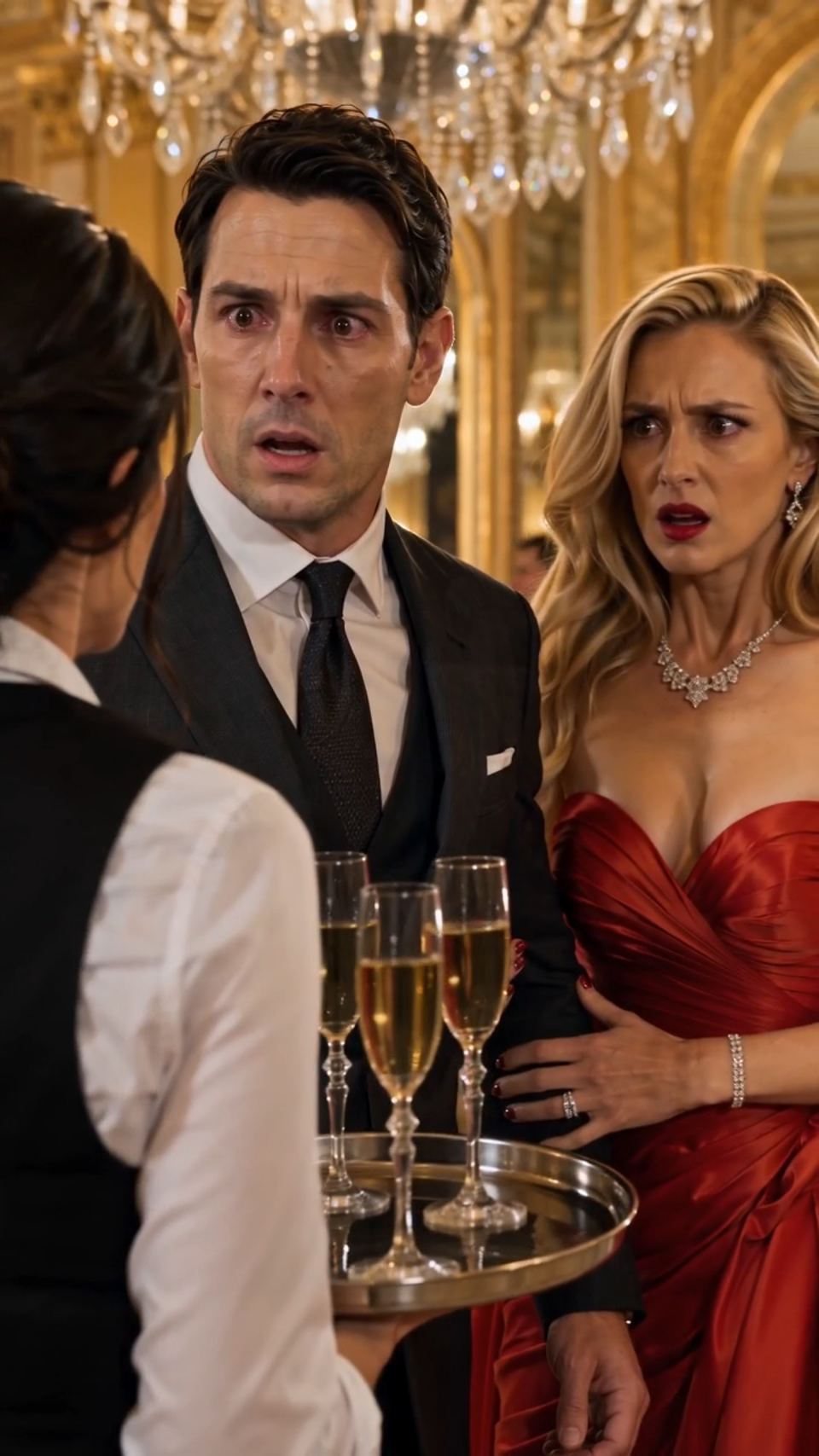
    “Because she’s not just a waitress. She’s my wife.”

    The words hit the ballroom like a dropped glass.

    Claire froze with her tray trembling in her hands. The champagne inside the flutes quivered, but somehow none of it spilled. Around her, the guests in silk and diamonds stared as if she had turned into smoke.

    Drew Mercer stepped away from the blonde woman clinging to his arm and walked toward Claire.

    He had once been the man she married in a courthouse with no flowers, no guests, and no promises except survival. Now he stood under a crystal chandelier in a room full of people who clearly believed he belonged somewhere else.

    The blonde woman looked outraged. “Your wife?”

    Claire’s face burned. “Drew, don’t.”

    But he was already close enough to see the tears she was trying not to shed.

    A man near the orchestra lowered his voice. Another guest whispered Claire’s name like it was a scandal.

    Then Drew said, quietly but clearly, “You left without telling me why.”

    Claire’s throat tightened. “I had no choice.”

    Before Drew could answer, an older woman in pearls stepped forward from the edge of the crowd.

    She was wearing the Mercer family emerald pin.

    And Claire went pale, because this was the first person from Drew’s past who had ever known her name.

    The woman with the emerald pin did not look surprised.

    That frightened Claire more than the shouting had.

    “You are Claire Bennett,” she said. Not a question. “You were supposed to be gone.”

    Drew turned sharply. “You know her?”

    The woman’s mouth tightened. “I know enough.”

    Claire had not seen Eleanor Mercer in six years. Not since the night she packed one bag, left Drew a single note, and disappeared before dawn. Back then, she had been young enough to believe love could survive silence. Then life had taught her otherwise.

    Now Eleanor stood in the center of the gala like a judge.

    “You work here?” Eleanor asked. “As a server?”

    Claire lifted her chin. “Yes.”

    Drew stared at her uniform. “Why?”

    Because she had bills. Because she had a mother in a care home. Because pride did not pay rent. But none of that mattered now.

    “That isn’t the issue,” Claire said.

    “Oh, it is,” said the blonde woman, whose name Claire suddenly remembered as Vivienne Hale. “If she really is your wife, why are you here with me?”

    That question landed harder than she meant it to.

    Drew looked from Vivienne to Claire. “I came tonight because Eleanor told me you would be here.”

    Claire blinked. “What?”

    Eleanor’s eyes did not soften. “I asked him to come. I needed proof.”

    The music had resumed, but no one was dancing now. People were pretending not to listen while listening to everything.

    Claire took one careful breath. “Proof of what?”

    Eleanor reached into her clutch and removed a folded letter, yellowed at the edges.

    It was addressed in Claire’s handwriting.

    Claire had not seen that envelope since the night she vanished.

    And on the back, in another hand, was a sentence that made her knees weaken.

    “Do not tell Drew about the baby.”

    Claire could not hear the orchestra anymore.

    The room tilted around her, and for one terrible second she thought she might drop the tray and the whole evening with it. Drew caught her elbow before she fell.

    “Baby?” he said, his voice rough. “What baby?”

    Claire pulled away as if his touch burned. “Not here.”

    Eleanor’s face had gone rigid. “You had no right to keep it from him.”

    “I had every right,” Claire snapped, and the sharpness in her own voice startled her.

    She had spent years learning how to survive by being small. Quiet. Useful. Invisible. But this was not a night for silence anymore.

    Drew followed her into a side hallway lined with gilt mirrors and soft lamps. The noise of the gala dulled behind the doors. For a moment, they were alone.

    “Tell me the truth,” he said.

    Claire looked at the letter in Eleanor’s hand. Her own handwriting stared back at her like a ghost.

    Six years ago, Drew had just been hired for the job that would change his life. Claire had been working double shifts at a bakery, trying to care for her mother and hide her fear of what the future would do to them. Then she got pregnant. Then she learned Drew’s father was already pressing him toward another woman, another life, another path.

    Worse, Claire had been told something about Drew that she never confirmed. Something she still hated herself for believing.

    “I left because I thought you chose her,” she said.

    Drew shook his head. “Vivienne? I never chose Vivienne.”

    “Then why did your family tell me to disappear?”

    He went still.

    That answer mattered. She saw it in his face.

    Before he could speak, Eleanor stepped into the hallway. “Because if you stayed, the baby would have ruined everything.”

    Claire stared at her. “My baby was not a problem to be managed.”

    “No,” Eleanor said softly. “It was the one thing your husband was willing to lose his inheritance over.”

    Drew’s eyes widened.

    Claire turned to him, confused, angry, and suddenly afraid of what else might be true.

    Then Eleanor handed him the second page of the letter.

    It was not Claire’s handwriting.

    It was a medical report.

    And the name on it was Claire’s mother.

    Claire read the report twice before the words made sense.

    Her mother, Anne Bennett, had been diagnosed with advanced heart failure six years ago. The treatment had cost more than Claire could pay. The report showed a private payment. Full coverage. Anonymous donor.

    Claire looked up slowly. “You paid for her care?”

    Eleanor’s eyes flickered. Not with guilt. With something close to grief.

    “I did,” she said. “But not for the reason you think.”

    Drew stared at her. “You knew Claire was pregnant.”

    “I knew more than that.”

    The hallway seemed too small now. Too bright. Claire could hear her own pulse.

    Eleanor drew a breath. “Your mother came to me. She said you were terrified and alone. She asked me to protect your future, because she believed the child would drag you into a life neither of you could survive.”

    Claire shook her head. “No. My mother would never say that.”

    “She said it because she was dying,” Eleanor replied. “And because I told her the truth. I told her Drew’s father planned to use your marriage to force him into a financial arrangement with Vivienne’s family.”

    Drew turned sharply. “That’s what this was?”

    Vivienne had followed them after all, pale now and furious. “You make it sound as if I was the villain.”

    “You were part of it,” Eleanor said.

    Vivienne flinched. For the first time, her arrogance cracked. “I was nineteen. My father told me Drew would lose everything if he stayed with Claire. I believed him.”

    Claire looked at her, stunned by the honesty.

    Drew said nothing. He was staring at the medical report.

    “There’s more,” Eleanor admitted. “Your child was born in another state. The adoption papers were filed the same week Claire left.”

    Claire’s breath stopped.

    “I never gave a child up,” she whispered.

    Eleanor handed her a final page.

    It was a birth certificate.

    Under “Mother,” it said Claire Bennett.

    Under “Father,” it said Drew Mercer.

    And at the bottom, in a small nurse’s stamp, was the name of the hospital where Claire’s mother had died.

    Claire felt her whole life split open.

    “If the baby wasn’t adopted,” Drew said slowly, “then where is our child now?”

    Eleanor closed her eyes.

    And Claire realized with cold certainty that someone in this family had lied about more than love.

    The answer came from the most unexpected person in the room.

    A teenage server, no older than sixteen, had been standing near the door through most of the confrontation. Claire had noticed her earlier because she kept staring at the floor, clearly terrified of the wealthy guests.

    Now the girl stepped forward.

    “I think I know,” she said.

    Eleanor turned white. “Lily, this is not your place.”

    But Lily held up a folded photograph with trembling fingers.

    It showed a small boy, maybe six years old, standing beside a piano bench in a modest house. On the back was written: “Daniel Bennett Mercer, age 6.”

    Claire made a sound she did not recognize as her own.

    Drew took the photo and stared at it. His hands shook. “This is my son.”

    Lily nodded. “He lives with my aunt. She works at the hospice where your mother stayed. She said the boy was brought there years ago after his father disappeared and his mother got sick.”

    Claire looked at Eleanor. “You knew.”

    “I was trying to keep him safe,” Eleanor said, and for the first time she sounded old.

    The truth came apart in pieces after that. Drew’s father had paid to hide the pregnancy. Claire’s mother, desperate and dying, had signed temporary guardianship papers she did not understand. Eleanor had let it happen because she believed Drew would be destroyed by scandal. Vivienne’s family had walked away once the money was secured. Everyone had chosen fear, and a child had paid for it.

    Drew set the photograph down carefully.

    “No more lies,” he said.

    They found Daniel that night at the hospice, asleep in a small room with a baseball cap on the bedside table and a sketch of a woman with dark hair tucked under his pillow. He woke slowly, wary at first, then stared at Claire as if he had seen her in dreams.

    “Mom?” he whispered.

    Claire knelt beside the bed and cried for the first time in years.

    Not from shame now.

    From relief.

    A month later, Claire no longer wore the black-and-white uniform. She sat at a kitchen table in a small rented house with Drew, Daniel, and a stack of school forms between them. Eleanor visited on Sundays. Vivienne wrote a letter of apology that Claire did not answer right away. She was learning that forgiveness did not have to be rushed to be real.

    Drew held Claire’s hand across the table.

    “You should have trusted me,” he said softly.

    “I know,” Claire answered. “And you should have come looking.”

    He smiled, tired and tender. “I am now.”

    On the windowsill sat the old yellowed letter and the photograph Lily had found.

    One had nearly destroyed them.

    The other had given them back their son.

    And when Daniel laughed in the next room, Claire finally understood that sometimes the truth does not arrive to punish you.

    Sometimes it arrives to bring you home.

  • When a Beggar Child Spoke, One Proud Man Lost Everything

    When a Beggar Child Spoke, One Proud Man Lost Everything

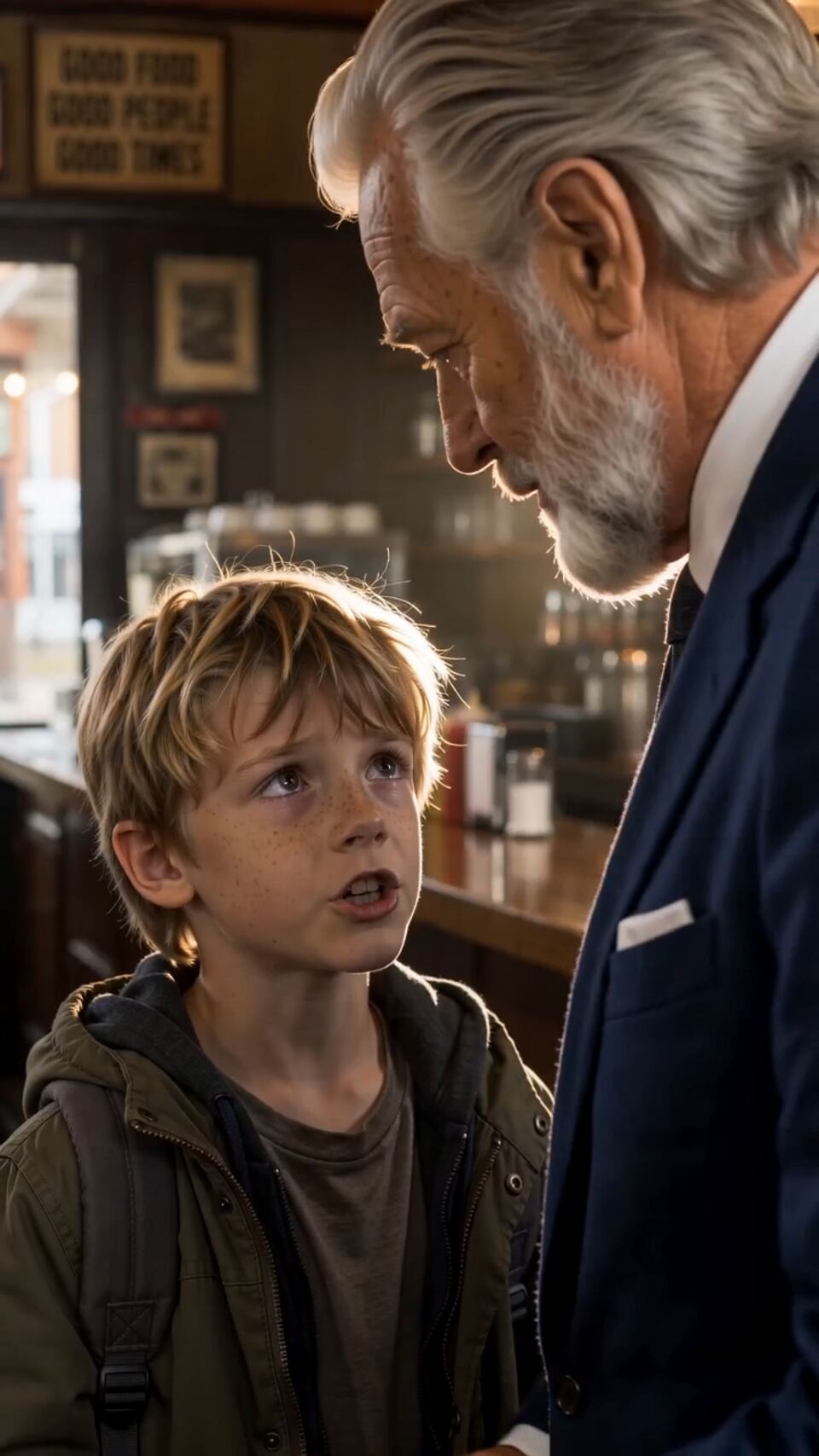
    “Keep it. You’ll need that money soon.”

    Martin Vale had only meant to be generous in the most insulting way possible.

    He stood on a busy downtown sidewalk in his dark gray suit, his polished shoes spotless, looking down at the small boy sitting on the concrete.

    Martin had tossed a few bills at him like crumbs.

    “Buy yourself some food,” he said with a smug smile.

    The boy looked at the money, then at Martin. His blue eyes were steady, almost unnervingly calm.

    “Keep it,” he said. “You’ll need that money soon.”

    Martin laughed. Not kindly. He laughed because the boy looked absurdly serious.

    “I have more money than you can imagine. Worry about yourself, kid.”

    He turned away, already bored. His phone rang a second later. He almost ignored it.

    Then he heard the voice of his plant manager, sharp with panic.

    “Sir, your factory is on fire!”

    Martin stopped walking.

    The sidewalk seemed to tilt under him. He stared at the street as if the cars, the glass towers, the tidy planters, even the boy, had all become strangers.

    “No… that can’t be true,” he whispered.

    The manager kept talking, but Martin heard only pieces. Flames. Smoke. People evacuated. The east storage bay.

    Martin sank onto the curb, his face draining of color.

    “Everything… everything is burning.”

    The boy did not move. He only watched him with a strange, old sadness that did not belong on a child’s face.

    Martin looked up, breath shaking. “Who are you?”

    The child said nothing.

    Then, in the distance, Martin saw two police officers talking to a woman near the corner deli.

    It was Lena, his wife.

    And she was looking straight at the boy.

    Martin reached the factory too late to save the building, but not too late to watch his life split in two.

    Orange flames rolled through the loading dock. Workers stood behind tape, some crying, some holding their phones to record the disaster. The smell of burning plastic and metal clung to the air. Martin tried to push past a firefighter, but was stopped with a hand on his chest.

    “Sir, you can’t go in.”

    “That’s my plant,” Martin snapped. “My machinery, my inventory, my records.”

    “Then you’ll want to speak with the investigator.”

    That word stayed with him.

    Investigator.

    By dusk, the damage was worse than he had feared. A storage room had collapsed. Two employees were treated for smoke inhalation. Insurance would ask questions. Clients would cancel. Banks would call.

    And Lena had not answered her phone once.

    He found her outside the apartment an hour later, sitting on the front steps with that folded newspaper in her lap. Her face was pale. Her hands were shaking.

    “Why were you with that boy?” he asked.

    She looked at him as if he had lost his mind. “Because he was looking for you.”

    “For me?”

    She nodded once. “His name is Eli. He came to the clinic where I volunteer. He said your company trucks had been going in and out of the old South Warehouse for weeks.”

    Martin frowned. “So?”

    “So the boy said someone was hiding something there.”

    Martin stared at her. “You listened to a homeless child?”

    “Not just listened,” she said. “He handed me this.”

    She opened the newspaper.

    Inside was a printed photo of Martin standing beside the South Warehouse three years earlier, at a charity event he barely remembered. Someone had circled the building in red ink.

    Lena swallowed. “He said if I loved my husband, I should make sure he saw it before dark.”

    Martin took the paper, his pulse beating hard in his throat.

    Printed across the back page was a handwritten line in black marker:

    DID YOU EVER TELL HER WHAT REALLY HAPPENED HERE?

    Martin’s mouth went dry.

    Because the South Warehouse had burned once before.

    And Lena had been there.

    Lena did not sleep that night.

    Neither did Martin.

    By morning, he had driven to the ruins of the old South Warehouse. It stood three blocks from the factory, a dead brick shell half hidden behind chain-link fencing and weeds. The place had been sealed for years after a fire destroyed part of the stock and sent one worker to the hospital.

    Martin had told everyone the same story: faulty wiring.

    But now he stood before the blackened wall, remembering Lena’s face the day she had begged him to stop using the building until it was inspected.

    He had dismissed her. Told her she was worrying too much.

    Inside the shell of the warehouse, under a beam of broken wood, he found Eli.

    The boy was sitting on an overturned crate as if he had been waiting for him.

    “You knew I’d come,” Martin said.

    Eli shrugged. “You had to.”

    “Who are you?”

    The boy looked past him, toward the street. “Someone who saw your trucks bringing drums here at night.”

    Martin felt anger rise first, then fear. “Those drums were cleaning supplies.”

    “Then why did the men wear masks?” Eli asked.

    Before Martin could answer, Lena appeared behind him.

    She had followed him.

    Her voice was quiet. “Martin, tell me the truth.”

    The boy watched them both.

    Martin wanted to deny everything. He wanted to protect the life he had built, the company, his name, the careful lie that had kept his family stable for years.

    Instead, he heard himself ask, “What did you see, Eli?”

    The boy reached into his pocket and pulled out a small metal key on a blue string.

    “My mother worked here,” he said. “She died in the first fire. Before she died, she told me if anything happened to her, I should find the man who signed the safety reports.”

    Lena went still.

    Martin stared at the key. On the tag was a number he recognized.

    Archive locker 14.

    He had not seen that number in seven years.

    And he knew, with a sick lurch in his stomach, exactly what was inside that locker.

    The key fit.

    Martin stood in the basement records room of the old city archive while Lena waited in the hall and Eli hovered near the door, his arms folded tight across his chest. Locker 14 opened with a sharp metallic click.

    Inside was a folder, yellowed and soft at the edges.

    Safety inspection reports.

    The original copies.

    Martin’s hands trembled as he read the dates. The warnings had been real. Faulty electrical lines. Overloaded storage. Requests for repairs signed and ignored.

    At the bottom of the stack was a note in Lena’s handwriting.

    I told you this place was unsafe. You said the contract mattered more than the delay.

    Martin closed his eyes.

    He remembered that night now. The pressure from the board. The deadline. His choice to silence the report because a closure would have cost him a major deal. He had convinced himself no one would get hurt.

    He had been wrong.

    Lena took the papers from him, tears bright in her eyes. “I kept copies because I was afraid one day someone would need them.”

    Martin looked at her, stunned. “You knew?”

    “I knew enough,” she said. “Not everything. But enough to know you had let pride make decisions for all of us.”

    The silence between them was heavier than the fire.

    Then Eli spoke.

    “My mother was Marisol Cruz,” he said. “She was the night supervisor here. She was the one who filed the last warning.”

    Martin stared at the boy. A memory surfaced: a young woman in a navy work coat, standing outside the warehouse, arguing with him about the missing repairs. Marisol had been furious. Brave. Unafraid.

    He had fired her the next week.

    Not because she was wrong.

    Because she had embarrassed him.

    Martin sat down hard on the concrete floor.

    The real fire, he realized, had not begun with sparks.

    It had begun with his silence.

    Outside the room, a voice called his name.

    It was Detective Halden.

    And in his hand was a warrant.

    The detective did not come for revenge.

    He came for the truth.

    By then the reports, the old invoices, and Lena’s testimony had been enough to open an official investigation into both fires. Martin could have fought it. He could have hired people. He could have hidden behind careful language and years of polished respectability.

    Instead, he did the one thing he should have done long ago.

    He confessed.

    He told the detective about the ignored repairs, the night shifts, the rushed shipment, the way he had told himself business was business. He told Lena everything, even the parts that made him look worst. He admitted that he had blamed fate for a fire he had helped create.

    Eli stayed silent through most of it, but when Martin finished, the boy asked, “Will anyone go to jail?”

    “Maybe,” the detective said. “If the evidence holds.”

    Martin looked at Eli. “Your mother should not have died for my pride.”

    The boy’s face tightened, but he did not answer right away.

    Then he said, “She used to tell me people can either keep lying until they vanish, or tell the truth and become smaller for a while. But smaller is still alive.”

    That sentence broke Martin more than shouting would have.

    The hearings came. The company changed hands. Martin lost the thing he had protected most: the image of himself as untouchable. He also lost friends who preferred the old version of him.

    But Lena stayed.

    Not because she excused him. Because she saw that the man who had once laughed at a child on a sidewalk was finally able to sit down, lower his head, and listen.

    Together, they helped set up a small fund for workers injured in the fire and for Marisol’s surviving relatives. The first donation came from Martin’s own savings. The second came from people who had known the truth all along and were relieved someone had finally spoken it.

    One evening, months later, Martin found Eli outside the rebuilt clinic where Lena volunteered. The boy was holding a paper cup of cocoa, his face cleaner now, his jacket donated by a neighbor.

    “You were right,” Martin said.

    Eli glanced up.

    “About the money?”

    Martin gave a tired smile. “About needing it.”

    For the first time, Eli smiled back.

    At the clinic door, Lena watched them both, her expression softer than it had been in years.

    And in Martin’s pocket was the key from Locker 14, which he had not thrown away, because some things were not meant to be hidden again.

    When they walked home together, Eli reached for Lena’s hand on one side and Martin’s on the other.

    The city moved on around them.

    But this time, Martin did not look away from the people beside him.

  • You? In a Place Like This?” She Said Before the Manager Bowed

    You? In a Place Like This?” She Said Before the Manager Bowed

    “You? In a place like this? Even the price tags would scare you.”

    The voice cut across the soft music and polished calm of the jewelry store.

    Elena Moreau kept her hand resting on the curved glass counter.

    She looked up.

    Camila Reyes stood on the other side of the counter in a burgundy velvet dress, one brow lifted, one arm looped through the sleeve of a tall man in a charcoal suit. He looked embarrassed already. Camila looked delighted.

    “Do you know her?” the man asked quietly.

    Camila gave a sharp laugh. “Sadly, yes. She never climbed out of poverty.”

    For one painful second, Elena was twenty again. Standing in a borrowed coat. Pretending not to hear the whispers.

    She raised her eyes, calm now, and met Camila’s stare.

    Before she could answer, Martin, the store manager, hurried across the marble floor. He stopped beside Elena and bent his head.

    “Madam, forgive me. You arrived early; your private collection is ready.”

    Camila’s face changed so fast it was almost crueler than the insult. Her mouth parted. The man beside her straightened and looked from Elena to Martin.

    Elena did not raise her voice.

    “Please show them the collection.”

    Martin signaled toward the back salon with instant obedience.

    Camila swallowed. “Private collection?”

    Elena gave her a small, restrained smile. “Yes.”

    She should have walked away then. She knew that.

    But when Camila’s companion finally looked directly at her, Elena felt the air leave her lungs.

    There was a thin white scar beside his right eyebrow.

    A scar she had seen on a six-year-old boy the night her sister disappeared.

    And his name, Martin murmured a second later, was Daniel Reyes.

    Daniel Reyes.

    The name struck Elena harder than Camila’s insult ever could.

    She followed Martin into the private salon because her legs moved before her thoughts did. Behind her, Camila insisted on coming too, suddenly sweet, suddenly eager, as if meanness could be folded away like a glove.

    The private room was quiet and gold-lit. Velvet trays waited on a walnut table. Necklaces, earrings, and antique brooches from Elena’s late mother’s estate had been restored for auction. The pearls at Elena’s neck were the only piece she had kept for herself.

    Daniel looked around with polite uncertainty. “I think there’s been some mistake,” he said. “We’re not here for a private showing.”

    “You are now,” Camila said quickly, touching his arm. “Elena always liked attention.”

    Elena ignored her. She was studying Daniel’s face. The scar. The gray eyes. The careful way he stood, as if he had learned not to take up too much room.

    “Have we met before?” she asked.

    Daniel frowned. “I don’t think so.”

    Camila gave a short laugh. “Trust me, if you had, you’d remember.”

    Martin entered with a folder for Elena’s signature. On top of it lay a photograph he had taken from the archive box by mistake. Elena saw it at once.

    An old picture.

    Two girls on a front porch. One ten, one seventeen. And between them, a little dark-haired boy with a bandage above his eyebrow.

    Daniel reached for the photo before she could stop him.

    He went pale. “Where did you get this?”

    Camila looked from him to Elena. “What is that?”

    Elena’s pulse thudded in her throat. “That was taken thirty years ago in Seabrook.”

    Daniel’s hand shook. “My adoptive mother told me I was brought from Seabrook after an accident.”

    Camila stared. “Adoptive?”

    He didn’t even look at her.

    Then he turned the photograph over.

    On the back, in Elena’s mother’s handwriting, were five words:

    For Rosa, until he is safe.

    Camila whispered, “Who’s Rosa?”

    Elena closed her eyes for one second.

    Rosa was her sister.

    The sister everyone believed had run away with stolen money.

    And Daniel was somehow tied to the night she vanished.

    They met the next morning in a small diner two blocks from the harbor.

    Elena chose the place because it was ordinary. She needed ordinary. Coffee cups. Scratched tables. A waitress who called everyone honey.

    Daniel arrived alone.

    Camila had called him all night, he admitted, but he had turned his phone off. He placed the old photograph on the table between them like something fragile.

    “My adoptive mother died last year,” he said. “I found papers after the funeral. My name used to be Mateo Cruz. I was six. There was a note saying I had to be taken away for my protection.”

    Elena wrapped both hands around her coffee. “Rosa Cruz was my sister.”

    Daniel looked stunned even though he must have expected it by then.

    Elena told him what she had not said aloud in years. Rosa had worked as a bookkeeper for a marina owner in Seabrook. One night she came to Elena and their mother terrified, saying she had found proof of smuggling hidden in fake shipping invoices. The owner had threatened her. Two days later, Rosa vanished. The police called it theft and escape. Her drawer at work had been emptied. Some money was missing. The town decided the story for itself.

    “Our mother never believed it,” Elena said. She touched the pearls at her throat. “Neither did I.”

    Daniel opened his wallet and pulled out a folded paper. “I found this with the adoption records.”

    It was a note, faded and rushed.

    If anything happens, tell Elena I did not leave him. I sent him away because they were watching the house.

    Elena could not breathe for a moment.

    “Why didn’t she come back for you?” she whispered.

    Daniel’s eyes were wet. “Maybe she couldn’t.”

    He slid one more item across the table. A key with a rusted brass tag.

    Pier 8. Locker 214.

    Before Elena could speak, a woman in a navy coat stopped beside their table.

    She was older, maybe seventy, with tired eyes and a trembling mouth.

    “I heard your name,” she said to Daniel. “Mateo?”

    Then she looked at Elena.

    “I was Rosa’s neighbor,” she said. “And I lied to the police.”

    Her name was Mrs. Aguilar.

    Elena remembered her at once after the shock wore off. She had lived across from Rosa’s apartment, always watering geraniums, always watching from her porch.

    In the diner, Mrs. Aguilar sat down slowly and clasped her hands.

    “I was afraid,” she said. “The marina owner had men working for him. I saw Rosa that night. She wasn’t running away. She was bleeding.”

    Elena felt cold all over.

    Mrs. Aguilar went on. Rosa had come to her door carrying a little boy and a canvas bag. She said the boy had seen too much and had to be sent away first. She begged Mrs. Aguilar to say nothing until morning. But by sunrise, Rosa was gone, and a man from the marina was already asking questions.

    “So you told the police she left?” Elena asked.

    The older woman nodded, ashamed. “I told myself I was protecting my own children.”

    Daniel looked down at the rusted key.

    They drove to Pier 8 together that afternoon. The harbor smelled of salt and diesel. Locker 214 was in a row of old metal storage boxes scheduled for demolition. Elena’s hands trembled so badly Daniel had to steady the key for her.

    Inside was a canvas bag, water-stained but intact.

    There were ledgers from the marina.

    A cassette tape.

    And a letter addressed in Rosa’s hand: Elena.

    Elena read it standing in the wind. Rosa had discovered illegal shipments and payments to a local official. She had hidden the records. She had sent Mateo away because his father, a dockworker who had been helping her, had been killed after threatening to talk. Rosa wrote that if she survived, she would come back. If she didn’t, Elena must clear both their names.

    At the bottom was one final line.

    The pearls are not for beauty. Sell them if you must. Use them to finish what I started.

    Elena touched the necklace with shaking fingers.

    Those pearls had never been vanity.

    They had been a plan.

    Then Daniel lifted the cassette tape and turned it over.

    On the label were three words that changed everything again:

    Statement of Chief Warren Hale.

    The police chief who had closed Rosa’s case was still alive.

    And he was now Camila Reyes’s grandfather.

    By evening, Elena knew exactly what the private collection was for.

    Not revenge.

    Proof.

    The next day, she returned to the jewelry store in the same cream suit and the same pearls. Martin closed the private salon to the public at her request. Daniel stood beside her. Mrs. Aguilar came too, carrying thirty years of guilt like a weight in her shoulders.

    Camila arrived ten minutes later, angry and confused.

    “My grandfather says you’re harassing this family,” she snapped. “Daniel, tell her to stop.”

    Daniel’s voice was quiet. “He’s not my family.”

    A few moments later, Warren Hale entered with a cane and the stiff pride of a man who had been obeyed for too long. He took one look at the cassette player Martin had brought from storage and stopped.

    Elena pressed play.

    The tape crackled. Then a younger man’s voice filled the room.

    Chief Hale.

    He was taking Rosa’s statement.

    She named the marina owner. She named the false invoices. She said she feared for her life. Then Hale’s voice cut in, sharp and low, telling her this case would disappear if she wanted the boy kept alive. At the end, another sound came through the static.

    A struggle.

    Rosa crying out.

    The tape ended there.

    Camila had gone white. “Granddad… what is this?”

    Warren sank onto a chair. For the first time, he looked old. Truly old.

    “I thought I could contain it,” he said. “I told myself I was saving the town.”

    “You saved yourself,” Elena said.

    “My sister lost her life, and a child lost his name.”

    The police came. This time, there were no lies strong enough to hold.

    Weeks later, the newspapers cleared Rosa Cruz of theft. An inquiry reopened the harbor case. Daniel reclaimed his birth name, though he kept Reyes too, saying both names had shaped him.

    Camila wrote Elena a letter. Not elegant. Not clever. Just ashamed. Elena did not answer right away, but she kept it.

    On the morning the auction opened, Elena sold every piece in the private collection except the pearls.

    Those she wore again, standing by the store window as the first customers entered.

    Not as armor.

    As inheritance.

    Daniel came to stand beside her. “What now?”

    Elena looked at their reflection in the glass, at the woman she had become and the family she had almost lost forever.

    “Now,” she said, “we begin with the truth.”

    And for the first time in thirty years, that felt rich enough.

  • The Janitor Who Stopped for a Dying Man

    The Janitor Who Stopped for a Dying Man

    “Easy, sir. Breathe with me.”

    Ethan Collins had said it before he could think.

    Harold Grant was bent over near the customer service counter, one hand crushed against his chest, coughing so hard Ethan thought he might fall right there on the polished marble floor.

    “Stay out of this,” snapped Marlene Voss, the supervisor, her voice sharp enough to cut glass.

    Ethan ignored her and guided Harold into the chair.

    The old man’s skin was pale. His breathing came in ragged pulls. Yet when Ethan knelt beside him, Harold’s shaking hand closed over his wrist for one brief second.

    “Thank you, son,” Harold whispered.

    Marlene stepped in closer, face tight with anger. “Back to work.”

    “I won’t leave him,” Ethan said.

    “Then you’re fired.”

    The words hit hard, but Ethan did not move. He kept one hand on Harold’s shoulder, steadying him, while the other adjusted the footrests.

    Then Harold’s right hand slid into the pocket of his dark wool coat.

    Ethan thought he was reaching for medicine.

    Instead, Harold pulled out a black smartphone. His breathing changed. His back straightened.

    The weak old man in the wheelchair suddenly looked like someone else entirely.

    He raised the phone to his ear and said, in a voice cold and commanding, “This is Harold Grant. I’m ready now.”

    Marlene’s face drained of color.

    “I’m ready now.”

    The airport seemed to hold its breath.

    Ethan stood frozen beside the wheelchair, while Harold stayed very still, the phone pressed to his ear. His cough was gone. His eyes were sharp now, alert and steady.

    Marlene took one step back. “Mr. Grant, I didn’t realize–”

    “That is exactly the problem,” Harold said.

    He ended the call and looked at Ethan. Not with the foggy helplessness from a minute ago, but with quiet intelligence.

    “What is your name?” he asked.

    “Ethan Collins.”

    Harold nodded once, as if storing it away. “You helped me when no one else did.”

    Marlene forced a smile that looked painful. “Sir, we were just about to assist you.”

    “No,” Harold said. “You were about to punish the only employee who acted like a human being.”

    A small crowd had gathered nearby. Travelers slowed. A child pointed. A woman lowered her phone after recording too late to matter.

    Marlene’s jaw tightened. “This is a security-sensitive area.”

    “And you still thought a collapsing man should wait in line,” Harold replied.

    Ethan could feel his face burning. He was used to being scolded. He was not used to being watched.

    Marlene grabbed a clipboard from the counter. “Ethan, you are suspended pending review.”

    Harold laughed once, softly. “Suspended for helping someone who could not breathe?”

    Marlene did not answer.

    Harold turned to Ethan again. “Where do you work the night shift?”

    “Maintenance. Mostly west concourse.”

    “Do you have a break in twenty minutes?”

    Ethan hesitated. “Yes, sir.”

    “Then meet me at the airport chapel.”

    That was strange enough.

    But then Harold added, “And bring the photo you keep in your wallet.”

    Ethan’s hand flew to his back pocket.

    The old photograph there had been with him for years. He had never shown it to anyone.

    Harold had noticed it from inside the wheelchair.

    And Ethan had no idea how.

    The photo in his wallet was missing.

    Ethan found the photo on the floor near Gate 12 ten minutes later.

    It was bent at one corner, but intact. He stared at the back.

    In faded ink, in his mother’s handwriting, was one line he had read a thousand times:

    Harold, if you ever find him, tell him I never stopped loving him.

    Ethan’s stomach turned cold.

    His mother, Teresa Collins, had died six years ago. Cancer had taken her in a small apartment in Tucson, with no money left and no answers to most of his questions. She had kept one old photograph in her sewing box. A younger Harold stood beside a smiling woman Ethan did not know. The woman wore a pale yellow dress and held a baby wrapped in a blue blanket.

    Ethan had always assumed it was just an old family picture.

    Now he sat alone in the chapel, the photo shaking in his hands as Harold walked in, no longer looking frail at all.

    “You knew my mother,” Ethan said.

    Harold took the seat across from him. “I loved her.”

    The words landed hard.

    Ethan wanted to be angry, but the old man’s face held something worse than guilt. It held regret that had lasted for years.

    “My mother never said your name,” Ethan said.

    “She was protecting you.”

    “From what?”

    Harold looked toward the stained-glass window before answering. “From me. I made a coward’s choice when you were born. I was married. I was afraid. I let her raise you alone and told myself silence was kindness.”

    Ethan looked down at the photo. The woman in yellow. The baby in blue. His mother had kept this hidden his entire life.

    “You are saying you’re my father.”

    “I am.”

    The room went very still.

    Ethan stood up too fast, anger and grief colliding in his chest. “You let me mop floors in this airport while you watched?”

    Harold’s voice cracked for the first time. “I was waiting for the right moment.”

    “Six years after my mother died?”

    “I was told you hated me.”

    Ethan almost said no. Almost said he had nothing to do with this man. But Harold slid a small envelope across the table.

    Inside was a letter in Teresa’s handwriting. The last line read: If Ethan ever needs help, Harold will know what to do.

    Ethan’s breath caught.

    So his mother had not erased Harold.

    She had trusted him.

    And if that was true, then someone else had lied.

    The next morning, Ethan returned to the airport before sunrise.

    He had not slept. He had replayed everything: Marlene’s shock, Harold’s call, the letter, the old photograph. If his mother had trusted Harold, then Marlene’s hostility was not random.

    He found her in the control office, speaking in a low voice to the airport operations manager.

    When she saw Ethan, her face hardened. “You’re not supposed to be here.”

    “I want my personnel file.”

    “I don’t think so.”

    Harold was waiting behind him in the hallway.

    “You lied to me,” Ethan said to Marlene. “About the suspension. About everything.”

    Marlene’s mouth tightened. “I was trying to keep this airport stable.”

    “By firing people who help sick passengers?”

    Harold stepped forward. “By hiding who I am?”

    That made her flinch.

    Ethan looked from one to the other. “What is going on?”

    Harold answered first. “Marlene used to work for my foundation in Boston. Years ago, she handled private records. She knew Teresa Collins.”

    Ethan turned sharply. “You knew my mother?”

    Marlene swallowed. For the first time, she seemed less cruel than terrified.

    “She asked me to do something,” Marlene said. “She begged me not to tell you until she was gone.”

    Harold’s eyes narrowed. “Tell him what?”

    Marlene took a breath. “Teresa did not leave because of fear. She left because she found out Harold had another family.”

    Ethan stared.

    Harold went pale. “No. That is not true.”

    “It is true,” Marlene said. “And I have the letters to prove it.”

    She crossed to her desk drawer and pulled out a sealed envelope. On the front was Ethan’s name.

    His mother’s name was written on the back.

    Ethan did not touch it.

    Harold reached for the envelope first, then stopped, as if he did not deserve it.

    Marlene’s eyes filled with tears. “Teresa asked me to keep it safe until the day you were ready.”

    Ethan felt the floor tilt beneath him.

    His father. His mother. A secret no one had been brave enough to speak.

    And inside that envelope was the reason Marlene had spent years trying to keep Harold and Ethan apart.

    The sealed envelope was addressed to Ethan from the one person he thought could never speak again.

    Ethan opened the envelope in the chapel, with Harold and Marlene watching from a careful distance.

    Inside were two pages, a hospital receipt, and a folded airline ticket dated sixteen years earlier.

    Teresa’s handwriting was steady.

    My son, if you are reading this, then I was wrong to keep the past buried.

    Ethan read in silence.

    The truth was not what he had feared.

    Harold had not abandoned a second family.

    The “other family” was Harold’s wife, Ruth, and her two children from a marriage that began long before he met Teresa. Harold had tried to leave, but Ruth had been terminally ill, and Teresa had refused to let a dying woman become another wound in the story. She had walked away to protect everyone, including Ethan.

    Harold covered his face with one hand. “She knew. She understood more than I deserved.”

    Marlene closed her eyes, tears slipping down her cheeks. “Teresa asked me to keep it quiet because she wanted Ethan to have a clean life, not a mess of shame.”

    Ethan sat very still.

    For years, he had imagined betrayal. What he found instead was sacrifice.

    That did not erase the loneliness. It did not erase the missed birthdays or the father-shaped hole in his life. But it changed the shape of the pain.

    Harold looked at him carefully. “I cannot give you back the years I lost.”

    “No,” Ethan said. “You can’t.”

    A long silence passed.

    Then Ethan folded the letter and slipped it into his jacket. “But maybe you can stop losing time now.”

    Harold’s eyes filled. “Are you saying–”

    “I’m saying I will have coffee with you,” Ethan said. “And maybe dinner. If you can behave.”

    Marlene let out a shaky laugh, the first kind sound Ethan had ever heard from her.

    Harold stood very slowly, then held out his hand. Ethan looked at it for a moment before taking it.

    Outside the chapel, the airport announcements rolled on. Planes came and went. People hurried toward lives they thought were ordinary.

    Ethan was still a cleaner. He still wore the blue jacket and the reflective vest. But now, when he looked in the mirror, he no longer saw a man waiting to be noticed.

    He saw a son who had finally been found.

    And on the table beside the chapel door, Harold’s black phone lit up again with one new message from an unknown number:

    Call me before the board meeting. We need to talk about Teresa’s second letter.

  • Emma’s Daughter Came in the Rain

    “Please! Don’t leave! My mom needs you!”

    The rain hit the hotel entrance like thrown stones. Clara Whitmore was halfway into her car when a small, soaked girl rushed forward and wrapped both hands around the door.

    Two security men grabbed her at once.

    “Wait,” Clara said.

    The child was maybe ten. Thin. Shivering. Her hair clung to her face. She was wearing a coat that had seen too many winters.

    Clara lowered her sunglasses and looked at her.

    “Who is your mother?”

    The girl reached inside her ruined jacket and pulled out a wooden music box. One corner was cracked. The brass latch was dulled with age.

    “This,” the girl cried, holding it up with both shaking hands. “She said you would recognize this.”

    Clara took it.

    The moment her fingers touched the wood, her breath caught. Inside the lid, nearly faded away, were the words:

    To Emma, from Mom.

    Her knees almost gave out.

    Clara turned the tiny key. A soft lullaby spilled into the storm, thin and old and painfully familiar.

    “I gave this to my daughter,” she whispered. “Before the fire.”

    The girl stared at her, crying harder now.

    “Your mother’s name is Emma?” Clara asked.

    “Yes. She said everyone thinks she died.”

    Clara’s hand tightened around the music box. Emma. Her daughter. Dead, or so Clara had been told. Burned away twenty-four years ago in a house fire that had stolen everything.

    Everything except this song.

    “Where is she now?” Clara demanded.

    The girl swallowed.

    “In the hospital. But a man is trying to take her away.”

    Across the street, a black car with no license plates sat in the rain. The window slid down.

    A man in black gloves was watching them.

    Then the girl whispered, “That’s him.”

    “Lock the doors! Call the—”

    Clara’s voice broke off as the black car’s door opened across the street. The driver never fully stepped out. He only watched, calm and certain, before the hotel staff rushed between them.

    The girl pressed closer to Clara’s side.

    “What is your name?” Clara asked.

    “Maddie.”

    “Where are your parents, Maddie?”

    “Only Mom now.”

    That answer hurt more than Clara expected.

    She got Maddie into the car and told her driver to go to St. Agnes Hospital. On the way, the child kept staring at the music box in Clara’s lap, as if it might vanish.

    At the hospital, the night nurse looked tired and suspicious.

    “Emma Reyes?” Clara asked.

    The nurse hesitated. “She was moved out of her room an hour ago. A man signed papers.”

    “What man?”

    “I didn’t get his name. Tall. Black gloves.”

    Clara felt cold all over.

    She pushed past the nurse and found Emma in a discharge bay, pale and fighting for breath. A heart monitor was still attached to her wrist. She looked older than Clara remembered, but the shape of her mouth was the same. The same eyes.

    Emma looked up.

    And went white.

    “Mom?” she whispered.

    Clara crossed the room in three steps. “They told me you died.”

    Emma closed her eyes. “I tried to come back. He wouldn’t let me.”

    Maddie stood in the doorway, terrified. “He said if I told anyone, you’d disappear again.”

    Clara turned sharply. “Who is he?”

    Emma opened her mouth, but the answer came from the hallway.

    A man’s voice.

    “Mrs. Whitmore, please step away from my patient.”

    A man in a dark coat stood there with hospital papers in his hand and black gloves pulled tight over his fingers.

    He smiled at Clara as if they were old friends.

    And Emma whispered, “That’s not the one I was afraid of.”

    The man in the dark coat was Dr. Adrian Vale, and he was not a stranger to Clara. He had once worked for her husband’s foundation, years ago, back when her life still felt orderly.

    “You have no legal authority here,” Adrian said.

    Clara laughed once, without humor. “Then explain why my daughter is in a hallway bed with a man hovering over her like a threat.”

    Emma gripped the blanket. “Clara, listen to me. I didn’t come back because I was sick. I came back because I found something.”

    She told them in pieces.

    The fire had not taken everything. Emma had survived, badly burned and frightened, and a nurse had helped her leave town under another name. She had spent years believing her mother had chosen not to look for her. Only when her own daughter began asking questions did Emma start searching again.

    Maddie reached into her backpack and pulled out a folded envelope. “I found this in Mom’s coat.”

    Inside was a copy of an old clinic transfer form, stamped with the date of the fire. Across the bottom was a signature Clara knew too well.

    Julian Whitmore.

    Her husband.

    Clara stared at the paper.

    “He signed away your treatment?” she asked.

    Emma shook her head. “He signed to move me. Away from the city. Away from you.”

    Before Clara could speak, Adrian stepped closer.

    “Mrs. Whitmore,” he said quietly, “your husband has been requesting copies of Emma’s records for three weeks. He says he’s her guardian.”

    Clara’s stomach twisted. “He can’t be.”

    Emma looked at her, exhausted. “Mom, I was told you wanted nothing to do with me.”

    The words landed like a slap.

    Clara thought of every year she had mourned a child she never buried, every birthday left unlit.

    “Who told you that?” she asked.

    Emma did not answer.

    Maddie did.

    “The man in the black gloves.”

    By morning, Clara had gone home for the first time in hours and found Julian in his study, calm as ever, as if none of this touched him.

    He looked at the music box and did not deny knowing it.

    “You kept that,” he said.

    “Why did you tell Emma I abandoned her?”

    He leaned back in his chair. “Because the truth would have destroyed what was left of this family.”

    Clara’s hands trembled. “You let me believe my daughter was dead.”

    “Your daughter was unstable after the fire. She needed distance. So did you.”

    That was the first lie. Clara had heard enough lies in her marriage to know the sound of one.

    Emma had not disappeared by choice. She had been moved, hidden, and cut off by the man Clara had trusted most.

    Adrian arrived with more records. The treatment transfer papers. A private memo. A note from a clinic administrator.

    And a photo.

    It showed the hotel from years ago, the same hotel where Clara now stood, with a man in the doorway carrying a fuel can.

    Julian went still.

    “It wasn’t an accident,” Adrian said.

    Maddie, sitting on the sofa with a blanket around her shoulders, looked up sharply. “You mean the fire?”

    Emma’s voice was barely there. “He told me if I came back, he’d take my child.”

    Clara turned slowly toward Julian.

    “You threatened your own daughter?”

    “I protected this family,” he snapped. “She was going to expose things that would ruin us.”

    “Us?” Clara said. “You mean you.”

    For the first time, Julian lost control.

    He admitted enough. There had been an argument that night. Emma had found evidence of financial theft from a charity fund tied to the family name. Julian had tried to take the papers. The fire had started when a lamp fell in the struggle. He had hidden the truth, moved Emma, and built a story around her disappearance.

    Clara felt sick.

    But the worst part was not the theft.

    It was what he had done after.

    He had watched her grieve their daughter for twenty-four years.

    “You are not taking her again,” Clara said.

    Julian stood. “Try to stop me.”

    Then his phone rang.

    He looked at the screen, and for the first time that night, fear crossed his face.

    It was the hospital.

    Maddie had vanished.

    Clara did not wait for Julian.

    She left him staring at his phone and drove straight to St. Agnes with Emma and Adrian. The police were already there. So was the nurse who had first seen the black-gloved man.

    Maddie had not been taken far. She had followed a maintenance corridor after hearing a voice she recognized.

    Not a threat.

    A plea.

    They found her in a side chapel off the hospital lobby, crouched beside a bench and clutching the music box.

    “He said he only wanted to talk,” she whispered.

    Clara knelt and held her close. “No one is taking you anywhere without us.”

    The man in the black gloves came in through the rear door ten minutes later, but this time he was not alone. He was a former board member from the old clinic, one of the men Julian had paid to keep quiet. When he saw Adrian’s recording device and the police outside, he started talking.

    Not because he was brave.

    Because he knew he was finished.

    His statement confirmed everything. Julian had ordered Emma moved. He had suppressed her recovery records. He had threatened the clinic to keep Maddie hidden once she started asking questions.

    The music box became the small, stubborn proof that undid all of it.

    Emma turned the tiny key and let the lullaby play in the chapel. The sound was thin, but it was enough.

    Clara took Emma’s hand.

    “I should have found you,” she said.

    Emma cried, but she did not pull away. “I thought you didn’t want me.”

    “I thought you were dead.”

    That truth did not erase the years.

    But it opened the door.

    Julian was arrested later that night. The charges were not the only punishment. He had to face the daughter he had buried in lies and the granddaughter he had never counted on.

    As for Clara, she stopped calling herself the woman who had lost everyone. She became the woman who found them again.

    Weeks later, she and Emma stood in Clara’s garden while Maddie wound the music box for the tenth time.

    The cracked lid still said the same words.

    To Emma, from Mom.

    Only now they meant something larger.

    A promise kept.

    A family returned.

    And for the first time in decades, Clara heard the lullaby and did not feel only grief.

    She felt home.

  • The Voice Beneath the Marble Floor

    The Voice Beneath the Marble Floor

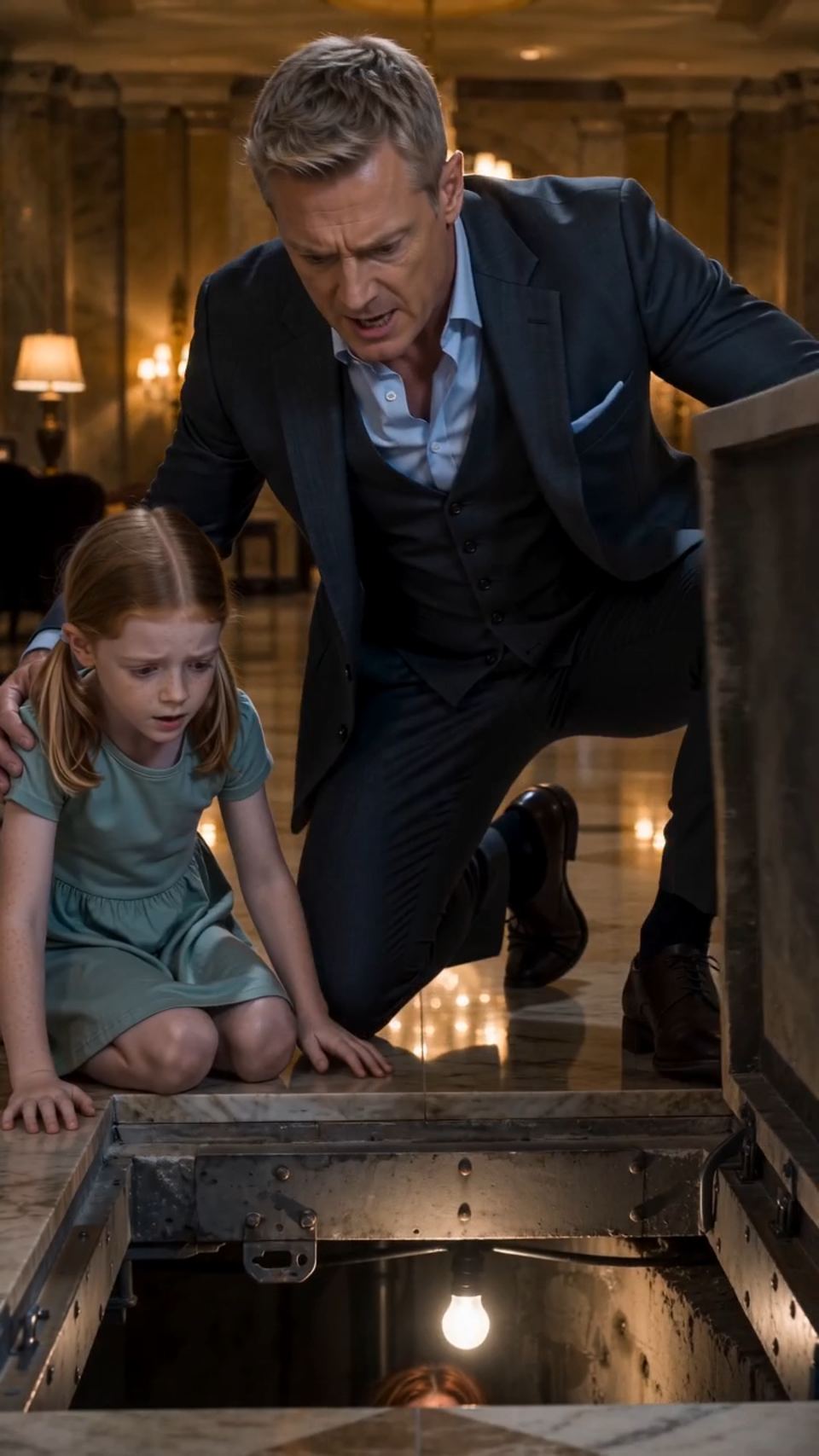
    “Dad! There is someone down here! It’s Mommy!”

    Six-year-old Ellie was on her knees on the polished marble floor, one hand trembling over the iron ring set into the stone.

    At first, David almost smiled.

    His daughter had always imagined things. Shadows in curtains. Faces in clouds. Once she had sworn their old Labrador was trying to talk.

    But there was something different in her voice now.

    Panic.

    He crossed the kitchen fast, the crystal chandelier above them throwing warm gold light across the white floor. “Don’t be silly, sweetie. Mom is at work.”

    Even as he said it, the words felt wrong.

    Lena had texted him that morning. A normal message. Running late. Big client meeting. Kiss Ellie for me.

    David dropped to one knee and grabbed the iron ring.

    The marble hatch was heavier than he remembered. It scraped open with a brutal sound, revealing darkness, a narrow stair, and a weak swinging bulb below.

    The basement had been sealed for years. It was little more than a storage pit left from the house’s original foundation.

    He leaned forward.

    Then he heard breathing.

    Not his own.

    His pulse slammed in his ears as he stared into the dim light below. A woman was curled in the corner, wrists bound with rope, her beige sweater filthy, her reddish-brown hair hanging over her tear-streaked face.

    She looked up.

    “David! Oh God, get me out!”

    His whole body went cold.

    It was Lena.

    Not possible.

    He had spoken to her that morning.

    He had seen her leave for work.

    Ellie started crying behind him. “Daddy, help Mommy.”

    David rushed down the steps, hands shaking so hard he nearly fell. As he reached Lena, she pulled back in terror and whispered, “Don’t touch me until you tell me one thing.”

    Her eyes locked on his.

    “Who is the woman wearing my wedding ring?”

    David froze, still kneeling in the dark.

    For one wild second, David thought Lena had hit her head.

    Then he saw the deep rope marks on her wrists. The dirt on her sweater. The truth in her eyes.

    He cut her free with the utility knife he kept on a shelf near the stairs. Lena couldn’t stand at first. Her legs gave under her, and he had to half-carry her into the kitchen while Ellie sobbed and clung to her mother’s side.

    Lena held their daughter so tightly Ellie whimpered.

    “I thought you were gone,” Lena whispered into her hair.

    David grabbed his phone. “I’m calling the police.”

    Lena’s hand shot out and caught his wrist. “No. Not yet.”

    He stared at her. “You were tied up in our basement.”

    “I know where I was.” Her voice was raw. “I also know that if we call too soon, she may disappear.”

    “Who?”

    Lena looked at him like she was trying to decide whether he was a fool or a liar.

    “The woman who took my place.”

    Ellie was too young to understand, but not too young to feel fear. David led her to the den, turned on cartoons, and came back to the kitchen. Lena sat wrapped in a blanket, pale and shaking, but her mind was clear.

    “I left for work yesterday morning,” she said. “I never got there. A woman stopped me in the parking garage. She knew my name. She said you had collapsed.”

    David went still. “Collapsed?”

    “I got close enough for her to spray something in my face.”

    He sank into the chair across from her. Yesterday morning. Not today. She had been gone for more than twenty-four hours.

    “But I spoke to you.”

    “No,” Lena said quietly. “You spoke to someone using my phone.”

    David opened his messages with numb fingers.

    There they were. Short texts. Familiar enough. Not too familiar.

    Then he looked closer.

    Lena always signed with a red heart.

    Every message from “her” ended with a period.

    Before he could speak, his phone rang.

    The screen said: Lena.

    And from the den, Ellie shouted, “Daddy! Mommy’s car is in the driveway!”

    “You spoke to someone using my phone.”

    David looked from the ringing phone to the front window, where a woman in Lena’s coat was walking to the door.

    David’s first instinct was to lock the door.

    His second was to open it and demand the truth.

    Instead, he stepped aside from the window and whispered, “Stay here.”

    Lena rose anyway, one hand braced on the table. She looked weak, but there was steel in her face David had not seen in years.

    The key turned in the front door.

    The woman entered with a leather tote on her shoulder and Lena’s scarf around her neck. She called out, cheerful and ordinary, “Traffic was awful. Did Ellie eat?”

    Then she saw Lena standing in the kitchen.

    Everything stopped.

    The tote slid from her hand and hit the floor.

    Up close, the resemblance was shocking. Same height. Same hair color. Similar build. But not exact. This woman’s jaw was sharper. Her eyes darker. Her freckles painted on too lightly, as if someone had copied them from memory.

    Ellie appeared at the den doorway and stared. “Why are there two mommies?”

    The woman looked at the child, and something like pain crossed her face.

    David stepped in front of Ellie. “Who are you?”

    The woman’s shoulders dropped. “My name is Mara.”

    Lena gripped the counter. “Why me?”

    Mara swallowed. “Because he said it had to be you.”

    “Who?” David asked.

    She looked at him with a tired, haunted expression. “Your father.”

    The room seemed to tilt.

    David’s father had been dead for eleven months.

    “No,” David said. “That’s impossible.”

    Mara gave a short, broken laugh. “I met Richard Hale three weeks before he died.”

    Lena stared at David. He stared back, both of them lost.

    Mara slowly reached into her coat pocket. David tensed, but she only pulled out an old photograph.

    She set it on the marble island.

    It showed a much younger Richard standing beside a teenage girl with dark eyes and a defiant mouth.

    Mara.

    On the back, in Richard’s unmistakable handwriting, were four words:

    My daughter. Keep hidden.

    “My name is Mara.”

    Lena’s hand began to shake as she turned the photograph over again and again.

    The police came an hour later.

    This time Lena let David call.

    Mara did not run. That changed everything.

    She sat at the dining table with her hands visible, as if she had rehearsed surrender before she ever came through the front door. Lena sat across from her, still wrapped in a blanket. David stood between them, not from anger now, but because he no longer understood where he belonged.

    Mara told them the story in pieces.

    Her mother had worked as a cleaner in a hotel outside Baltimore thirty-four years ago. Richard Hale had stayed there for months while building a real estate project. He promised help. Then he disappeared.

    Years later, when Mara tracked him down, he was old, sick, and terrified his respectable life would crack open. He begged her not to contact David. He paid for an apartment. Sent money. Kept her hidden, just as he had written on the back of the photograph.

    When Richard’s health failed, Mara went to see him one last time.

    “He said he wanted to make things right,” she said. “But not publicly. Never publicly.”

    Lena’s face hardened. “So he asked you to kidnap me?”

    Mara looked horrified. “No. He asked me to watch your family after he died. He said David was fragile. That he couldn’t survive another loss.”

    David let out a bitter breath. “Another loss?”

    Mara looked at him carefully. “He said your mother didn’t leave. She tried.”

    David’s knees nearly gave way.

    His mother had vanished when he was eight. Richard had told him she abandoned them.

    Mara reached into the leather tote and took out a cassette tape and a folded paper.

    “The woman who attacked Lena wasn’t me. It was Paula, your father’s housekeeper. She said if Lena disappeared for a while, I could step in. She said Richard had promised I belonged here too.”

    Lena stared. “She locked me in that cellar.”

    “Yes,” Mara said. “And when I realized what she’d done, I came here to tell the truth.”

    David unfolded the paper. It was an address.

    A care home in Vermont.

    At the bottom, in his father’s handwriting: Eleanor Hale. Tuesdays by the window.

    His mother was alive.

    “Your mother didn’t leave. She tried.”

    David looked up from the note, and for the first time in forty years, hope frightened him more than grief.

    The trip to Vermont took six hours and a lifetime.

    Lena insisted on coming.

    So did Ellie, who sat in the back seat with her stuffed rabbit and asked questions no adult could answer cleanly. Mara followed in her own car after giving a full statement to police. Paula was arrested before noon. She had confessed faster than anyone expected. Richard had promised her money if she helped “manage” the family after his death. Instead, she had built her own desperate plan from his secrets.

    The care home was small, quiet, and filled with winter light.

    David almost turned back at the door.

    Lena touched his arm. “Whatever happened, you deserved the truth.”

    A nurse led them to a sunroom.

    An elderly woman sat by the window with a blanket over her knees, silver hair brushed neatly back. Her hands were thin. Still. Waiting.

    David knew her at once.

    Not from memory, exactly. From the shape of his own face. From the old ache in him that had always belonged to someone.

    “Eleanor?” he asked.

    She turned slowly.

    For one terrible second, her eyes were empty.

    Then they filled.

    “David,” she said, as if his name had been resting in her mouth for decades.

    He fell to his knees beside her chair.

    Richard had told everyone she ran off. The real story came later from records, nurses, and Eleanor herself in fragments. After a breakdown following her sister’s death, Richard had placed her in treatment. When she improved and wanted to come home, he signed papers that moved her farther away and told their son she was gone. It was easier for him. Cleaner.

    Lena wept quietly. Mara stood in the doorway, crying too.

    Ellie walked up to Eleanor and placed a small hand on hers. “I’m Ellie. I found Mommy in the floor.”

    Eleanor gave a shaky laugh.

    That laugh broke something open in all of them.

    Months later, the marble hatch was gone. David had the floor sealed. Not to hide what happened, but to end it.

    On Tuesdays, they drove to Vermont together.

    Sometimes Eleanor remembered everything.

    Sometimes only their names.

    Mara came often. Not as an intruder. As family, awkward and real.

    One spring afternoon, Ellie looked up at David and said, “Grandma likes the window because she can see us arriving.”

    David smiled through sudden tears.

    “Yes,” he said. “And this time, we came back.”

    “And this time, we came back.”

    Outside the window, Eleanor lifted her hand before they even reached the door.

  • A Mother’s Secret, a Hungry Child, and One Broken Moon Locket

    A Mother’s Secret, a Hungry Child, and One Broken Moon Locket

    “Please… I’m hungry.”

    The girl’s voice was so weak it barely carried over the wind.

    Mara Ellison stopped on the stone steps outside St. Jude’s Church.

    “Where are your parents?”

    The girl swallowed hard. “My father died. Mom never came back.”

    Mara’s breath caught.

    The child’s collar slipped open.

    A silver half-moon pendant hung there on a chain. Broken cleanly down the middle.

    Mara went still.

    Her fingers trembled as she reached into her coat pocket and pulled out another half, old and polished by years of touch. She pressed the two pieces together.

    They formed one full moon.

    The world seemed to go silent.

    “Who gave you this?” Mara asked.

    “My dad,” the girl said. “He said my grandma had the other half.”

    Mara sat down hard on the steps.

    “No… this is impossible.”

    The church bells rang above them, and Mara felt suddenly cold in a way the winter could never explain.

    Then she heard footsteps.

    A man in a dark wool coat climbed the steps, holding two coffees. He was tall, calm, and familiar in a way that made Mara’s chest ache.

    He looked from Mara to the child.

    “Mom?” he said slowly. “This little girl looks so familiar… Who is she?”

    Mara’s hand closed around the pendant so tightly it hurt.

    “Don’t ask me that here.”

    Mara should have told Daniel everything right then.

    Instead, she grabbed his arm and hurried him down the steps.

    “Not here,” she whispered. “Please.”

    Daniel let her lead him away, but his eyes kept going back to the child sitting alone with the soup in her lap. Her face was pale, her hands shaking around the cup. She looked too small for the weight of the moment pressing around her.

    “Mom, what is going on?” he asked once they were out of earshot.

    Mara looked at the church doors. For a second, she saw another winter morning long ago. A tiny silver pendant in her palm. A baby in her arms. A son she had once believed was safe.

    “I don’t know,” she said, though it was not the full truth.

    Daniel frowned. He was forty, successful, and patient in the careful way men become when they have learned not to force old wounds open. But there were things in his face Mara had not seen in years. Familiar things. Fear. Hope. Confusion.

    Inside the church hall, the girl had followed them. She stood near the doorway, clutching the empty paper bag the bakery had given her. A volunteer from the parish, Sister Agnes, hovered nearby.

    “Her name is Lily,” Sister Agnes said quietly. “She’s been sleeping near the shelter behind the train station. She says her father died last month.”

    Mara stared at the child.

    Lily looked up. “My dad said my grandma was kind.”

    Mara almost told her to stop saying that word.

    Grandma.

    Because it was her son’s voice in that broken pendant. Her son’s laugh. Her son’s face when he had left home at nineteen after one devastating argument and never truly come back.

    Daniel watched Mara carefully. “Why do you have one half of that pendant?”

    Mara’s throat tightened. “It belonged to your grandfather.”

    “Then why did you say you gave it to me?”

    She could not answer.

    That evening, Daniel drove Mara home in silence. But before she went inside, he said, “I found something in your coat pocket.”

    He handed her a folded, faded hospital admission card.

    Her name was on it.

    And so was a baby’s.

    Mara did not sleep.

    By dawn, the admission card was spread open on her kitchen table beside the pendant. The card was from thirty-two years ago, from St. Anne’s Hospital, and it bore the name of a newborn boy with no listed father.

    Not Daniel.

    Not the son she had raised.

    Her hands began to shake.

    The next morning, she went to the parish shelter and asked Sister Agnes for Lily’s records. The nun hesitated, then admitted that the child’s father had called himself Thomas Reed. He had died in a warehouse collapse. No family had come forward.

    “Did he ever mention a mother?” Mara asked.

    “Only that she would know the pendant,” Sister Agnes said.

    That was enough to send Mara to the old hospital archives.

    A tired clerk searched for hours before returning with a thin envelope. Inside was a discharge note, a transfer request, and one line that made Mara’s knees weaken: Infant male, separated by order of relative pending investigation.

    Relative.

    Not mother. Relative.

    When Daniel arrived at the archives, he found her sitting on a bench, staring at the papers.

    “You lied to me,” he said, but not with anger. With hurt.

    Mara flinched. “I was trying to protect you.”

    “From what?”

    She looked at the pendant in his hand. “From the truth I spent thirty years trying to survive.”

    At last she told him about the winter night in 1992 when her sister had brought her a baby after a family dispute, claiming the child’s mother had vanished and the father was dangerous. Mara had taken the infant in for only one night.

    Only one night.

    By morning, the baby was gone, and the pendant with him.

    “I thought I had lost my son,” Mara said.

    Daniel’s face changed. “Your son?”

    She nodded. “The baby was not the son I raised. He was my first child. I believed he had died.”

    The clerk returned then, pale and breathless. “Mrs. Ellison… there is one more file. The man named Thomas Reed wasn’t the father.”

    Mara looked up.

    The clerk swallowed. “He was listed as the child’s older brother.”

    The truth was worse than Mara had imagined.

    Thomas Reed had found Lily after her father died and had been helping her in secret for months. He had used the pendant because it was the only proof he had left of the family he had never been able to reclaim. He was not the child’s father by blood.

    He was Mara’s lost son.

    The realization struck Daniel so hard he had to sit down.

    Mara could not speak.

    Thomas had not been dead for months. He had died three days earlier, according to the warehouse report. But before that, he had sent one last letter to St. Jude’s, asking that if anything happened to him, Lily be brought to the woman with the other half of the moon.

    In the envelope was a note in shaky handwriting.

    Mom, I never forgot.

    Mara pressed the paper to her chest and sobbed like the lost mother she had been for three decades.

    Daniel read the note twice, then looked toward Lily, who was coloring at the shelter table with a stub of crayon.

    “She knew him,” he said softly.

    Mara nodded. “He was raising her alone.”

    The final piece came from Sister Agnes. Thomas had feared Mara would reject Lily because the child was born from the man who had taken him away as a baby. But Lily was no stranger. She was Mara’s granddaughter.

    The pendant had not been a clue to wealth or power. It had been a promise.

    That evening, Mara found Lily outside, watching the church lights come on.

    “Did my dad know you?” the girl asked.

    Mara crouched beside her. “He was my son.”

    Lily stared, then blinked hard, trying to understand a world too big for her age.

    Daniel approached quietly. He looked at Mara, then at Lily, and something in him softened.

    “She needs a home,” he said.

    Mara nodded, then hesitated. “I don’t know if I deserve to ask for her trust.”

    Lily answered before anyone else could. “You gave me soup.”

    It was such a small sentence. It broke Mara open.

    “Sometimes one warm meal is how a family begins again.”

    Lily came home with Mara two days later.

    Not as a charity case. Not as a secret. As family.

    The first weeks were awkward and tender. Lily slept with the pendant under her pillow. Mara placed a small table in the kitchen where the child could draw while she cooked. Daniel came by every evening after work, bringing books, apples, and patience.

    He also brought questions.

    Together, they pieced together Thomas’s final years. He had worked rough jobs, moved from shelter to shelter, and kept the truth from Lily because he wanted her safe before he died. He had been trying to find Mara for months but feared she had chosen to forget him.

    Mara cried when she read that line.

    “I never forgot you,” she said into the quiet house after Lily had gone to bed. “I just didn’t know how to find you.”

    Daniel sat beside her at the kitchen table. “You found each other anyway.”

    At the memorial service in St. Jude’s, Mara stood beside Lily and held her small hand as the priest spoke Thomas’s name. There was no grand inheritance, no dramatic courtroom, no public scandal.

    Just a church, an old pendant, and a family mended by grief and mercy.

    After the service, Sister Agnes placed a worn envelope in Mara’s hand.

    “It was in Thomas’s bag,” she said. “He asked me to wait.”

    Inside was a photograph. Thomas at ten years old, standing on church steps, one half of the silver pendant around his neck.

    On the back, in faded pencil, were six words:

    Tell Mom I waited for her.

    Mara sank onto the bench outside the church and cried all over again.

    Lily climbed onto the seat beside her and leaned against her shoulder.

    “You’re not going to leave, right?” the girl asked.

    Mara kissed the top of her head.

    “Never again.”

    And for the first time in thirty years, the moon felt whole.

  • The Boy Who Paid With Coins Said That Unknow Name

    The Boy Who Paid With Coins Said That Unknow Name

    “Excuse me, Is this enough for a hot meal? Or anything…”

    Eli’s small hand shook as he pushed three coins across the diner counter.

    The waitress barely looked at him.

    “Not even close. If you ain’t got money, just leave.”

    She slid the coins back with two sharp fingers. Eli flinched, like the sound hurt him more than the words.

    Then the bell over the door rang again.

    An older man stepped inside. He paused at the sight of the boy.

    He walked straight to the counter and set down a ring of keys and the watch with a solid clink.

    “M-Mr. Harrison!” the waitress stammered. “I was just…”

    “Get the boy whatever he wants. On my tab.”

    The whole diner seemed to tighten around those words.

    The man turned to Eli, and his face softened in a way that made the boy stare.

    “Go on,” he said. “Take a seat, son.”

    Eli did not move. Not until he looked up and asked the question that changed the room.

    “Excuse me, sir… Do you know my mom, Sarah?”

    The man’s hand froze on the counter.

    “Sarah?” he whispered. “What is her last name?”

    Eli swallowed hard.

    “Harrison. Just like yours.”

    The man’s face went pale before he even answered. Eli saw it. The waitress saw it too, and for once she said nothing.

    The diner owner, Robert Harrison, guided Eli to a booth near the window. He ordered soup, grilled cheese, and a glass of milk. Eli ate carefully, like he was afraid the food might disappear if he moved too fast.

    “Where is your mother now?” Robert asked.

    Eli looked down at the table. “At the clinic. She was coughing blood. They said she had to wait.”

    Robert’s jaw tightened. “How long has she been sick?”

    “I don’t know. She tells me not to worry.”

    That sentence hit Robert harder than any accusation could have.

    He asked for the clinic’s name, and when Eli gave it, his eyes shut for a second. Not in confusion. In recognition.

    The waitress hovered nearby, suddenly unsure of herself. “Mr. Harrison, do you know this woman?”

    Robert did not answer her. He only asked Eli for Sarah’s full date of birth. Eli gave it after a pause, reciting it like a birthday song he had memorized in secret.

    Robert stood so fast his chair scraped the floor.

    “Who brought you here?” he asked.

    “My mom left me with Mrs. Vega at the laundromat. She said she’d be back after the test.”

    Robert reached for his keys, then stopped. His fingers tightened around them.

    At the counter sat the receipt printer’s fresh strip of paper. On top of it was a folded note, pushed there by the waitress when she thought no one was looking.

    Robert opened it.

    Inside was a clinic call-back number and one handwritten line:

    Do not let Sarah come here. She already asked about you once.

    Robert stared at the note, then at Eli.

    “Who wrote this?” he said.

    Eli shook his head. “I don’t know.”

    But the handwriting on the note looked painfully familiar.

    Robert drove Eli to the clinic himself. The boy sat silent in the passenger seat, holding the paper cup of milk with both hands.

    The clinic receptionist recognized Robert immediately. That should have comforted him. Instead, it made the room feel smaller.

    Sarah was not in the waiting area.

    A nurse finally led them to a back office and lowered her voice. “She’s being examined right now. She came in alone. She said she didn’t want her son scared.”

    Robert went still. “Her son?”

    The nurse nodded. “Eli, right?”

    That was when Robert understood this was not a chance meeting. Sarah had known his name. She had known where to find him. She had sent the boy into his diner because she had run out of options.

    When Sarah was brought out, she looked thinner than memory, but her eyes were the same. Sharp. Brave. Tired.

    She saw Robert and closed her eyes for one brief second.

    “I didn’t want this,” she said.

    Robert could barely speak. “You have my name. He has my face. And you were going to die before telling me?”

    Sarah flinched, but she did not look away. “I was going to tell you when I had proof.”

    “Proof of what?”

    She reached into her coat and pulled out an old photograph. It showed Robert years ago, standing outside the diner with a younger Sarah beside him. On the back was a date from more than seven years earlier.

    “I came back for you,” she said. “You never showed.”

    Robert stared at the photo. Memory returned in pieces. A storm. A train delay. A letter he never got because his sister said Sarah had moved on.

    His sister.

    The same one who had mailed the clinic note.

    Robert turned slowly. “You knew she was pregnant.”

    Sarah’s mouth trembled. “Your sister told me you were married.”

    The lie landed between them like broken glass.

    Eli, frightened by their silence, stepped forward and took Robert’s sleeve.

    “Please don’t send us away,” he whispered.

    Robert looked at the boy, then at Sarah, and for the first time in years he felt shame more than shock.

    But the nurse was already returning with a chart in her hand.

    “Mr. Harrison,” she said carefully, “we need you to see this. The test results are not what Sarah expected.”

    The chart was thin, but it changed everything.

    Sarah did not have the illness they feared. She had severe anemia, a lung infection, and exhaustion from months of working nights and skipping meals. Dangerous, yes. But treatable.

    The worst part was the handwritten note at the bottom of the file.

    Recommended follow-up for child: possible genetic screening.

    Robert looked up sharply. “Why would they test Eli?”

    Sarah pressed both hands to her face. “Because of my brother.”

    That was the part she had not said yet.

    Her younger brother had died at thirty-eight from a heart condition no one in the family had understood until too late. Sarah had feared Eli might carry the same risk. She had been trying to get him checked without worrying him.

    Robert sat down slowly.

    Everything he had imagined was wrong. She had not come looking for money or drama. She had been trying to protect the child.

    “I thought you left,” he said.

    “I thought you were married,” she answered. “By the time I learned the truth, I was already raising a son alone.”

    The sister who had lied was not there now, but her note sat on the table like a third voice in the room.

    Robert took it out and read it again.

    Do not let Sarah come here. She already asked about you once.

    Sarah laughed once, bitter and sad. “She said you wanted no part of us.”

    Robert stood. His hands were shaking now. “She kept us apart.”

    “Yes,” Sarah said. “But I also stayed silent. I was angry. I was proud. Then life kept moving.”

    Eli had been listening with the serious stillness children get when adults finally stop hiding.

    “So you’re my grandpa’s brother?” he asked Robert.

    Robert gave a broken smile. “Something like that.”

    “No,” Sarah said softly, looking at Robert. “If you want to be in his life, you need to decide that honestly. Not because of guilt.”

    That was the real test.

    Not the illness. Not the lie.

    Could Robert accept a child he had never known, without using shame or pity as his reason?

    He looked at Eli, then at Sarah, then at the clinic window where afternoon light was fading.

    “I want to know my grandson,” he said.

    Sarah’s head came up. “What did you say?”

    Robert answered before fear could stop him. “Eli is my grandson. And if you’ll let me, I want to be his family.”

    At that moment, the nurse returned with another envelope. It had been dropped off at the front desk an hour earlier.

    On the front, in Robert’s sister’s handwriting, were four words:

    Ask about Eli’s father.

    Robert opened the envelope with the care of a man handling old wounds.

    Inside was a letter from his sister, Margaret, written before her stroke last winter. Her hand shook across the page, but the words were clear.

    I lied because I was afraid. Sarah came to me after your accident and asked if you were married. I told her yes. I thought I was protecting you from pain. Then I found out I was protecting my own pride.

    The letter continued.

    Eli’s father was not a stranger. It was Daniel, Robert’s late brother, who had once loved Sarah too. Margaret had known all along. Daniel had died before the truth could be sorted out. Sarah had chosen silence rather than drag the family into grief and blame.

    Robert lowered the page and closed his eyes.

    Sarah had not stolen anything from him. She had survived what everyone else had hidden.

    He looked at Eli. “You have two families in this story,” he said. “And I have been missing one of them for seven years.”

    Eli’s mouth curved into a careful smile. “Can I still have soup?”

    That sound, so ordinary and alive, nearly undid him.

    In the weeks that followed, Robert paid for Sarah’s treatment without making it a debt. He visited the clinic every afternoon. He brought books for Eli, then a football, then a small toolbox because the boy liked fixing broken things.

    Sarah slowly regained her strength.

    Robert and Sarah did not become the people they had been. Too much had passed between them for that. But they found something gentler. Honest visits. Shared meals. Real apologies.

    Margaret never had the chance to explain herself in person. She died two months later. At her funeral, Robert placed her folded letter in her casket and forgave her out loud, even though the words hurt.

    One spring evening, Eli sat beside him on the diner bench and asked, “Are you going to stay this time?”

    Robert looked through the window at Sarah, laughing with the waitress who had once pushed away his coins.

    “Yes,” he said. “This time, I am staying.”

    Then Eli reached into his pocket and pulled out three worn coins.

    He placed them on the table between them.

    “I kept them,” he said. “To remember the day everything started.”

    Robert covered the boy’s hand with his own.

    Outside, the bell above the diner door rang again, and this time no one was being turned away.